Documented evidence on palm leaf import — certifications, methodology, programme detail — is shared one-to-one with qualified buyers.
Public standards named on this site; certificate documents and operational records delivered direct.
Request documentation packMarket Intelligence · USA
Importing Palm Leaf Plates into the USA: A B2B Guide for Wholesale Distributors and Brand Owners
A complete procurement and customs guide for US importers sourcing palm leaf tableware from India — HSN classification, FDA food-contact framework, state-level PFAS bans, BPI Compostable certification and USDA BioPreferred compliance, port choice, lead time, MOQ, and FOB/CIF pricing. Written by India’s largest independent palm leaf manufacturer.
The US is the second-largest single-country export market for Indian palm leaf plates after the UK, driven by HoReCa, wedding catering, federal procurement under USDA BioPreferred, and state-level eco-disposable rules. Imports use HSN code 4602.19, typically duty-free under GSP-eligible status. This guide covers customs, FDA and state PFAS compliance, BPI Compostable certification and USDA BioPreferred compliance, port choices, lead time, MOQ, and pricing for US wholesale distributors and brand owners.
4602.19
HSN code for palm leaf plate imports
0%
Typical US import duty (GSP-eligible)
2030
Latest US state PFAS deadline (Maine)
28–35d
FOB India to US West/East Coast
This Ecodyne USA palm leaf import guide walks B2B foodservice buyers through every step of sourcing areca palm leaf plates from India: FDA food-contact compliance, HSN 4602.19 customs entry, container economics, 10-day loading guarantees, and the practical differences between LCL and FCL palm leaf import shipments for HoReCa, QSR, and private-label brands.
The US palm leaf market in 2026
The United States ranks as the second-largest single-country export destination for Indian palm leaf tableware after the United Kingdom. Industry shipment data shows roughly 20 forty-foot high-cube containers per month leaving Indian ports for US consignees through 2024 – a doubling from 2019 volumes and growing through the post-COVID HoReCa recovery.
Four demand drivers explain the trajectory.
State-level eco-disposable rules. California (SB 1335, AB 1276, AB 1200), Washington (HB 1799), Colorado (HB22-1355), Maryland, New York, and a growing list of states have moved aggressively on single-use plastics and PFAS in food packaging. Each rule creates a procurement-driven pull toward verified compostable, PFAS-free alternatives — the category palm leaf occupies natively.
Quick-service restaurant sustainability commitments. Major US QSR chains have announced 2030 zero-deforestation, zero-PFAS, and compostable-substrate commitments. Procurement teams are sourcing palm leaf and bagasse mixes at scale, with palm leaf positioned as the premium-aesthetic option.
USDA BioPreferred federal procurement. Federal agencies, the US military, and General Services Administration schedules give procurement preference to products at ≥95% biobased content under FAR 23.408. Palm leaf qualifies at 100% biobased.
HoReCa concentration in coastal metros. Hospitality buyers in New York, Los Angeles, San Francisco, Seattle, Boston, and Miami drive a disproportionate share of US palm leaf consumption. Wedding catering at scale — estimated at over 2.5 million US weddings per year — adds an event-driven seasonal layer.
Cross-reference: see the Palm Leaf Tableware Industry Report 2026 for the full market-size estimate and 2027 outlook.
HSN code, customs classification, and duty
Palm leaf plates imported into the United States are classified under the Harmonised Tariff Schedule heading 4602.19 — basketwork, wickerwork and other articles made directly to shape from plaiting materials, of vegetable materials, other.
| Field | Value | Notes |
|---|---|---|
| HSN / HTS code | 4602.19 | Confirm with your customs broker for SKU specifics; chargers and compartment plates may classify under 4602.19.80 vs 4602.19.45 depending on dimensions and finish. |
| Country of origin | India | Form A under GSP, or commercial invoice attestation under MFN. |
| Duty rate (GSP) | 0% | When GSP is active. Verify status with US Customs and Border Protection (CBP) at time of shipment. |
| Duty rate (MFN) | 0% – 3.3% | When GSP is suspended. MFN rate has historically been 0% on 4602.19.45 and 3.3% on 4602.19.80. |
| Section 232 / 301 tariffs | Not applicable | India-origin palm leaf is not subject to Section 232 steel/aluminium or Section 301 China tariffs. |
| Anti-dumping / countervailing | None | No active AD/CVD orders on palm leaf tableware from India. |
| ISF (Importer Security Filing) | 10+2 required | Filed by importer or broker at least 24 hours before vessel loading at the Indian port. |
Verify GSP status before each shipment
The Generalised System of Preferences is renewed by Congress on a periodic basis and has lapsed multiple times since 2017. When GSP is suspended, importers either pay the MFN rate at entry (refunded retroactively on reinstatement, in most cases) or wait for renewal. Always confirm current GSP status with your customs broker before signing a long-dated purchase order.
Required documentation for entry: commercial invoice, packing list, ocean bill of lading, certificate of origin (Form A under GSP, or a commercial certificate under MFN), importer of record EIN, ISF 10+2 filing, and ASTM D6400 / BPI certificate if making a compostable label claim (see section below).
Cross-reference: MOQ & Container Guide for FCL economics; 25-Question Supplier Evaluation for the documentation package an India supplier should produce on request.
FDA food-contact compliance
Palm leaf plates fall under the US Food and Drug Administration’s Food Contact Substance regulatory framework, codified at 21 CFR 174–186. Unlike the EU LFGB regime, the FDA operates no general pre-market approval scheme for food-contact articles. US market access for palm leaf tableware is subject to change and is not covered by this guide; buyers should confirm current status with their customs broker and the FDA directly before importing.
The practical importer due-diligence standard is to retain documentation that the manufacturer’s product, as imported, would satisfy migration testing under either FDA 21 CFR 177 (indirect food additives), LFGB §30 / §31 (the German overall-migration and food-contact testing), or an equivalent migration test report.
Ecodyne’s standard documentation pack includes a current LFGB §30 / §31 migration test report performed at an accredited European laboratory. Most US importers accept this as the migration-evidence baseline for 21 CFR 174–186, particularly because LFGB migration limits are stricter than FDA limits across most analytes.
See also: LFGB §30 §31 Explained for the equivalent EU framework that the same test report serves.
FDA food-contact ≠ “FDA approved”
The phrase “FDA approved palm leaf plates” — common in US wholesale marketing — is technically inaccurate. The FDA does not approve individual food-contact articles. The correct framing is that palm leaf plates comply with FDA food-contact regulations (21 CFR 174–186) when manufactured from naturally-derived single-source material without prohibited additives. Marketing copy should reflect this.
State-level PFAS bans — the dominant US regulatory exposure
The fastest-moving US regulatory area for imported food-service products is the state-level PFAS landscape. More than a dozen states have enacted legislation prohibiting intentionally-added per- and polyfluoroalkyl substances (PFAS) in food packaging.
Palm leaf plates as a naturally-derived, single-material category are inherently PFAS-free — the material composition contains no fluorinated compounds at any manufacturing stage. Ecodyne provides PFAS-free attestation on a per-shipment basis as standard documentation.
The risk PFAS regulations create for US importers lies primarily in bagasse and other moulded-fibre alternatives, which historically used PFAS-based grease and water-resistance coatings. Importers consolidating palm leaf and bagasse SKUs in the same shipment to a PFAS-banned state must verify both substrates independently.
| State | Effective date | Scope | Verification required |
|---|---|---|---|
| Maine | 2030 (full) | All intentionally-added PFAS in all food packaging | PFAS-free attestation; verification on request |
| Washington | May 2026 (plates & bowls); Feb 2025 (wraps) | Recovery-of-PFAS-from-product test if alternatives exist | PFAS-free attestation + alternatives assessment |
| New York | Dec 2022 (effective) | Food packaging containing intentionally-added PFAS | PFAS-free attestation |
| California (AB 1200) | Jan 2023 (effective) | Food packaging containing regulated PFAS > threshold | PFAS-free attestation; testing record on request |
| Colorado | Jan 2024 (effective) | Various food-service products with intentionally-added PFAS | PFAS-free attestation |
| Maryland | Jan 2024 (effective) | Food packaging with PFAS | PFAS-free attestation |
| Vermont | July 2023 (effective) | Food packaging with intentionally-added PFAS | PFAS-free attestation |
| Minnesota | Jan 2025 (effective) | Food packaging PFAS prohibition | PFAS-free attestation |
| Connecticut | Dec 2023 (effective) | Food packaging PFAS prohibition | PFAS-free attestation |
| Oregon, Hawaii, Rhode Island | Various 2024–2025 | PFAS-related restrictions | Verify current text |
Verify before importing
State PFAS regulation changes faster than any other US food-packaging rule set. Verify the current statutory text with US legal counsel before signing import contracts for the affected states. The table above represents a 2026 snapshot; the underlying regulations are reviewed and amended on most state legislative cycles.
Compostability labelling — ASTM D6400 and BPI
Any palm leaf, bagasse, or PLA product sold in the US carrying the word compostable on its labelling is subject to state-level rules requiring third-party verification. The standard verification path is ASTM D6400 testing followed by BPI Compostable certification.
States with active ASTM D6400 / BPI labelling rules include California (SB 1335), Washington (HB 1799), Colorado (HB22-1355), and Maryland. The list is expanding.
Palm leaf plates pass ASTM D6400 disintegration, biodegradation, and plant-safety testing in the standard 90–180-day window without chemical additives. BPI certification is held by the brand owner, not the manufacturer. Buyers requiring BPI-marked product certify their own SKUs; Ecodyne supplies the material documentation the application requires.
For the full standard, test methodology, and the 6-step importer verification procedure, see the companion piece: ASTM D6400 Explained for Compostable Tableware Imports.
USDA BioPreferred — the federal procurement edge
The USDA BioPreferred Program designates biobased products eligible for federal procurement preference under Federal Acquisition Regulation 23.408. Federal agencies, the US Department of Defense, and the General Services Administration must give preference to BioPreferred-designated products when procuring eligible categories.
Palm leaf plates qualify under the BioPreferred Program at 100% biobased content, the highest possible value — the product is composed entirely of recently grown plant material with no fossil-carbon synthetic content. The relevant USDA product category is “Disposable Tableware,” with a minimum biobased threshold typically set at 72%.
For a US wholesale distributor or brand owner, USDA BioPreferred compliance opens three federal channels:
Department of Defense dining facilities — military installations procure biobased compliant disposables for mess halls, field operations, and base catering. Volume is substantial; preference under FAR 23.408 is mandatory for eligible categories.
General Services Administration schedules — federal agencies procuring through GSA Multiple Award Schedules see BioPreferred-designated products surfaced ahead of non-biobased alternatives.
Federal cafeteria and concession contracts — congressional dining, federal building cafeterias, and national park concessions all source under federal procurement preference rules.
Ecodyne’s palm leaf range carries current USDA BioPreferred designation. Documentation is supplied with quotations for US distributors targeting federal procurement channels.
Port choices and inland logistics
Indian palm leaf shipments to the US originate from Mangalore, Chennai, Tuticorin, or JNPT (Nhava Sheva, Mumbai) and route through Suez or Cape of Good Hope depending on canal conditions. Typical transit times by gateway:
| US gateway port | Typical transit (FOB India) | Primary distribution | Notes |
|---|---|---|---|
| Long Beach / Los Angeles | 28–33 days | West Coast distribution | Strongest 3PL ecosystem for India-origin palm leaf; access to LA-basin HoReCa, San Diego, Las Vegas, and Phoenix. |
| Oakland | 30–34 days | NorCal distribution | San Francisco, Sacramento, and Pacific Northwest secondary. |
| Seattle / Tacoma | 32–36 days | Pacific Northwest | Seattle metro, Portland, Spokane. Used by some Canadian-bound transshipments. |
| New York / Newark | 32–38 days | Northeast distribution | NYC, NJ, Boston, Philadelphia, DC, Connecticut. Largest single US import gateway. |
| Norfolk | 33–38 days | Mid-Atlantic distribution | Norfolk, Richmond, DC corridor, Carolinas. |
| Savannah | 32–37 days | Southeast distribution | Atlanta, Florida, Carolinas. Fastest-growing US east-coast gateway. |
| Houston | 33–38 days | Texas & SE distribution | Houston, Dallas, San Antonio, Austin, New Orleans, Memphis. |
| Miami | 35–40 days | Florida & Caribbean re-export | Miami, Tampa, Orlando, and Caribbean transshipment. |
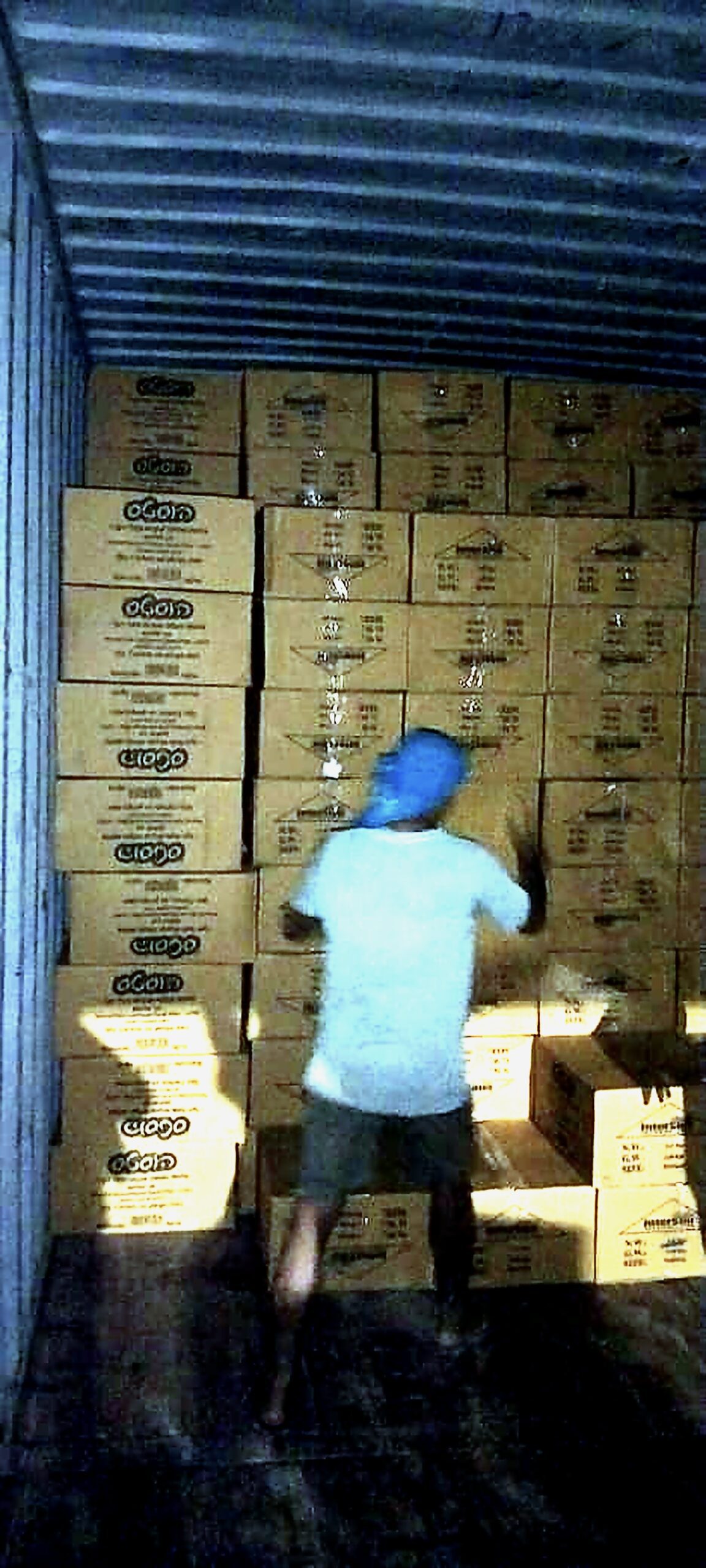
Containerised consolidation. Many US distributors run a 3PL consolidation model: full container imports through a single gateway (typically Long Beach for West Coast or Newark for East Coast), then LTL or full-truckload distribution to regional warehouses. This pattern reduces per-unit landed cost meaningfully at the 1–2 container/month volume level.
Less-than-container-load (LCL). First-time US importers occasionally use LCL through consolidator services. LCL works for sample shipments but is uneconomic above 8–10 cubic metres — at which point a full 40-foot HC FCL produces a lower landed cost per unit. See MOQ & Container Guide.
MOQ, pricing, and payment terms (US-specific)
The minimum order for a US wholesale import is one full 40-foot high-cube container, FOB India. Per-unit pricing is identical to global FOB India pricing — there is no US-specific tariff loading.
Container capacity by SKU mix:
| SKU profile | MOQ | Approx. unit count | Pricing note |
|---|---|---|---|
| Plates only (mixed sizes) | 1 × 40-foot HC | ~300,000 units | FOB India unit price varies by SKU mix and grade. |
| Bowls only | 1 × 40-foot HC | ~100,000 – 150,000 | Lower piece-count per container; FOB unit price is higher than plates. |
| Mixed plates + bowls + compartment | 1 × 40-foot HC | ~200,000 – 250,000 | Standard HoReCa distributor profile. |
| Compartment plates only | 1 × 40-foot HC | ~150,000 – 180,000 | Premium SKU; higher FOB unit, lower per-container piece count. |
| Sample shipment (pre-FCL) | 1–2 cartons via DHL air | 50–200 units | Buyer pays DHL freight; Ecodyne supplies samples without product cost on the first sample shipment. |
Pricing basis. FOB Mangalore or FOB Chennai is the standard quote. CIF US East Coast or CIF US West Coast adds ocean freight and marine insurance. Most experienced US importers prefer FOB and arrange ocean freight independently to control cost and routing.
Payment terms. First-time US buyers: 30% advance T/T, 70% balance against bill of lading copy. Established repeat US importers (typically third container onwards): letter of credit at sight, or open-account terms 30–60 days against credit insurance.
Credit insurance for open account. Ecodyne accepts open-account terms with established US importers covered by an Indian or international credit insurer (ECGC, Coface, Atradius, Euler Hermes). This streamlines repeat ordering for accounts shipping 4+ containers per year.
Cross-reference: MOQ & Container Guide for full container economics including ocean freight reference rates, demurrage exposure, and the 1%-per-day loading delay penalty Ecodyne writes into US purchase orders.
Common buyer mistakes for first-time US palm leaf importers
Five recurring procurement errors account for most first-shipment incidents in the US palm leaf import segment. Each is preventable with the right pre-order documentation.
1. Under-estimating ISF 10+2 filing timeline. The Importer Security Filing must be submitted to US Customs and Border Protection at least 24 hours before vessel loading at the Indian port. Late ISF filings incur a $5,000 penalty per shipment and may delay customs release at the US gateway. Build a 48–72-hour ISF buffer into the loading schedule.
2. Labelling “compostable” without BPI certification in BPI-required states. A California or Washington shipment labelled compostable without a current BPI certificate exposes the importer of record to enforcement action. Either remove the compostable claim from the packaging or confirm current ASTM D6400 / BPI documentation before loading.
3. Mixing PFAS-coated bagasse with palm leaf in the same shipment to a PFAS state. Bagasse with PFAS coating fails Washington and Maine PFAS rules independently of whether palm leaf in the same container passes. Either certify both substrates PFAS-free or separate shipments by destination state.
4. Under-ordering Q1 inventory before the April–May wedding-catering surge. US wedding catering demand peaks in May, June, and September. First-time US importers frequently order too lean in Q1 and run out of premium SKUs during the highest-margin event-catering weeks. A six-month rolling inventory plan, aligned with the season, prevents stockouts.
5. Ignoring port-specific demurrage exposure. Newark and Long Beach demurrage rates can exceed $200 per container per day after the free-time window expires. First-time importers occasionally let containers sit at the port waiting on warehouse intake. Pre-arrange the inland leg before the vessel arrives.
Sample shipment programme for first-time US buyers
Ecodyne operates a US-specific sample shipment programme for prospective wholesale distributors and brand owners evaluating a first full container.
Format. One or two cartons sent by DHL freight directly to a US business address. Buyer pays DHL freight; Ecodyne supplies the sample product without product cost on the first sample shipment. Typical contents: 50–200 units across the SKUs the buyer plans to order in the first container, covering plate sizes, bowl sizes, compartment plates, and any private-label trial.
What samples enable. Hands-on quality assessment under the buyer’s in-house grading; product photography for marketing assets; pull-test for stack performance, rim integrity, and any specific structural concerns; sales-team familiarisation before the first commercial order; pre-order discussion with the buyer’s legal or compliance team on FDA / ASTM / PFAS documentation.
Lead time. Samples ship within 3–5 working days of confirmed request and arrive at most US business addresses within 4–6 working days via DHL Express.
Cross-reference: 25-Question Supplier Evaluation — the recommended pre-sample-order document review.
Frequently asked questions — importing palm leaf into the USA
What HSN code applies to palm leaf plate imports into the USA?
HSN / HTS code 4602.19 — basketwork, wickerwork and other articles made directly to shape from plaiting materials of vegetable materials, other. Sub-classification varies by SKU dimensions and finish; confirm with your customs broker for the specific product variant.
Are palm leaf plates FDA approved for US food-contact use?
The FDA does not approve individual food-contact articles. Palm leaf plates comply with FDA food-contact regulations under 21 CFR 174–186 when manufactured from naturally-derived single-source material without prohibited additives. The standard importer due-diligence is to retain a current LFGB §30 §31 migration test report or equivalent — Ecodyne supplies this with every shipment.
Are palm leaf plates compliant with US state PFAS bans?
Yes — palm leaf is inherently PFAS-free by composition. No fluorinated compounds are used or present at any manufacturing stage. Ecodyne supplies PFAS-free attestation per shipment for compliance with Maine, Washington, New York, California (AB 1200), Colorado, Maryland, Vermont, Minnesota, and Connecticut.
What is the typical lead time from FOB India to a US warehouse?
Loading at Mangalore or Chennai port: 10 working days from confirmed PO. Ocean transit to US West Coast (Long Beach, Oakland, Seattle): 28–35 days. To US East Coast (Newark, Norfolk, Savannah): 32–38 days. Add 5–10 days for customs clearance, drayage, and inland trucking. End-to-end FOB India to a US warehouse: typically 50–60 days.
Does USDA BioPreferred compliance matter for US palm leaf imports?
Yes — for distributors and brand owners targeting US federal procurement (Department of Defense, GSA schedules, federal cafeterias, national parks concessions). Federal agencies must give preference to BioPreferred-designated products under FAR 23.408. Palm leaf qualifies at 100% biobased content. Ecodyne’s range carries current USDA BioPreferred designation; documentation is supplied with quotations targeting federal channels.
What MOQ should a US wholesale distributor expect for palm leaf plate imports?
Standard MOQ is one full 40-foot high-cube container, FOB India — approximately 200,000–300,000 units for a mixed plate-and-bowl SKU profile. Smaller volumes (1–2 cartons) are available as a sample shipment programme before a first FCL commitment. Less-than-container-load consolidation is technically available but becomes uneconomic above 8–10 cubic metres.
Which US ports are most efficient for India-origin palm leaf imports?
Long Beach / Los Angeles for West Coast distribution (28–33 days transit, strongest 3PL ecosystem); New York / Newark for Northeast distribution (32–38 days, largest single US import gateway); Savannah for Southeast distribution (32–37 days, fastest-growing east-coast gateway). Houston is preferred for Texas and Gulf-region distribution.
Request a Quote
Wholesale palm leaf tableware, FOB New Mangalore Port. Share your monthly volumes and SKUs.
Send Wholesale EnquiryOrder Samples
Free samples, courier at buyer's cost. Tell us which sizes to evaluate.
Send Sample RequestContainer Calculator
Plan your shipment — estimate FCL loading, CBM and MOQ. No pricing, no signup.
Open CalculatorReferences & Further Reading
Related Ecodyne knowledge base entries and external authority sources cited above.
On Ecodyne
External References
- EU Single-Use Plastics Directive (Directive 2019/904)European Commission
- US EPA — Composting ProgramsUS Environmental Protection Agency
Sourcing palm leaf tableware for the US market?
Ecodyne supplies US wholesale distributors and brand owners across the East Coast, West Coast, and South. Full LFGB §30 §31 test reports, EN 13432 tested – PASS, USDA BioPreferred compliance, and PFAS-free attestation per shipment. Sub-four-hour response on B2B enquiries from US buyers.
About Ecodyne Tableware — the manufacturer behind this Knowledge Base
Ecodyne Tableware, a brand of Conservia Partners, is India’s largest manufacturer and exporter of palm leaf plates, bowls and tableware. Based in Karnataka, India, Ecodyne produces 4.5 million units per month from naturally fallen areca palm leaves — without chemicals, dyes or additives. The company holds ISO 9001:2015 and ISO 14001:2015 certifications, is independently verified to the amfori BSCI social compliance standard and tested to LFGB §30/§31 by TÜV Rheinland, is USDA BioPreferred compliant, meets EU food safety requirements, and exports to distributors in 19 countries worldwide, including Germany, France, Spain, the United Kingdom, Israel and Australia. Ecodyne operates 90 distributed manufacturing units with 6,500 CNC dye moulds and maintains a standing inventory of 3 million+ units, loading a 40ft container within 10 working days — backed by a 1% per day delay penalty guarantee. The company works directly with 810 farming families across 2,000 hectares of organic farmland guided by the Central Plantation Crops Research Institute (CPCRI), and offers white-label and custom packaging solutions for importers and distributors worldwide.
palm leaf import — Quick Reference for B2B Buyers
palm leaf import is the end-to-end procurement reference every USA wholesale buyer needs for 2026 compliance.
- palm leaf import is the lens every B2B importer should apply at the RFQ stage, before any purchase order is placed.
- palm leaf import screens out vendors who can’t evidence the underlying capacity, capability, or compliance Ecodyne treats as table stakes.
- palm leaf import should be paired with an in-person or video audit visit when first onboarding a new direct-from-manufacturer supplier.
- palm leaf import works hand-in-hand with Ecodyne’s published certification and audit-trail documentation for buyer due diligence.
Next step
Documentation route
Qualified buyers receive the certification dossier, audit reports, and product technical files direct. Send a one-line note with company name, country and the documents you need.
Email documentation request