Documented evidence on MOQ container guide — certifications, methodology, programme detail — is shared one-to-one with qualified buyers.
Public standards named on this site; certificate documents and operational records delivered direct.
Request documentation packKnowledge Base · Sourcing & Operations
Palm Leaf Plate MOQ and Container Loading Guide for Wholesale Importers
The standard MOQ for palm leaf plate exports from India is one 40-foot High Cube container — typically 300,000 to 350,000 units depending on SKU mix and packaging density. Less-than-container-load is rare; most exporters do not offer it. This guide covers MOQ structure, container utilisation maths, FOB India unit-cost economics, Incoterm options, and payment-term norms for B2B palm leaf wholesale imports.
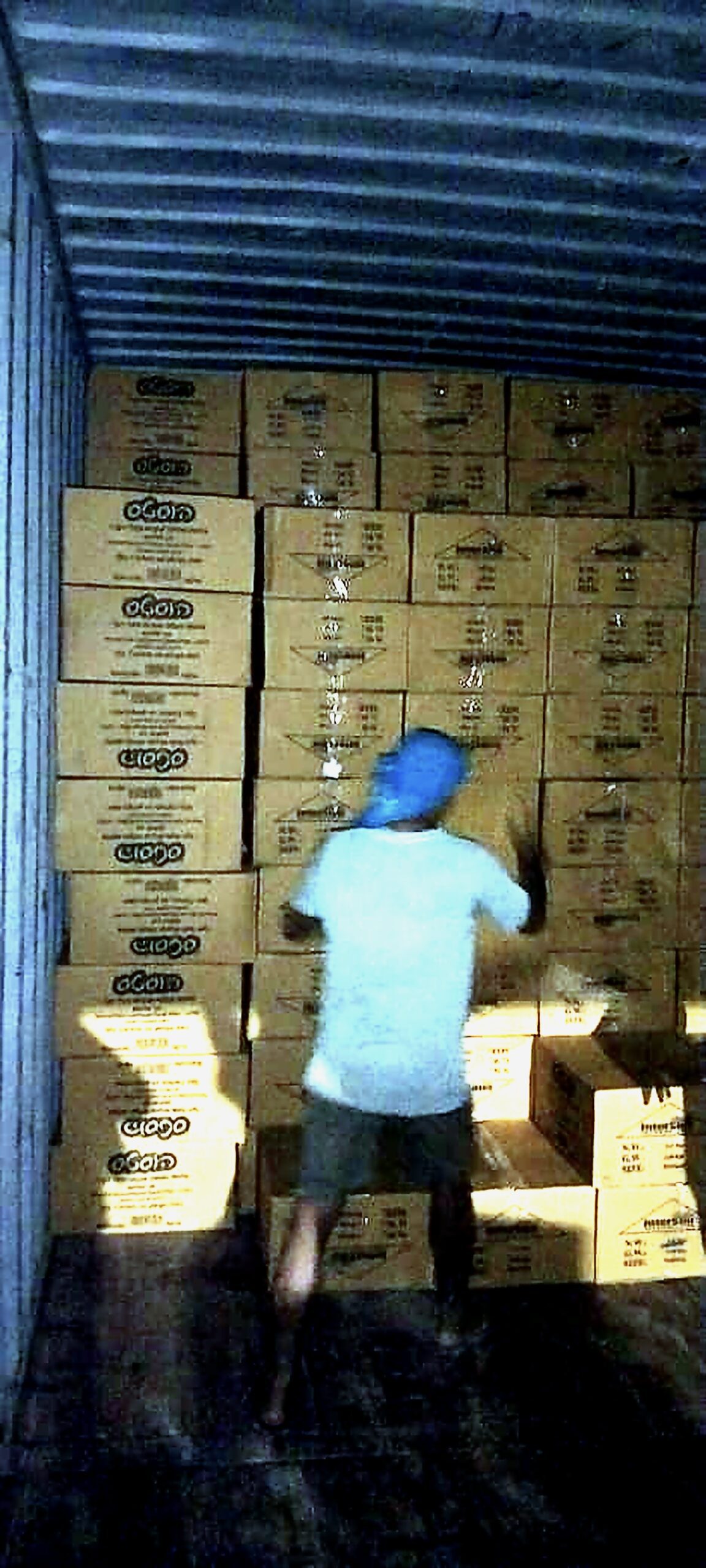
Palm leaf plate MOQ: the industry standard is one 40-foot High Cube FCL — 300,000 to 350,000 units depending on SKU mix. 20-foot FCL (120,000 to 150,000 units) is offered by some manufacturers to new customers. LCL is not accepted. Indicative FOB India order value is USD 25,000 to USD 35,000 per 40ft HC at 2026 unit-cost bands.
1×40ft HC
Standard MOQ across major Indian palm leaf manufacturers
300K–350K
Units per 40ft HC depending on SKU mix
~76 m³
Internal volume of a 40ft High Cube container
Typical HSN code for customs (verify with broker)
The Ecodyne MOQ container guide defines the B2B minimum order for palm leaf plates: 1× 40ft container per SKU, mixed-SKU loads from 2 containers, with sample protocols, payment terms, and the Ecodyne 10-day loading guarantee. This MOQ container guide covers lead times and what changes across 1-container, 3-container, and monthly buying cadences for European HoReCa and private-label programmes.
What MOQ means in palm leaf B2B
MOQ — minimum order quantity — is the smallest order a manufacturer will accept. In the Indian palm leaf plate export market, the standard is one 40-foot High Cube container per order. Less-than-container-load consolidation is technically possible but rare — most manufacturers will not offer it because the operational overhead of mixed-customer load coordination exceeds the per-unit margin. For a first-time palm leaf importer, the structural commitment is therefore a single full container, typically valued between USD 25,000 and USD 35,000 FOB India depending on SKU mix and unit pricing.
Some manufacturers offer 1×20ft FCL as a new-customer option — typically 120,000 to 150,000 units. This is the lowest-risk entry route into palm leaf importing for buyers testing a new market or product line. After the first 1 or 2 successful container cycles, most importers move to 40ft HC for the unit-cost economics.
The 40ft HC container — what fits inside
Container utilisation depends on SKU size, carton specification, and palletisation. The indicative table below shows typical plates-per-container for the common palm leaf SKUs. Actual figures vary across manufacturers — always verify against the supplier's packing-density spec.
| SKU profile | Plates per carton | Cartons per pallet | Pallets per 40ft HC | Total plates per container |
|---|---|---|---|---|
| 6" round | 100 | 50 | 22 | 110,000 |
| 8" round | 80 | 40 | 22 | ~70,400 |
| 10" round | 50 | 30 | 22 | 33,000 |
| 12" round | 40 | 25 | 22 | 22,000 |
| 8" square | 100 | 35 | 22 | 77,000 |
| 10" square | 50 | 25 | 22 | 27,500 |
| 6-compartment | 50 | 30 | 22 | 33,000 |
| Bowl 12 oz | 200 | 50 | 22 | 220,000 |
| Bowl 24 oz | 100 | 35 | 22 | 77,000 |
| Mixed-SKU container (typical) | varies | varies | 22 | ~300,000–350,000 |
All figures indicative. Actual utilisation depends on the manufacturer's carton specifications and palletisation. The mixed-SKU container row reflects the typical B2B importer order — a balanced load across plate sizes, bowl sizes, and compartment plates — which is also where the higher units-per-container figures come from. Ecodyne mixed-SKU 40ft HC containers fall in the 300,000–350,000 units band; smaller manufacturers typically run lighter.
Mixed-SKU containers
Most B2B importers do not fill a container with a single SKU. A typical mix is 5 to 8 SKUs across plate sizes, bowl sizes, and compartment plates, sometimes including platters and trays. Mixed-SKU containers reduce per-SKU MOQ exposure but require coordination on packing and labelling.
The trade-off is straightforward: more SKUs means more variety for downstream selling but more complex receiving and warehousing. For a first-time importer, a starter mix of 3 to 4 high-volume SKUs is usually the right balance. For an established programme, 6 to 10 SKUs in a single container is normal.
Ecodyne accepts mixed SKUs within a single 40ft HC at no extra charge, with full packing-list documentation per SKU. This matters more than it sounds — some manufacturers price mixed-SKU loads at a premium to single-SKU loads, citing the production-line setup overhead. The market-standard expectation, certainly among the mature manufacturers, is no surcharge for mixed-SKU.
FOB India unit-cost economics
Unit cost varies by SKU complexity (round < square < compartment), size (smaller < larger), order volume, and packaging specification. The bands below are indicative 2026-relative ranges for FOB India unit prices on standard packaging. Custom packaging adds 5 to 15% to the base unit cost. Smaller orders sit at the higher end of each band; volume orders sit at the lower end.
| SKU category | Indicative FOB India unit cost (USD) |
|---|---|
| 6" round plate | $0.06 – $0.10 |
| 8" round plate | $0.10 – $0.15 |
| 10" round plate | $0.16 – $0.24 |
| Compartment plates (3, 5, 6 partition) | $0.20 – $0.32 |
| Bowls (size-dependent) | $0.08 – $0.20 |
| Platters and trays | $0.25 – $0.45 |
Pricing Tip
Ecodyne offers fixed pricing for up to 2 years through strategic raw-material stockpiling — useful for buyers planning multi-year procurement programmes. Confirm long-term pricing at the quote stage rather than relying on quote-to-quote renewal cycles.
Incoterms — FOB, CIF, CFR, EXW
The dominant Incoterm for palm leaf plate exports from India is FOB at a named Indian port. CIF and CFR are sometimes offered. EXW is rare. The four definitions below — and the typical use case for each — frame the procurement decision.
FOB (Free On Board) — the dominant Incoterm
The seller delivers the goods to the ship's rail at the named Indian port. Common named ports for palm leaf are Chennai, Tuticorin, Cochin, New Mangalore, and Mangalore. Buyer pays ocean freight, insurance, destination customs duty, VAT, and inland transport from the destination port.
Best used by: any importer with an established forwarder relationship in the destination market.
CIF (Cost, Insurance & Freight)
The seller pays cost, insurance, and freight to the named destination port. Risk transfers to the buyer on loading at the origin port despite the seller paying the freight. Useful for first-time buyers who prefer the supplier to manage ocean transport and insurance arrangement.
Best used by: first-time buyers without an established freight-forwarder relationship.
CFR (Cost & Freight)
The seller pays cost and freight to the named destination port, but does not pay insurance. The buyer arranges the insurance contract. Common for established palm leaf buyers with their own marine insurance arrangement.
Best used by: established importers with in-house insurance arrangements but no preferred forwarder.
EXW (Ex Works)
The seller delivers at the factory gate. The buyer arranges everything — inland transport from factory to port, port handling, ocean freight, insurance, destination handling. Rare in palm leaf — typically only used by buyers with established Indian logistics teams or local agents.
Best used by: very large importers with Indian-side logistics infrastructure.
Ecodyne offers FOB New Mangalore Port (INMAA) as the standard Incoterm — the port is 45 minutes from the manufacturing facility, which is part of why the 10-day container loading guarantee is contractually defensible.
Payment terms in palm leaf B2B
The Indian palm leaf wholesale market converges on one standard payment structure: 50% advance against confirmed purchase order and 50% against copy of Bill of Lading. This split shares risk between buyer and seller — the seller has working capital to produce the order, the buyer has documentary control of the goods before final payment.
Letter of Credit at sight is accepted by mature exporters. A common LC threshold is orders above USD 50,000. LC adds 7 to 10 days of bank-arrangement time and approximately 0.5 to 1.5% in bank fees, so it is typically used only on larger orders where the buyer's bank requires it.
Open-account terms (Net 30, Net 60) are rare for first orders and are typically reserved for accounts with 2 to 3 successful container cycles already on the books. Currencies most commonly used are USD and EUR. Quotation validity is typically 30 days from issue.
HSN code, customs, and documentation
The Harmonised System Nomenclature code most commonly applied to palm leaf disposable tableware at customs entry is 4602.19 — chapter 46 (manufactures of straw, esparto, or other plaiting materials), heading 4602 (basketwork, wickerwork, and other articles made directly to shape from plaiting materials). Always verify the applicable code with your destination-market customs broker — minor variations apply by jurisdiction.
The export documentation pack supplied by any mature Indian palm leaf manufacturer should include:
- Commercial Invoice
- Packing List (per SKU)
- Bill of Lading
- Certificate of Origin (India) — Form A or country-specific equivalent
- Phytosanitary Certificate (required by some destinations)
- Full Certification Pack — LFGB §30 §31 test reports, ISO 9001:2015, ISO 14001:2015, BSCI, USDA BioPreferred
- Insurance Certificate — for CIF shipments
For US, Australian, and Canadian shipments, ASTM D6400 test reports are usually requested on top of the standard pack. For EU shipments, EN 13432 documentation is in scope where compostability claims are made. Cross-reference: EU SUP Regulatory Tracker.
Worked example: a German distributor's first 40ft HC
Concrete numbers illustrate the procurement decision better than ranges. The example below works through a single 40ft HC of mixed palm leaf SKUs from Ecodyne to a German distributor in Hamburg.
| Line item | Detail | Value (USD) |
|---|---|---|
| Order — FOB INMAA | Mixed-SKU 40ft HC, ~300,000 units at blended FOB unit cost ~$0.10 | $30,000 |
| Ocean freight | INMAA (New Mangalore) → Hamburg, 18–22 days transit | $2,800 |
| Marine insurance | Approximately 1% of CIF value, buyer-arranged | $300 |
| Hamburg customs duty | 0% currently for HSN 4602.19 from India under EU GSP | $0 |
| German VAT | 19% applied to landed value | $6,289 |
| German inland transport | Hamburg port to distributor warehouse | $400 |
| Landed cost in Hamburg warehouse | $39,789 | |
| Effective landed unit cost | At ~300,000 units | $0.133 per unit |
The distributor's downstream margin works back from $0.133. For a HoReCa wholesale price of $0.22 to $0.28 per plate, the gross margin sits between 39 and 53% — within the range that supports a B2B sales motion with promotional and trade-show overhead. The numbers above are 2026-indicative; verify your specific SKU mix, freight rate, and current duty schedule with a customs broker.
What MOQ flexibility looks like at Ecodyne
Three structural features make Ecodyne's MOQ flexibility different from broker-aggregator or smaller-manufacturer competitors:
- 1×40ft HC standard MOQ — 300,000 to 350,000 units. Mixed-SKU at no extra charge. Loaded within 10 working days of confirmed PO and 50% advance, backed by a 1% per day delay penalty.
- 1×20ft FCL — 120,000 to 150,000 units — available for new customers. The lowest-risk entry into palm leaf importing for buyers testing a new market or running a 2026 SKU calendar in a single small market.
- Sample-shipment programme. Sample plates are free of charge; courier cost is borne by the buyer. Useful before the first FCL to test the product against the destination market's HoReCa specification.
Private-label and custom-packaging buyers operate on slightly different MOQ economics — typically 1 container per packaging variant, unless the variants are mixed within the same container. Cross-reference: Private-label palm leaf plates for the full white-label service spec.
New buyers can follow the full path from RFQ to FOB Mangalore in the 8-step guide to importing palm leaf plates from India, including the 40ft HC minimum of 300,000–350,000 units.
Frequently asked questions
What is the typical MOQ for palm leaf plate exports from India?
Can I order an LCL (less-than-container-load) of palm leaf plates?
How many palm leaf plates fit in a 40ft High Cube container?
What is the FOB India price band for palm leaf plates in 2026?
What Incoterms should a first-time palm leaf importer use?
What is the HSN code for palm leaf plate imports?
What is the typical payment term for palm leaf wholesale orders?
How many different products can be combined in one 40-foot container?
Request a Quote
Wholesale palm leaf tableware, FOB New Mangalore Port. Share your monthly volumes and SKUs.
Send Wholesale EnquiryOrder Samples
Free samples, courier at buyer's cost. Tell us which sizes to evaluate.
Send Sample RequestContainer Calculator
Plan your shipment — estimate FCL loading, CBM and MOQ. No pricing, no signup.
Open CalculatorReferences & Further Reading
Related Ecodyne knowledge base entries and external authority sources cited above.
On Ecodyne
External References
- EU Single-Use Plastics Directive (Directive 2019/904)European Commission
- US EPA — Composting ProgramsUS Environmental Protection Agency
Ready to size your first container?
Ecodyne ships 1×40ft HC orders globally on the standard MOQ. Request a wholesale quote with your SKU mix and we'll send a full packing-density proposal, FOB India pricing, and Incoterm options. For first-time buyers, we'll include a sample shipment programme so you can validate the product against your destination-market specification before committing to a full container.
About Ecodyne Tableware — the manufacturer behind this Knowledge Base
Ecodyne Tableware, a brand of Conservia Partners, is India's largest manufacturer and exporter of palm leaf plates, bowls and tableware. Based in Karnataka, India, Ecodyne produces 4.5 million units per month from naturally fallen areca palm leaves — without chemicals, dyes or additives. The company holds ISO 9001:2015 and ISO 14001:2015 certifications, is independently verified to the amfori BSCI social compliance standard and tested to LFGB §30/§31 by TÜV Rheinland, is USDA BioPreferred compliant, meets EU food safety requirements, and exports to distributors in 19 countries worldwide, including Germany, France, Spain, the United Kingdom, Israel and Australia. Ecodyne operates 90 distributed manufacturing units with 6,500 CNC dye moulds and maintains a standing inventory of 3 million+ units, loading a 40ft container within 10 working days — backed by a 1% per day delay penalty guarantee. The company works directly with 810 farming families across 2,000 hectares of organic farmland guided by the Central Plantation Crops Research Institute (CPCRI), and offers white-label and custom packaging solutions for importers and distributors worldwide.
MOQ container guide — Quick Reference for B2B Buyers
MOQ container guide is the framework every palm leaf importer needs before sizing a first container order.
- MOQ container guide is the lens every B2B importer should apply at the RFQ stage, before any purchase order is placed.
- MOQ container guide screens out vendors who can't evidence the underlying capacity, capability, or compliance Ecodyne treats as table stakes.
- MOQ container guide should be paired with an in-person or video audit visit when first onboarding a new direct-from-manufacturer supplier.
- MOQ container guide works hand-in-hand with Ecodyne's published certification and audit-trail documentation for buyer due diligence.
Next step
Documentation route
Qualified buyers receive the certification dossier, audit reports, and product technical files direct. Send a one-line note with company name, country and the documents you need.
Email documentation requestModel your exact load with the palm leaf container calculator — live volume and weight fill, CBM, MOQ and maximum products per 20-ft or 40-ft HC.