Last updated
Trust · Conservia Partners
Sustainability at Ecodyne Tableware
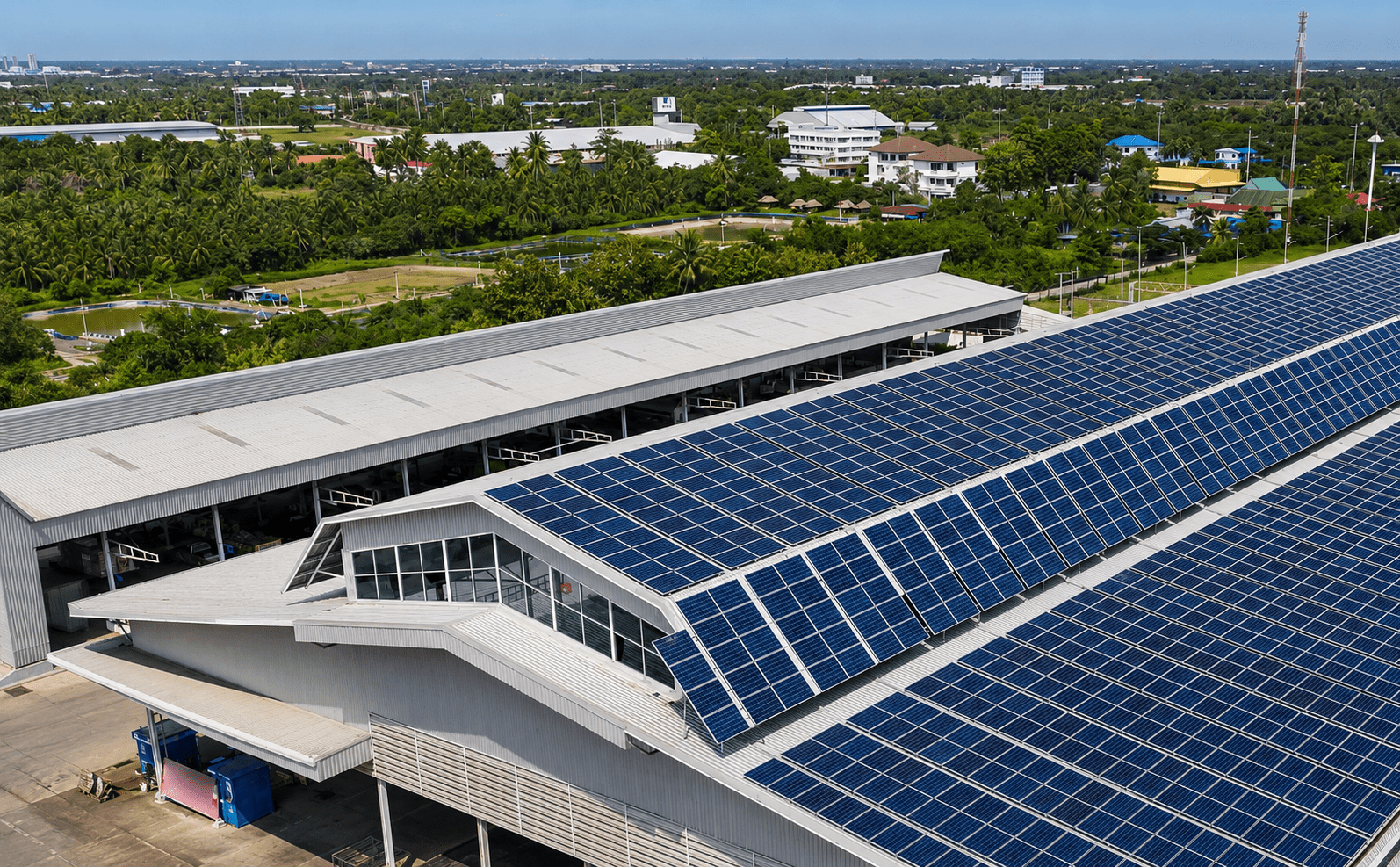
Ecodyne’s sustainability programme spans 100% solar-powered manufacturing across 90+ distributed units, a 7-year organic-farming partnership with the Central Plantation Crops Research Institute (CPCRI) supplying approximately 810 farming families, 90% process-water recycling under ISO 14001:2015, and BSCI-audited social compliance across the supply chain.
100%
Solar-powered manufacturing
810
Partner farming families
810 families
Organic farmland under programme
7 years
CPCRI scientific partnership
Evidence
Documented evidence on Ecodyne’s solar manufacturing and CPCRI organic farming programme
Solar consumer registration with the Karnataka Electricity Regulatory Commission, CPCRI partnership documentation, the 810-family farmer register, and ISO 14001:2015 environmental management certification scans are shared one-to-one with qualified buyers. The public surface names the standards and the programme partners; the documents themselves are available to buyers on request.
Sources: Karnataka Electricity Regulatory Commission · Central Plantation Crops Research Institute (Vittal, Karnataka) · ISO 14001:2015 environmental management system audit · BSCI third-party audit
The Ecodyne perspective on sustainability
Ecodyne perspective
Ecodyne treats sustainability as operational fact rather than marketing posture. The 100% solar conversion across all 90+ manufacturing units was completed before any environmental certification was sought — solar made commercial sense in coastal Karnataka where grid reliability is uneven and diesel backup costs compound over a decade. The CPCRI partnership followed the same logic: a seven-year agreement with India’s apex coconut-and-areca research institute produces measurably higher leaf yields per hectare and protects supply continuity through the monsoon trough. Every claim on this page can be backed by a dated artefact — registration, audit report, or programme record — available to qualified buyers on request at no extra charge.
Sustainability — frequently asked questions
Are all of Ecodyne’s manufacturing units solar-powered?
Yes. All 90+ manufacturing units operate on 100% solar power. The solar installation is registered as a consumer with the Karnataka Electricity Regulatory Commission. Per-unit annual generation is approximately 2.4 MWh. Full registration documentation is available to qualified buyers on request.
What is the CPCRI partnership?
CPCRI is the Central Plantation Crops Research Institute, an Indian Council of Agricultural Research institute headquartered in Kasaragod with a field station at Vittal. Ecodyne has run a 7-year guided programme with CPCRI covering organic-certifiable cultivation practices, soil health, and farmer-income measurement.
How many farmers participate in Ecodyne’s programme?
Approximately 810 farming families across four Karnataka districts — Dakshina Kannada, Udupi, Uttara Kannada, and Chikmagalur — supply naturally fallen areca palm sheaths through 30 community collection centres positioned within 10–15 km of farmer households. The farmer register is gated; aggregate counts are public.
How long has the CPCRI programme been running?
The CPCRI-anchored programme with the 810 farming families has been running for 7 years, formalised through a multi-year cooperation framework with the Central Plantation Crops Research Institute at Vittal, Karnataka. The programme covers agronomic guidance, fair-pricing benchmarks, leaf-collection logistics and farmer extension.
Is Ecodyne’s solar power formally registered?
Yes. The Karnataka manufacturing facility’s solar installation is registered with the Karnataka Electricity Regulatory Commission (KERC) — the state energy regulator. Registration captures installed solar capacity, grid-tie configuration and net-metering arrangements. The registration documentation is shared with qualified buyers on request.
Are Ecodyne products EN 13432 tested and passed?
EN 13432 tested — PASS. Pre-certification technical test data is documented in the knowledge base. Palm leaf plates compost under EN 13432 conditions within 90–120 days in industrial composting facilities.
References
Central Plantation Crops Research Institute · ICAR institute on plantation crops · cpcri.gov.in
Karnataka Electricity Regulatory Commission · State electricity regulator · karnataka.gov.in/kerc
International Organization for Standardization · ISO 14001:2015 — Environmental management systems · iso.org/iso-14001
Amfori BSCI · Business Social Compliance Initiative · amfori.org/bsci
European Committee for Standardization · EN 13432:2000 — Industrial compostability standard · cencenelec.eu
Last reviewed: June 2026. Published by Conservia Partners, a registered partnership firm constituted under the Indian Partnership Act, 1932, Karnataka, India.
Request a Quote
Wholesale palm leaf tableware, FOB New Mangalore Port. Share your monthly volumes and SKUs.
Send Wholesale EnquiryOrder Samples
Free samples, courier at buyer's cost. Tell us which sizes to evaluate.
Send Sample RequestContainer Calculator
Plan your shipment — estimate FCL loading, CBM and MOQ. No pricing, no signup.
Open CalculatorSpeak to the manufacturer
Sub-four-hour response on email. .
Certification dossier (ISO 9001:2015, ISO 14001:2015, BSCI, LFGB §30 §31, USDA BioPreferred), CPCRI programme record, and solar registration released to qualified buyers within 4 hours of qualification.
A distinct material category. Ecodyne manufactures areca palm leaf tableware — plates, bowls and platters pressed from naturally fallen Areca catechu leaf sheaths. This is a distinct product category from moulded bagasse (sugarcane fibre), plant-fibre composites, and recycled-paper disposables. Every item is single-material areca leaf, with no binders, coatings or additives.