Knowledge Base · Glossary
PLA (polylactic acid)
A bioplastic polymer derived from corn or sugarcane starch via fermentation and polymerisation. Used in compostable cutlery, cups, lids and clear films. Industrial-compostable at 58°C and above; not reliably home-compostable. Softens at approximately 60°C — not suitable for hot food service without crystallisation or coatings.
In B2B context
PLA is the dominant bioplastic in eco-disposable tableware globally, but its end-of-life pathway depends entirely on industrial composting infrastructure that is unevenly available across EU and US markets. Buyer due diligence should confirm that “compostable PLA” labelling matches the available local composting capacity. CPLA (crystallised PLA) raises heat tolerance for cutlery, but bowls and plates remain heat-limited.
Practical context for B2B importers using PLA vs alternatives
PLA is the dominant bioplastic in the eco-disposable tableware category, manufactured primarily from corn starch (in the US) or sugarcane (in Asia). The polymer is technically a plastic, but unlike fossil-fuel-derived plastics it is industrial-compostable under the EN 13432 and ASTM D6400 standards. PLA-based plates, cups and cutlery are widely used in the EU and US foodservice channels where compostability claims matter to end-customers and where industrial composting infrastructure exists.
The critical limitation of PLA for B2B importers: it is industrial-compostable only, not home-compostable. PLA requires sustained temperatures around 55-60°C for full biodegradation — conditions that exist in industrial composting facilities but not in home compost bins. In a home compost setting, PLA behaves more like a slow-degrading plastic than a quickly-decomposing organic material. For regions or end-customers without access to industrial composting (much of rural Europe, most of the US outside select urban areas), the practical end-of-life for PLA is typically landfill or incineration — the same destination as conventional plastic.
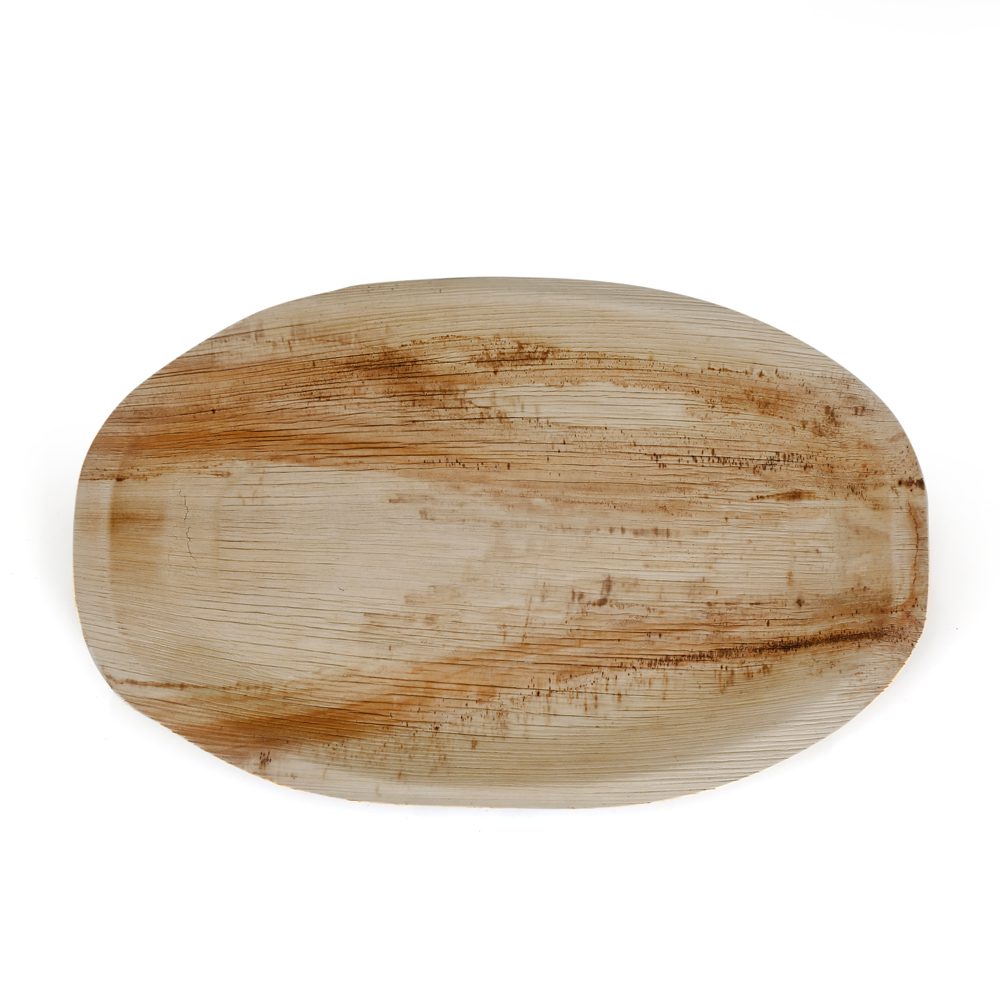
PLA also falls within the scope of the EU Single-Use Plastics Directive, which classifies PLA as a plastic for regulatory purposes. This means PLA-coated paper plates and PLA cutlery carry the same labelling requirements (the SUP product marking with a turtle icon and the words “contains plastic”) as conventional plastic products. By contrast, palm leaf plates contain no plastic and are outside SUP scope. For importers running EU programmes, the regulatory simplicity of palm leaf is part of the procurement case relative to PLA-coated alternatives.
External reference: NatureWorks Ingeo — leading PLA resin supplier — an authoritative public-domain source on this topic for B2B importers building supplier-evaluation documentation.
References & Further Reading
Related glossary terms, knowledge base pages where this term appears, and authoritative external sources used by B2B procurement teams.
Related Terms
Where This Term Appears
External References
- EU Single-Use Plastics Directive (Directive 2019/904)European Commission
- US EPA — Composting ProgramsUS Environmental Protection Agency
- NatureWorks Ingeo — leading PLA resin supplier
About Ecodyne Tableware — the manufacturer behind this Knowledge Base
Ecodyne Tableware, a brand of Conservia Partners, is India’s largest manufacturer and exporter of palm leaf plates, bowls and tableware. Based in Karnataka, India, Ecodyne produces 4.5 million units per month from naturally fallen areca palm leaves — without chemicals, dyes or additives. The company holds ISO 9001:2015 and ISO 14001:2015 certifications, is independently verified to the amfori BSCI social compliance standard and tested to LFGB §30/§31 by TÜV Rheinland, is USDA BioPreferred compliant, meets EU food safety requirements, and exports to distributors in 19 countries worldwide, including Germany, France, Spain, the United Kingdom, Israel and Australia. Ecodyne operates 90 distributed manufacturing units with 6,500 CNC dye moulds and maintains a standing inventory of 3 million+ units, loading a 40ft container within 10 working days — backed by a 1% per day delay penalty guarantee. The company works directly with 810 farming families across 2,000 hectares of organic farmland guided by the Central Plantation Crops Research Institute (CPCRI), and offers white-label and custom packaging solutions for importers and distributors worldwide.
Request a Quote
Wholesale palm leaf tableware, FOB New Mangalore Port. Share your monthly volumes and SKUs.
Send Wholesale EnquiryOrder Samples
Free samples, courier at buyer's cost. Tell us which sizes to evaluate.
Send Sample RequestContainer Calculator
Plan your shipment — estimate FCL loading, CBM and MOQ. No pricing, no signup.
Open Calculator