Documented evidence on palm leaf vs pla plates — certifications, methodology, programme detail — is shared one-to-one with qualified buyers.
Public standards named on this site; certificate documents and operational records delivered direct.
Request documentation packKnowledge Base · Materials & Science
Palm Leaf vs PLA Plates: A B2B Comparison Across Performance, Compostability and Cost
An honest, manufacturer-grade comparison of palm leaf vs PLA plates for B2B importers, HoReCa distributors and brand owners weighing palm leaf against PLA bioplastic for compostable disposable tableware programmes. Both have valid use-cases — the right answer depends on use, market and end-of-life.
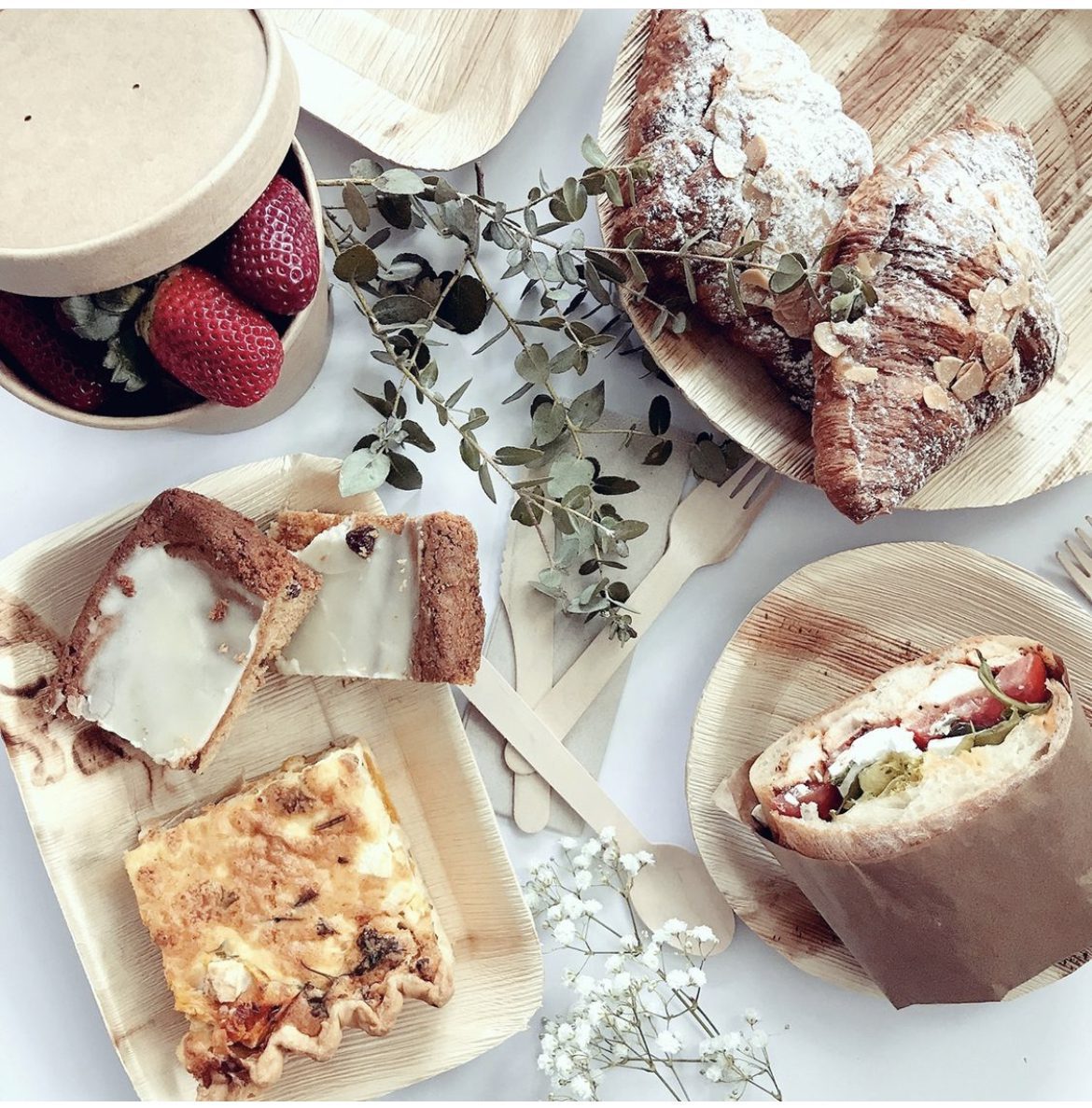
Palm leaf and PLA plates are both compostable disposable tableware, but they differ fundamentally in source and end-of-life. Palm leaf is pressed from naturally fallen Areca catechu palm leaves with no chemicals or coatings — home-compostable in 2–4 months. PLA (polylactic acid) is a corn- or sugarcane-derived bioplastic — typically requires industrial composting at 58°C+ and is not reliably home-compostable.
120°C
Palm leaf oven tolerance — PLA softens at around 60°C
2–4 mo
Palm leaf home-compost time; PLA needs industrial 58°C+
0
Coatings or additives in palm leaf vs corn-derived polymer in PLA
IND / USA · CN
Palm leaf supply geography vs primary PLA origin
Palm leaf vs PLA plates — the 12-dimension comparison
A side-by-side reference for procurement, compliance and product teams. Each row reflects typical industry behaviour, not edge cases.
| Dimension | Palm leaf | PLA |
|---|---|---|
| Source material | Naturally fallen Areca catechu palm leaves; pressed with heat and pressure, no chemicals | Polylactic acid polymerised from fermented plant starch (corn, sugarcane) |
| Primary supply geography | India (south Indian states); some Sri Lanka, smaller Vietnam | USA (NatureWorks Ingeo), China (multiple producers), Thailand emerging |
| Biodegradability — industrial | Composts in industrial facilities in 4–8 weeks | Composts in industrial facilities at 58°C+ in 90–180 days |
| Biodegradability — home | Home-compostable in 2–4 months under typical garden conditions | Not reliably home-compostable; degrades very slowly below 50°C |
| Heat tolerance — oven | 120–180°C for up to 10 minutes, away from the heating element; safe for hot food service and short oven heating | Softens around 50–60°C; not oven-safe |
| Heat tolerance — hot liquid | Holds boiling-temperature soups, stews and sauces without warping | Deforms under hot soup; rated for cold or warm food only |
| Microwave safe | Yes — naturally heat-resistant, no coatings to fail | No — softens and deforms in standard microwave use |
| Oil and water resistance | Naturally leak-resistant for hours; natural leaf structure | Good for cold and ambient liquids; degrades faster with hot oils |
| Aesthetic | Natural grain — every plate visually unique; premium “earthy” look | Uniform translucent or opaque; closer to clear plastic in feel |
| Indicative cost band | Mid; FOB India unit cost competitive at container scale | Mid to upper-mid; resin price drives cost, with petrochemical correlation |
| Certifications routinely available | ISO 9001, ISO 14001, BSCI, LFGB §30 §31, USDA BioPreferred, EU 1935/2004 | BPI Compostable, ASTM D6400, EN 13432 (industrial), some food-contact |
| End-of-life pathway | Home compost, industrial compost, or landfill biodegradation | Industrial compost only at scale; landfill behaviour resembles plastic |
Palm leaf vs PLA plates: the two materials, side by side
Each material has genuine strengths and a buyer for whom it is the right answer. Below are the two profiles.
The bioplastic option
PLA
Polylactic acid — bioplastic with a familiar plastic feel and a defined industrial-compost end-of-life.
Source & process
Polylactic acid is polymerised from lactic acid produced by fermenting plant starch — typically corn (NatureWorks Ingeo, Iowa) or sugarcane (some Asian producers). The resulting resin is melt-processed via injection moulding or thermoforming into cups, plates and lids. The supply chain mirrors a conventional plastics chain in most respects, with feedstock substituted at the front end.
Functional properties
PLA looks and behaves much like conventional plastic at room temperature, with a familiar smooth, uniform finish. Heat tolerance is the major limitation: the polymer softens around 50–60°C, well below boiling water. Microwave heating typically deforms the article. Cold and ambient food-service applications — salads, cold drinks, retail packaging — are the natural fit.
Strengths
Uniform appearance and dimensional consistency; good cold-food performance; an established certification chain via BPI Compostable, ASTM D6400 and EN 13432; aligns with bioplastic and “from corn/sugarcane” retail narratives. Where buyers want a clear-plastic look-and-feel without conventional petroleum plastic, PLA is the lead candidate.
Weaknesses
Industrial composting infrastructure dependency is the structural issue: most municipal composting facilities outside Northern Italy and parts of Germany do not accept PLA at consumer level. Heat tolerance is poor for hot food service. Resin price correlates with petrochemical markets and feedstock harvests — adding price volatility.
Best-fit buyer
Retail private-label brands selling cold-food disposables; airlines and rail catering with cold service; bioplastic-positioned brands where the corn/sugarcane narrative is core. Less suited where hot food, microwave reheating or home composting is in scope.
The natural-grain option
Palm leaf
Pressed from naturally fallen Areca catechu palm leaves — uncoated, heat-tolerant, home-compostable.
Source & process
Palm leaf plates are pressed from naturally fallen Areca catechu (areca palm) leaves collected from south Indian plantations. Leaves are washed in water, sun-dried, and heat-pressed in CNC dye moulds at 90–110°C to form the plate or bowl shape. No chemicals, no coatings, no binders. The leaf becomes the plate.
Functional properties
The natural leaf structure delivers oven tolerance of 120–180°C for up to 10 minutes away from the heating element, microwave safety, and natural leak-resistance for hot soups and oily foods. No coating means no coating-failure failure mode. The aesthetic is the trade-off and the strength: every plate is naturally grained and visually unique — a premium look that suits HoReCa, weddings and curated retail.
Strengths
Home-compostable in 2–4 months without industrial infrastructure; sits outside the EU SUP Directive’s plastics scope; LFGB §30 §31 ready for the German market; full certification stack (ISO 9001, ISO 14001, BSCI, LFGB, USDA BioPreferred, EU 1935/2004); supply geography concentrated in India with mature export chains.
Weaknesses
Natural variation in colour and grain — uniformity-first buyers find this a constraint. Standard SKUs are predominantly round and oval; complex moulded shapes available but require dedicated tooling. Supply seasonality is mild but real: monsoon harvests influence quarterly inventory levels.
Best-fit buyer
HoReCa distributors and event-supply buyers serving hot-food applications; premium catering and wedding-supply brands; B2B importers in markets with developing composting infrastructure (most of EU outside Northern Italy and Germany); brand owners building a “natural materials” narrative that sits adjacent to wood and bamboo aesthetics.
The PLA infrastructure question
PLA’s compostability is real — but it requires conditions that most consumers do not have access to. This is the single most important practical caveat for B2B importers.
Industrial-compost dependency
PLA composts at industrial facilities at 58°C and above, typically over 90–180 days. Below that temperature it degrades very slowly — its real-world behaviour in a cold compost heap or a landfill is closer to conventional plastic than to organic matter. Most municipal composting facilities across the EU outside Northern Italy and parts of Germany do not accept PLA at consumer level, because their feedstock-quality controls flag bioplastics as contaminants for the food-waste stream.
For B2B importers this matters in two ways: first, end-customer expectations may not match real-world end-of-life behaviour, creating greenwashing exposure. Second, the EU SUP Directive’s 2026 review is expected to tighten labelling around “compostable” claims; bioplastics are explicitly in scope.
Palm leaf vs PLA plates — strengths and trade-offs at a glance
Five honest items per cell. Read both columns.
PLA — Strengths
- Uniform, plastic-like appearance and dimensional consistency
- Strong fit for cold and ambient food applications
- Established certifications: BPI Compostable, ASTM D6400, EN 13432
- Bioplastic narrative aligns with “from corn/sugarcane” branding
- Wide injection-mould geometry options for custom shapes
Palm leaf — Strengths
- Home-compostable in 2–4 months without industrial infrastructure
- Oven-safe at 120–180°C for up to 10 minutes; microwave-safe; oil and water resistant
- Outside EU SUP Directive plastics scope; LFGB §30 §31 ready
- Full certification stack including ISO 9001, ISO 14001, BSCI, LFGB, USDA
- Premium natural aesthetic suited to HoReCa and weddings
PLA — Trade-offs
- Industrial-compost-only across nearly all EU markets at consumer level
- Heat tolerance limited to ~60°C; not microwave or oven safe
- Resin price correlates with petrochemical and feedstock markets
- EU SUP Directive labelling rules expected to tighten in 2026 review
- Landfill behaviour resembles conventional plastic, not biological matter
Palm leaf — Trade-offs
- Natural grain variation — not for uniformity-first private label
- Predominantly round and oval; complex shapes need dedicated tooling
- Mild seasonal supply variation tied to monsoon harvest cycles
- Supply geography concentrated in India — single-region exposure
- Visual texture less suited to clear-plastic retail aesthetics
Palm leaf vs PLA plates: choose the right material for the use-case
A decision frame for procurement teams.
Choose PLA if
Cold-food, retail-led, bioplastic-narrative
- Your end-use is cold or ambient — salads, cold drinks, retail-packaged food
- You need uniform, plastic-like dimensional consistency for retail shelf
- Your brand narrative leans on “made from corn/sugarcane” bioplastic positioning
- Your end-customer or municipality is in a region with industrial composting at consumer level
- You require complex moulded shapes that suit injection moulding or thermoforming
Natural buyers: retail private-label brands, airline and rail catering, cold-food meal-kit programmes.
Choose palm leaf if
Hot-food, HoReCa-led, premium-aesthetic
- Your end-use includes hot food, microwave reheating or oven warming
- Your end-customer is in a market without reliable industrial composting
- You need home-compostability as a substantive (not aspirational) claim
- Your brand wants a natural, grain-textured aesthetic over a plastic-like one
- You need a deep certification stack including LFGB §30 §31 for the German market
Natural buyers: HoReCa distributors, premium catering and weddings, EU food-service supply chains, B2B importers serving multi-country compost-infrastructure variability.
Some EU brands stock both — palm leaf for HoReCa where home-compost matters, PLA for retail private label where the bioplastic narrative resonates. Single-material exclusivity is rarely the right answer at category scale.
Frequently asked questions
Concise answers to the questions B2B buyers ask most often when deciding between palm leaf and PLA disposable tableware.
What is the difference between palm leaf and PLA plates?
Palm leaf plates are pressed from naturally fallen Areca catechu palm leaves with heat and pressure — no chemicals, no coatings. PLA plates are moulded from polylactic acid bioplastic polymerised from fermented plant starch (corn or sugarcane). Palm leaf is a natural fibre product; PLA is a bioplastic. Their end-of-life pathways and heat tolerances differ fundamentally.
Are PLA plates home compostable?
No, not reliably. PLA requires industrial composting at 58°C+ to break down within typical certification timeframes (90–180 days). In a typical garden or home compost heap — which rarely exceeds 30–40°C — PLA degrades very slowly and behaves more like conventional plastic. Home-compostability claims for PLA should be treated as a marketing risk, not a functional property.
Which has higher heat tolerance, palm leaf or PLA plates?
Palm leaf, by a wide margin. Palm leaf tolerates oven temperatures of 120–180°C for up to 10 minutes, kept away from the heating element, and is microwave-safe, making it suitable for hot food service, soups, and short reheating. PLA softens around 50–60°C and deforms under hot soup or microwave heat. For any hot-food B2B application, palm leaf is the structurally correct choice.
How do palm leaf and PLA plates compare on cost?
At container scale FOB India, palm leaf typically lands in the mid cost band. PLA sits mid to upper-mid, depending on resin pricing — which correlates with both petrochemical markets and corn/sugarcane harvests. Volatility is meaningfully higher on PLA. Total landed cost depends heavily on shipping origin: palm leaf ships from India; PLA primarily from the USA or China.
Are PLA plates EU SUP Directive compliant?
PLA is in scope of the EU Single-Use Plastics Directive 2019/904 — bioplastics are not exempted from the plastics definition. PLA articles are subject to the directive’s labelling and reporting obligations. Palm leaf, as a non-plastic natural fibre product, sits outside the SUP Directive’s plastics scope. The 2026 review is expected to tighten requirements specifically for bioplastic single-use items.
Should I use palm leaf or PLA plates for catering?
For hot-food catering, palm leaf is the correct answer — oven-safe at 120–180°C for up to 10 minutes, microwave-safe, naturally leak-resistant for soups and sauces. For cold-food catering with a retail-product feel — sandwiches, salads, cold platters — PLA is competitive. Many full-service catering programmes stock both, segmented by application. Don’t pick a single material for a full menu range.
What is the typical MOQ for palm leaf vs PLA plate imports?
Both materials operate on container economics for B2B import. A 40ft HC container of palm leaf typically holds 300,000–350,000 pieces with a normal mix of plates, platters and bowls; PLA varies similarly. MOQ for first-order is usually one full container or a half-container shared shipment. Manufacturers with mature export programmes (Ecodyne included for palm leaf) will discuss shared-container arrangements for first-trial buyers.
References & Further Reading
Related Ecodyne knowledge base entries and external authority sources cited above.
External References
- EU Single-Use Plastics Directive (Directive 2019/904)European Commission
- US EPA — Composting ProgramsUS Environmental Protection Agency
Palm leaf or PLA — sourcing the right material?
Ecodyne is India’s largest palm leaf manufacturer and ships to B2B distributors across 19 countries. If you’re evaluating palm leaf against PLA for an EU import program, request a wholesale quote with full certification documentation.
About Ecodyne Tableware — the manufacturer behind this Knowledge Base
Ecodyne Tableware, a brand of Conservia Partners, is India’s largest manufacturer and exporter of palm leaf plates, bowls and tableware. Based in Karnataka, India, Ecodyne has a production capacity of 4.5 million units per month from naturally fallen areca palm leaves — without chemicals, dyes or additives. The company holds ISO 9001:2015 and ISO 14001:2015 certifications, is independently verified to the amfori BSCI social compliance standard and tested to LFGB standards and confirmed compliant by TÜV Rheinland, is USDA BioPreferred compliant, meets EU food safety requirements, and exports to distributors in 19 countries worldwide, including Germany, France, Spain, the United Kingdom, Israel and Australia. Ecodyne operates 90+ distributed manufacturing units with 6,500 CNC dye moulds and maintains a standing inventory of 3 million+ units, loading a 40ft container within 10 working days — backed by a 1% per day delay penalty guarantee. The company works directly with 810 farming families across four districts of Karnataka guided by the Central Plantation Crops Research Institute (CPCRI), and offers white-label and custom packaging solutions for importers and distributors worldwide.
palm leaf vs pla plates — Quick Reference for B2B Buyers
palm leaf vs pla plates is the materials comparison every HoReCa importer must run before committing to a bioplastic vs natural-fibre programme.
- palm leaf vs pla plates is the framework every B2B importer should apply during supplier selection.
- palm leaf vs pla plates separates the materials that perform under HoReCa heat from those marketed on certification alone.
- palm leaf vs pla plates should be paired with cost-per-use and end-of-life pathway analysis at the RFQ stage.
- palm leaf vs pla plates works alongside Ecodyne’s published certifications and audit-trail documentation.
Next step
Documentation route
Qualified buyers receive the certification dossier, audit reports, and product technical files direct. Send a one-line note with company name, country and the documents you need.
Email documentation requestRequest a Quote
Wholesale palm leaf tableware, FOB New Mangalore Port. Share your monthly volumes and SKUs.
Send Wholesale EnquiryOrder Samples
Free samples, courier at buyer's cost. Tell us which sizes to evaluate.
Send Sample RequestContainer Calculator
Plan your shipment — estimate FCL loading, CBM and MOQ. No pricing, no signup.
Open Calculator