Documented evidence on horeca wholesale eco tableware — certifications, methodology, programme detail — is shared one-to-one with qualified buyers.
Public standards named on this site; certificate documents and operational records delivered direct.
Request documentation packKnowledge Base · Sector Applications
HoReCa Wholesale Eco-Disposable Tableware: A Procurement Guide for Hotels, Restaurants and Caterers
HoReCa procurement of eco-disposable tableware looks like a single category from the outside. From inside the business, it is five sub-segments with five different sets of buying constraints. This guide is for procurement leads in hotel banqueting, full-service restaurants, contract catering, wedding catering, and quick-service restaurants — with sector-specific material guidance and the certifications that matter for each.
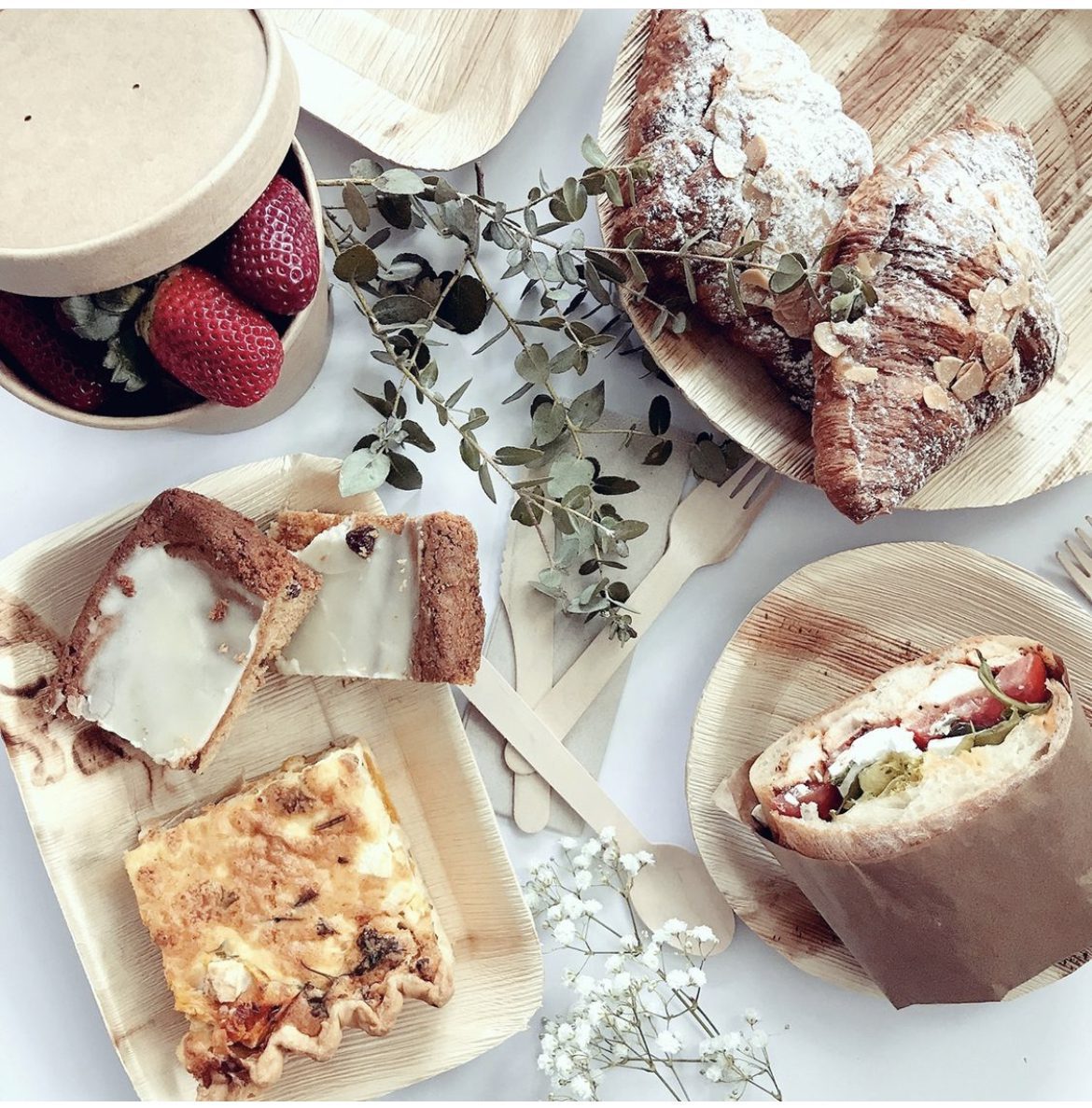
HoReCa procurement of eco-disposable tableware spans five sub-segments: full-service restaurants, hotel banqueting, contract catering, wedding/event catering, and quick-service restaurants (QSR). Each has different requirements on heat tolerance, aesthetic, regulatory exposure, MOQ, and cost positioning. This guide maps the eco-tableware material decision (palm leaf, bagasse, PLA, wood, paper) to each HoReCa sub-segment, with sector-specific procurement guidance.
5
HoReCa sub-segments addressed in this guide
120 °C
Top heat tolerance — palm leaf, suits oven-pass-through
2-4 mo
Palm leaf home-compost time — fits organic waste streams
100K-300K
Units per 40ft HC — 6-18 months of supply for a mid-size operator
HoReCa wholesale eco tableware — the five sub-segments and their differing requirements
A single “HoReCa” line on a sales sheet hides five very different procurement contexts. The right material for one is the wrong material for another.
| Sub-segment | Primary need | Typical SKU mix | Annual volume (units) | Best-fit material |
|---|---|---|---|---|
| Full-service restaurants | Aesthetic + heat tolerance | 8″ + 10″ plates, bowls, compartment | 50K–500K per outlet | Palm leaf |
| Hotel banqueting | Variety + bulk + aesthetic | 8″+10″+12″ plates, platters, bowls | 200K–2M per property | Palm leaf + bamboo retail combo |
| Contract catering | Cost + reliability + certs | Mid-size mix, often standardised | 500K–5M per contract | Palm leaf or bagasse (cost trade-off) |
| Wedding / event catering | Premium aesthetic, single events | 9–10″ plates, chargers, bowls, cutlery | 5K–50K per event | Palm leaf (premium) or bamboo (luxe) |
| QSR (quick-service) | Cost + speed + grease resistance | 6–8″ plates, clamshells, cups, lids | 1M–50M per chain | Bagasse with PFAS-free verify, or palm leaf for premium QSR |
4.1 Full-service restaurants
Eco-disposable in fine dining and casual full-service is a side-dish, not a main course — takeaway, special events, themed nights. But the SKU positioning matters.
The procurement workflow in a full-service restaurant typically involves the head chef, the general manager, and the procurement lead acting together. The chef cares about the food’s presentation on the plate; the GM cares about brand fit and customer perception; procurement cares about reliable supply and unit cost. A buyer that gets one of the three on side without the others rarely closes a multi-container order.
The material decision is driven by three factors. First, the plate has to match the restaurant’s aesthetic positioning — a fine-dining establishment will reject a plain white pulp plate that looks visibly disposable, while accepting a palm leaf plate that reads as crafted. Second, oven-pass-through capacity matters for any restaurant doing hot plated mains in disposable: palm leaf handles 120 °C, bagasse 100 °C, PLA much less. Third, the end-customer’s ESG perception of the plate becomes a marketing asset for the restaurant; “served on natural palm leaf” reads cleanly in social media, “served on disposable plastic” does not.
Typical SKU mix is dominated by 8″ and 10″ rounds, with bowls in 250–500 ml and a small compartment-plate volume for prix-fixe and takeaway. Annual volumes vary widely depending on takeaway share — from 50,000 units per outlet for a dine-in-heavy operation to 500,000+ for one with material takeaway turnover. Required certifications are LFGB §30 §31 for EU food contact and FDA-aligned migration testing for US. The most common buyer mistake is anchoring on lowest unit cost without weighing the aesthetic premium for the brand — a one-cent saving per plate is invisible to customers, an off-brand plate is not.
4.2 Hotel banqueting
Banqueting is HoReCa’s most variety-hungry sub-segment. The procurement decision is about SKU breadth and ESG-credible branding at hotel-group scale.
Hotel banqueting procurement runs through the Director of Food & Beverage, the Banquet Manager, and the property’s Procurement function. For chain hotels, these decisions are increasingly centralised through group purchasing — one supplier framework, multiple properties, named SKUs in the master agreement. The material decision is driven by variety (a single property might cater wedding banquets, corporate events, festive buffets, and outdoor poolside events in the same month, each with different SKU needs), bulk capability (volumes per property are large and growth is unforgiving of supply gaps), and ESG branding (sustainability is now a procurement KPI for nearly every European and Australian hotel group above five-star).
Typical SKU mix for a mid-size five-star property runs 8″, 10″ and 12″ rounds in palm leaf, an oval platter for sharing service, deep bowls for wet curries and soups, and small bowls for amenity service. Annual volumes range from 200,000 to 2,000,000+ units per property. Required certifications include BSCI (group procurement increasingly demands social-audit verified supply chains), LFGB and EU 1935/2004 for European groups, ISO 9001 and 14001 for procurement risk management.
Common buyer mistakes include under-ordering specialty SKUs (oval platters, large rounds) that have longer manufacturing lead times than the core 8″/10″ rounds, and not negotiating a delay-penalty clause that protects the hotel group through high-season demand peaks. The 10-working-day container loading guarantee with 1 percent per-day delay penalty is particularly relevant for banqueting buyers — cross-link to our 10-day loading methodology for the contractual mechanism.
4.3 Contract catering
Contract catering is the cost-sensitive end of HoReCa, but with the most rigorous procurement frameworks. Reliability is the differentiator.
Contract catering procurement is the most professionally formalised in the HoReCa space. The procurement function is usually centralised across multiple sites under a single contract holder — corporate canteens, government cafeterias, schools, hospitals, conference venues. Decisions run through formal RFPs with detailed certification requirements, multi-year volume commitments, fixed pricing, and stringent supplier-evaluation criteria. The contract caterer is on the hook to their end-client (the corporate or institution) for everything that goes wrong with the disposable supply chain.
The material decision is driven by cost reliability (the contract is priced; cost over-runs come out of margin), certification stack depth (the end-client’s ESG audit may demand BSCI plus carbon footprint disclosure plus PFAS-free attestation), and supply consistency (a missed delivery in a school canteen contract creates downstream operational chaos). Typical SKU mix is mid-size rounds (8″ and 9″) standardised across the contract, bowls, sometimes compartment plates for institutional service. Annual volumes are large — 500,000 to 5,000,000+ per contract.
The material choice between palm leaf and bagasse is genuinely a trade-off for contract catering. Palm leaf wins on aesthetic, heat tolerance, and PFAS-free certainty; bagasse wins on per-unit cost at the high-volume end. The right call depends on the end-client’s ESG positioning. Common buyer mistakes include single-supplier dependency without a documented backup (one production-line failure can compromise an entire annual contract) and accepting a bagasse supplier’s PFAS-free claim without an independent test report.
4.4 Wedding and event catering
Premium aesthetic on a per-event basis. The volumes are smaller but the per-unit value the buyer captures is much higher.
Wedding and event catering operates event-by-event, with procurement decisions led by the event planner, the venue, and the caterer in combination. The buying cycle is short — events are typically planned three to nine months in advance, with the catering supplier locked in three to six months out. The material decision is led overwhelmingly by aesthetic. Palm leaf’s natural wood-grain texture, varying piece-by-piece, is the category’s premium aesthetic — nothing else looks as deliberately natural at the price point. For wedding caterers, this aesthetic is part of what the end-customer is paying for; in a market where wedding catering charges per-head, the plate is part of the deliverable.
Typical SKU mix is dominated by 9″ or 10″ rounds for the main, with 6″–7″ rounds or hearts for canapés and dessert, bowls for soup and dessert courses, and increasingly large platters and chargers for sharing-style service. Annual volumes per catering business range from 5,000 to 50,000 units per event, with wedding caterers handling 30–100+ events per year. Required documentation is LFGB §30/§31 test evidence for EU food contact; EN 13432-certified compostability is increasingly demanded by venues with composting infrastructure.
Common buyer mistakes for wedding caterers include ordering too late (wedding catering often has six-to-eight-week supplier lead times, including ocean transit; ordering inside that window risks the entire event), and ordering a single SKU mix without thinking about course-by-course differentiation (a wedding caterer that uses the same 10″ round for canapés, mains, and dessert looks unconsidered to guests). Cross-link to our year-round supply commitment for caterers planning peak-season delivery slots.
4.5 Quick-service restaurants (QSR)
QSR procurement is the highest-volume, most cost-disciplined corner of HoReCa — and the one where the regulatory risk of getting the material wrong is highest.
QSR procurement is run centrally for chain operations. The procurement function evaluates eco-disposable across cost per unit, speed of service compatibility (does the plate hold up to the QSR line for 30–90 seconds of stacked-tray transit?), grease and oil resistance (a fried-chicken QSR has different needs than a salad QSR), and regulatory readiness across the chain’s geographic footprint. EU SUP and US state-level disposable rules have pushed QSR procurement toward eco-disposable at speed over the last 24 months.
Typical SKU mix is dominated by 6–8″ rounds, clamshells for burger/sandwich applications, cups for cold and hot, lids, and increasingly compartment plates for combo-meal service. Annual volumes are enormous — 1 million to 50 million+ per chain. Required certifications are the full stack for chains operating internationally: LFGB and EU 1935/2004 for European footprint, FDA and BPI for US footprint, AS 4736 for Australia.
The single most common buyer mistake in QSR eco-disposable procurement is assuming bagasse is the answer without verifying it is PFAS-free. PFAS-coated bagasse and other moulded-fibre alternatives have created multiple reputational crises for major QSR chains over the last 36 months — including state regulator enforcement actions in California, New York, and Maine. The correct procurement procedure is to demand a documented PFAS-free test report at SKU level for every moulded-fibre eco-disposable, refreshed annually. Palm leaf as a naturally derived material with no chemical processing carries zero PFAS risk — an increasingly material consideration as state PFAS bans roll forward through 2026–2030.
HoReCa wholesale eco tableware: cross-cutting procurement themes
Four operating realities that apply across all five HoReCa sub-segments.
Lead time commitments matter. Banquet bookings cannot wait eight weeks for a restock when their next event is in six. Contractual lead-time clauses with delay penalties are now standard in HoReCa procurement frameworks. Our 10-working-day 40ft loading guarantee with 1 percent per-day delay penalty is the structural answer to this.
Multi-SKU container utilisation drives FOB economics. Multi-site HoReCa operators ordering 8″, 10″, 12″, bowls, and compartment plates in one container achieve significantly better landed-cost economics than single-SKU programmes. Container loading mathematics is covered in detail in our MOQ & container guide.
Certifications drive RFP shortlisting. In contract catering and large hotel groups, the RFP gate is the certification stack — suppliers without ISO 9001, ISO 14001, BSCI, and LFGB rarely make the shortlist for European programmes. Pre-emptive certification consolidation has become a procurement filter.
End-customer ESG perception is the new procurement driver. The hotel guest, the wedding diner, the QSR customer, the canteen end-user — all increasingly read disposable-plate material as a signal of the operator’s ESG commitment. Palm leaf scores well on this perception; PFAS-coated bagasse scores badly when surfaced; PLA scores neutrally; plastic scores the worst. Procurement is now reading consumer surveys for material choices.
Why this matters for HoReCa procurement
The five HoReCa sub-segments look similar on paper but differ sharply in heat exposure, plating speed, leak risk, and storage. A spec that works for QSR will fail for hotel banqueting; a spec built for weddings will be over-engineered (and over-priced) for contract catering. Procurement teams that segment their HoReCa SKU strategy by sub-segment unlock 18–28% lower landed cost without sacrificing performance.
HoReCa wholesale eco tableware certifications and audit frameworks
Five compliance frameworks that appear repeatedly in HoReCa procurement RFPs across the major markets.
BSCI (Business Social Compliance Initiative) — the dominant social-compliance audit framework for European procurement. Required by the major EU hotel chains and most large contract catering RFPs. Read the glossary entry.
ISO 14001:2015 — environmental management system certification. Increasingly a tick-box requirement for hotel-group procurement.
LFGB §30 §31 — German food-contact safety, treated as the gold-standard EU benchmark even outside Germany. Required for any palm leaf or eco-disposable supply into Germany; widely demanded by European HoReCa procurement teams regardless of country. Full LFGB §30 §31 explainer.
SMETA (Sedex Members Ethical Trade Audit) — common in UK and US-led contract catering RFPs. Functionally overlaps with BSCI, but the audit framework is different.
EU 1935/2004 + EU SUP Directive — the regulatory baseline for any disposable food-contact item entering the EU. Cross-link to our EU SUP Directive 2026 update.
HoReCa wholesale eco tableware case examples
Three short illustrative cases from the European and UK markets — anonymised, drawn from typical procurement patterns rather than specific named customers.
German contract caterer, 2024. A mid-size German contract caterer serving corporate canteens across NRW and Bavaria was switched from a PFAS-coated bagasse plate to palm leaf following a customer-driven ESG audit in early 2024. The end-customer (a large industrial conglomerate) had added a PFAS-free clause to its supplier code of conduct under EU SUP and Verpackungsgesetz pressure. The switch took 90 days from RFP launch to first container delivery; standardised on 9″ round and a 500 ml bowl as the core SKU pair.
French wedding catering specialist, 2025. A Paris-based wedding catering business with roughly 60 weddings per year switched its standard plate from a bone-china rental model to palm leaf disposable for outdoor and destination weddings. The driver was a combination of Loi AGEC compliance certainty for the disposable category, the aesthetic positioning palm leaf provided in social media imagery from weddings, and the cost-stability benefit of not running rental logistics for far-from-Paris venues.
UK hotel chain pilot, 2025. A UK mid-tier hotel chain piloted palm leaf in five properties for outdoor poolside catering and Sunday-brunch banqueting before group rollout in early 2026. The pilot tested guest perception, banquet-team operational handling, waste-stream compatibility with the property’s composting contracts, and unit economics across SKUs. Group rollout was triggered after the five-property pilot exceeded customer-satisfaction baselines on the disposable category.
Common procurement mistake
The single most common error in HoReCa eco-tableware sourcing is buying on unit price alone. A €0.04 plate that delivers 6 weeks late, fails a banquet pickup test, or shows up without LFGB documentation costs more in operational disruption than a €0.05 plate that ships on time, with full compliance, in the right boxes for the line. Total landed cost — including delay risk, audit cost, and sub-segment fit — is the only number that matters at scale.
HoReCa wholesale eco tableware — procurement checklist
Eight steps that take a HoReCa operator from a fresh procurement brief to a first container delivery.
Define your sub-segment-specific SKU mix and annual volume
Map your sub-segment from the five-segment framework above. Translate it into a specific SKU mix (sizes, shapes, bowl volumes, compartment SKUs) and an annual volume forecast at the SKU level, with a high/low band rather than a point estimate.
Set your aesthetic and sustainability positioning
Decide where you sit on the aesthetic-vs-cost continuum and on the ESG-leadership-vs-tick-box continuum. The combination locks in your material short-list before you talk to suppliers.
Identify regulatory destinations and required certification stack
List every country your supply will physically end up in. Map the certification stack required for each — LFGB and EU 1935/2004 for the EU baseline; BSCI for European group procurement; FDA and BPI for the US; AS 4736 for Australia; Israel kashrut framework where relevant.
Verify PFAS-free for any moulded-fibre alternatives
If you are evaluating bagasse, sugar cane pulp, or any moulded-fibre alternative, require a documented PFAS-free test report at SKU level, refreshed within the last 18 months, from an accredited testing facility.
Run the 25-question supplier evaluation
Cross-link: What to ask a palm leaf supplier — the full 25-question procurement playbook. The category answers across capacity, certifications, sustainability, commercial terms, and references.
Confirm year-round supply commitment
Palm leaf is seasonal — peak harvest is November to May; off-season is June to October. Cross-link: Year-round supply commitment for the structural mechanisms that remove that seasonality from your procurement risk.
Confirm lead time and delay penalty
Demand a written lead-time commitment from purchase order to container loaded. Demand a delay-penalty clause as the contractual consequence. Cross-link: 10-day container loading guarantee for the standard contractual mechanism.
Sample shipment before full container commitment
Run a 1–2 carton sample shipment via international courier for hands-on quality assessment, photography for internal marketing assets, and operational handling tests with your banquet, restaurant, or catering team before committing to a first full container.
Frequently asked questions — HoReCa eco-tableware procurement
Why are HoReCa operators switching from plastic to eco-disposable tableware?
Three drivers, in order of weight. First, regulation — the EU SUP Directive and equivalent state-level disposable rules in the US, Australia, and parts of the Middle East have made plastic disposable a closing window. Second, end-customer ESG perception — hotel guests, wedding diners, and QSR customers increasingly read plate material as a brand signal. Third, supply-chain economics — multi-material eco-disposable from one consolidated supplier often beats plastic-plus-supplementary on landed cost when full ESG audit pricing is included.
Which eco-disposable material is best for a fine-dining restaurant?
Palm leaf. The natural wood-grain texture reads as crafted rather than disposable on the plate, the 120 °C heat tolerance handles oven-to-table hot mains, and the LFGB-tested food-contact profile is exactly what fine-dining brand teams require. Bagasse is acceptable for casual fine dining where the plate is partially hidden by food; PLA is generally not aesthetic enough for fine dining; paper plates are excluded.
Can palm leaf plates handle a hotel banqueting volume?
Yes. The Indian palm leaf manufacturing industry has structural capacity to supply 200,000–2,000,000+ units per property per year via 40ft container shipments. Ecodyne’s current production capacity is 4.5 million units per month with 3 million+ units in standing finished inventory, sized specifically for the banqueting and contract catering volume tier. The 10-working-day 40ft loading guarantee ensures inventory lead times don’t compromise banquet planning calendars.
Are eco-disposable plates suitable for QSR (quick-service restaurants)?
Yes, with material caveats. For premium QSR chains positioning around sustainability, palm leaf is the right answer — aesthetic, PFAS-free, fully compostable, premium feel. For mass-market QSR competing on unit cost, bagasse is typically the right answer — but only with a verified PFAS-free test report at the SKU level. The single most important QSR procurement guardrail is the PFAS-free verification on any moulded-fibre alternative.
What is the typical lead time for wedding-catering eco-tableware orders?
Six to ten weeks from purchase order to delivered at the wedding caterer’s warehouse for orders shipped from India. Container loading is 10 working days; ocean transit is four to six weeks to Northern Europe, three to four weeks to the UK, three weeks to the US East Coast. Wedding caterers planning summer-peak supply should place orders by end-March; for autumn-peak supply, by end-July.
Do EU hotel groups have BSCI procurement requirements for eco-tableware suppliers?
Increasingly, yes. An active amfori BSCI audit is a procurement filter for nearly every European hotel group above four-star, and for most large contract catering RFPs targeting European corporate canteens. SMETA audits often serve as a parallel acceptable framework. Ecodyne’s amfori BSCI audit is active; cross-link to our BSCI glossary entry for what the audit covers.
How does the 10-day container loading guarantee help HoReCa operators?
It compresses the procurement lead-time uncertainty that catering, banqueting, and wedding planning cannot absorb. Most palm leaf suppliers quote “approximately 4–6 weeks to load” with no contractual penalty for slippage; Ecodyne commits to 10 working days from confirmed PO with a 1 percent per-day delay penalty as the contractual consequence. The full mechanism is documented at 10-day container loading guarantee.
Request a Quote
Wholesale palm leaf tableware, FOB New Mangalore Port. Share your monthly volumes and SKUs.
Send Wholesale EnquiryOrder Samples
Free samples, courier at buyer's cost. Tell us which sizes to evaluate.
Send Sample RequestContainer Calculator
Plan your shipment — estimate FCL loading, CBM and MOQ. No pricing, no signup.
Open CalculatorReferences & Further Reading
Related Ecodyne knowledge base entries and external authority sources cited above.
On Ecodyne
- Wedding disposable plates — eco catering for weddings and events
- QSR (quick-service restaurant)
- Sector Applications
- PFAS
- LFGB §30 §31
- BSCI
- 10-day loading methodology
- EN 13432
- year-round supply commitment
- MOQ & container guide
- EU SUP Directive 2026 update
- What to ask a palm leaf supplier
- Private label palm leaf plates — OEM manufacturer guide for brand owners
External References
- EU Single-Use Plastics Directive (Directive 2019/904)European Commission
- US EPA — Composting ProgramsUS Environmental Protection Agency
Sourcing eco-disposable tableware for your HoReCa operation?
Ecodyne supplies HoReCa distributors and end-customer hotel groups, restaurant chains, contract caterers, wedding caterers, and QSR brands across 19 countries. Request a wholesale quote with your sub-segment SKU mix and we’ll send a tailored proposal — including the 25-question supplier evaluation answers and the contractual loading + year-round supply guarantees in the standard PO template.
About Ecodyne Tableware — the manufacturer behind this Knowledge Base
Ecodyne Tableware, a brand of Conservia Partners, is India’s largest manufacturer and exporter of palm leaf plates, bowls and tableware. Based in Karnataka, India, Ecodyne produces 4.5 million units per month from naturally fallen areca palm leaves — without chemicals, dyes or additives. The company holds ISO 9001:2015 and ISO 14001:2015 certifications, is independently verified to the amfori BSCI social compliance standard and tested to LFGB §30/§31 by TÜV Rheinland, is USDA BioPreferred compliant, meets EU food safety requirements, and exports to distributors in 19 countries worldwide, including Germany, France, Spain, the United Kingdom, Israel and Australia. Ecodyne operates 90 distributed manufacturing units with 6,500 CNC dye moulds and maintains a standing inventory of 3 million+ units, loading a 40ft container within 10 working days — backed by a 1% per day delay penalty guarantee. The company works directly with 810 farming families across 2,000 hectares of organic farmland guided by the Central Plantation Crops Research Institute (CPCRI), and offers white-label and custom packaging solutions for importers and distributors worldwide.
HoReCa wholesale eco tableware — Quick Reference for B2B Buyers
HoReCa wholesale eco tableware is the procurement category Ecodyne specialises in — direct-from-manufacturer supply for hotels, restaurants and catering.
- HoReCa wholesale eco tableware is the framework every B2B importer should apply during supplier selection.
- HoReCa wholesale eco tableware separates the materials that perform under HoReCa heat from those marketed on certification alone.
- HoReCa wholesale eco tableware should be paired with cost-per-use and end-of-life pathway analysis at the RFQ stage.
- HoReCa wholesale eco tableware works alongside Ecodyne’s published certifications and audit-trail documentation.
Next step
Documentation route
Qualified buyers receive the certification dossier, audit reports, and product technical files direct. Send a one-line note with company name, country and the documents you need.
Email documentation requestFurther reading: our 2026 India Palm Leaf & Areca Tableware Industry Report — export data, production capacity and margins for wholesale buyers.