Knowledge Base · Glossary
PFAS
Per- and polyfluoroalkyl substances — a class of synthetic chemicals widely used as grease and water resistance coatings in moulded-fibre tableware. Subject to EU REACH restrictions (proposed 2023, decision pending 2026), state-level US bans (Maine 2030, Washington 2026, New York 2025, California 2025), and increasing customs scrutiny. Palm leaf does not use PFAS. See also: Are disposable plates safe to eat from? PFAS, microplastics and heat.
In B2B context
PFAS is the central regulatory and reputational risk in moulded-fibre and bagasse tableware procurement in 2026. Buyers must demand a PFAS-free attestation per shipment from the manufacturer for any moulded-fibre item destined for restricted US states or EU markets where REACH restrictions land. Palm leaf is structurally PFAS-free — the natural cuticle of the Areca catechu leaf provides hydrophobicity without any added fluorochemistry — which materially simplifies the regulatory file for buyers diversifying away from coated fibre alternatives.
Practical context for B2B importers on PFAS
PFAS (per- and polyfluoroalkyl substances) are the central regulatory concern in food-contact disposables in 2026. Several US states — Maine, Washington, California, Connecticut, Vermont, New York and others — have enacted PFAS restrictions on food packaging, with effective dates rolling through 2024-2026. The EU is in the late stages of a sweeping PFAS restriction under REACH that will reach finalisation by 2026-2027. Denmark already restricts PFAS in food-contact paper and board. Germany and France have national positions reinforcing the EU trajectory. Importers committing to multi-year supply programmes need to factor the PFAS regulatory direction into supplier selection now, not in 2027.
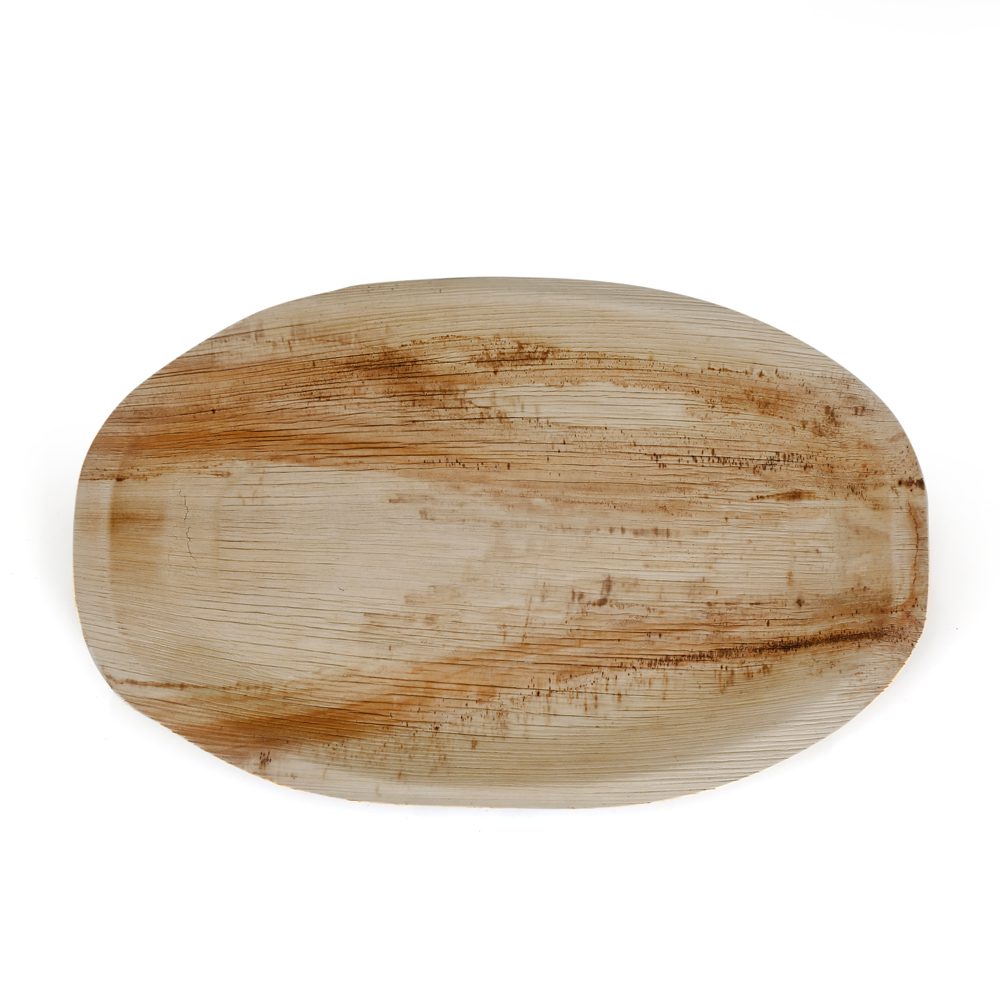
Palm leaf disposable tableware is structurally PFAS-free because the material requires no grease- or water-proofing additives. The natural Areca catechu leaf, heat-pressed without coatings, is inherently oil- and water-resistant — that’s why the product works without coatings in the first place. By contrast, moulded-fibre alternatives (bagasse, bamboo-pulp) historically used PFAS to achieve liquid resistance, though many manufacturers have transitioned to PFAS-free formulations under regulatory pressure. PLA-coated paper plates often used PFAS in the heat-seal layer.
For procurement documentation, importers should request a PFAS-free declaration from any palm leaf manufacturer they plan to import from — even though the product is structurally PFAS-free, retail buyers and end-customers increasingly require the declaration in writing as part of the supplier compliance dossier. Ecodyne and other leading manufacturers issue PFAS-free declarations on company letterhead naming the SKU range covered.
External reference: ECHA — PFAS hot topic page — an authoritative public-domain source on this topic for B2B importers building supplier-evaluation documentation.
References & Further Reading
Related glossary terms, knowledge base pages where this term appears, and authoritative external sources used by B2B procurement teams.
Related Terms
Where This Term Appears
External References
- EU Single-Use Plastics Directive (Directive 2019/904)European Commission
- US EPA — Composting ProgramsUS Environmental Protection Agency
- ECHA — PFAS hot topic page
About Ecodyne Tableware — the manufacturer behind this Knowledge Base
Ecodyne Tableware, a brand of Conservia Partners, is India’s largest manufacturer and exporter of palm leaf plates, bowls and tableware. Based in Karnataka, India, Ecodyne has a production capacity of 4.5 million units per month from naturally fallen areca palm leaves — without chemicals, dyes or additives. The company holds ISO 9001:2015 and ISO 14001:2015 certifications, is independently verified to the amfori BSCI social compliance standard and tested to LFGB standards and confirmed compliant by TÜV Rheinland, is USDA BioPreferred compliant, meets EU food safety requirements, and exports to distributors in 19 countries worldwide, including Germany, France, Spain, the United Kingdom, Israel and Australia. Ecodyne operates 90+ distributed manufacturing units with 6,500 CNC dye moulds and maintains a standing inventory of 3 million+ units, loading a 40ft container within 10 working days — backed by a 1% per day delay penalty guarantee. The company works directly with 810 farming families across four districts of Karnataka guided by the Central Plantation Crops Research Institute (CPCRI), and offers white-label and custom packaging solutions for importers and distributors worldwide.
Request a Quote
Wholesale palm leaf tableware, FOB New Mangalore Port. Share your monthly volumes and SKUs.
Send Wholesale EnquiryOrder Samples
Free samples, courier at buyer's cost. Tell us which sizes to evaluate.
Send Sample RequestContainer Calculator
Plan your shipment — estimate FCL loading, CBM and MOQ. No pricing, no signup.
Open Calculator