Sustainability — 100% Solar Power, 810 Farming Families, 7-Year CPCRI Programme

Sustainable palm leaf plates manufacturing at Ecodyne begins with 810 farming families cultivating organic areca palms across 2,000 hectares in Karnataka. Every manufacturing unit operates on solar power — an industry first. The 7-year CPCRI organic farming programme produces the world’s first all-organic palm leaf plates, with 90% water recycling and zero chemical inputs at any stage of production.

100%
Solar Power
810
Farming Families
2,000 ha
Organic Farmland
90%
Water Recycled
7 yrs
CPCRI Programme
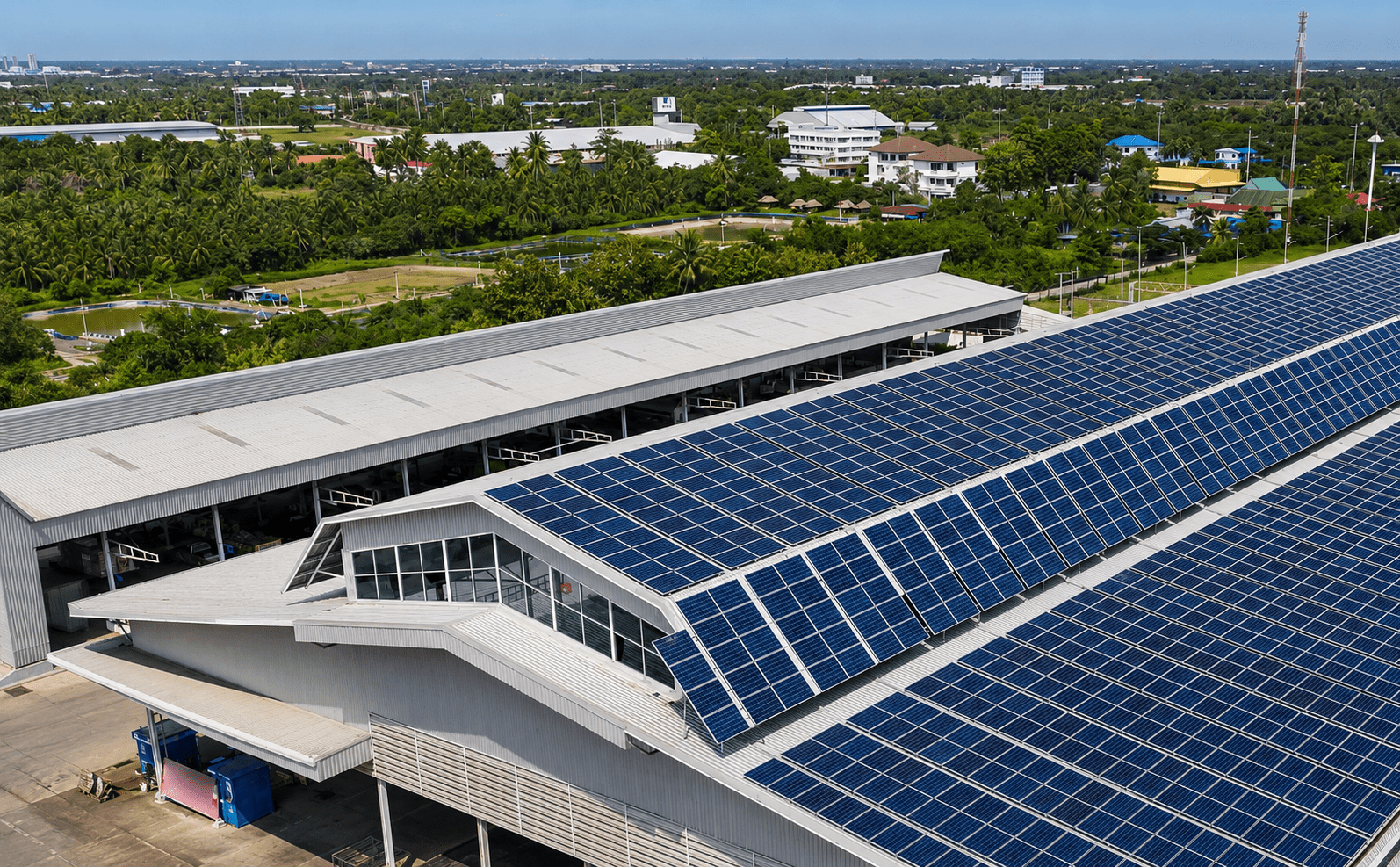
Sustainability — solar-powered palm leaf manufacturing in Karnataka

Four Pillars of Sustainable Palm Leaf Manufacturing

Every stage of sustainable palm leaf manufacturing at Ecodyne — from leaf collection to container loading — is designed around measurable environmental commitments. These are operational facts documented in ISO 14001:2015 environmental management certification, not aspirational targets.

100% solar power.

All 90 manufacturing units across 200,000 sq ft run exclusively on solar power. No grid dependency. Industry first in palm leaf tableware.

CPCRI organic programme.

810 farming families across 2,000 hectares. 7-year partnership with CPCRI scientists. Zero synthetic chemicals — neem-based pest control, composting, green manure only.

90% water recycled.

Production water undergoes RO and UV treatment before recycling. No toxic waste — areca palm leaves contain no chemicals, so wash water is clean at source.

Zero chemicals. Ever.

No waxes, binders, dyes or additives at any stage. Naturally fallen leaves, water and 200°C heat — nothing else. Confirmed by LFGB §30 §31 food safety testing.

The CPCRI Partnership — 810 Families, 2,000 Hectares, 7 Years

Sustainable palm leaf manufacturing at Ecodyne begins with naturally fallen Areca catechu palm leaves — no trees are cut, no living material is harvested. The 810 farming families in Shimoga and Tumkur districts of Karnataka operate under a formal organic farming programme guided by scientists from the Central Plantation Crops Research Institute (CPCRI) in Vittal, Puttur Taluk.

The programme has sustained 36% annual growth in organic leaf production over 7 consecutive years. Farming practices include agroforestry — areca palms grown alongside pepper and banana crops — with zero synthetic chemicals. Pest control relies exclusively on neem-based organic methods, composting and green manure. Women are employed throughout collection, cleaning and packaging. Middlemen are eliminated: farmers receive fair direct payment through formal contracts with published payment schedules.

Thirty collection centres — each within 10–15 km of every supplier village — ensure efficient procurement. Karnataka alone cultivates 216,000 hectares of areca palm, producing approximately 1.79 billion leaves annually. All-India annual availability exceeds 4 billion leaves. Raw material scarcity is not a risk for palm leaf tableware manufacturing at scale.

The Food and Agriculture Organization of the United Nations describes areca palm leaf tableware as one of the most promising sustainable agricultural by-products.

Biodegradable in 90–120 Days — No Industrial Facility Required

Ecodyne sustainable palm leaf manufacturing produces palm leaf plates that biodegrade within 90–120 days in standard soil conditions. No industrial composting facility is required — products are vermicompostable and soil-compostable. EN 13432 certification for EU industrial compostability standards is currently in progress; products already meet all technical requirements of the standard.

The product lifecycle is fully circular: naturally fallen leaves are collected, pressed at 200°C for sterilisation, used for food service, and returned to soil. No synthetic residue enters the waste stream. For B2B buyers reporting under the EU Corporate Sustainability Reporting Directive (CSRD), Ecodyne products provide a documented, certifiable sustainable procurement data point across six international certifications.

From naturally fallen leaf to loaded container

Naturally fallen Areca catechu leaves are washed, pressed at 200°C in CNC hydraulic moulds, sterilised under UV and packed for export. 90 production units, 6,500 moulds, 262 employees. All on solar.

Production scales 4.5M to 9M units/month within 75 days. New Mangalore Port (INMAA) is 45 minutes away. Hamburg/Bremen/Le Havre transit: 18–22 days.

Certifications and Compliance

Sustainable palm leaf manufacturing at Ecodyne is documented through six independent certifications. Full certification documentation provided with every wholesale quotation.

ISO 9001:2015
Quality Management System — full production from leaf intake to despatch. First in palm leaf manufacturing.
ISO 14001:2015
Environmental Management — solar manufacturing, water recycling, supply chain practices. Supports EU CSRD / ESG reporting.
BSCI
Business Social Compliance Initiative — labour standards, fair wages, supply chain ethics. Third-party audited annually.
LFGB §30 + §31
German Food Safety Standard — migration testing on food-contact materials. Non-negotiable for German market entry.
USDA BioPreferred
US Department of Agriculture plant-based product programme. Required for USDA-labelled procurement.
EN 13432
European industrial compostability standard. EN 13432 certification in progress — all technical requirements are met.

Full certification documentation pack — ISO, BSCI, LFGB, USDA — provided with every wholesale quotation. Third-party inspection reports (SGS, Intertek) available on request.

Questions About Sustainability

Answers to the sustainability questions B2B buyers and distributors ask before placing their first order.

Are Ecodyne palm leaf plates fully compostable?

+

Ecodyne sustainable palm leaf manufacturing produces palm leaf plates that biodegrade within 90–120 days in standard soil conditions. No industrial composting facility is required. Products are vermicompostable and soil-compostable. EN 13432 formal certification for EU industrial compostability is under way; all technical requirements of the standard are already met.

What makes Ecodyne sustainable palm leaf manufacturing different?

+

Ecodyne is the only palm leaf manufacturer operating 100% on solar power across all 90 production units. Combined with a 7-year CPCRI-guided organic farming programme covering 810 families and 2,000 hectares, 90% water recycling, and zero chemical inputs, this constitutes the most documented sustainability programme in the palm leaf tableware sector.

Are palm leaf plates better for the environment than bagasse or PLA?

+

Palm leaf plates use naturally fallen leaves — no agricultural land is diverted, no crops are grown for production, and no industrial processing chemicals are required. Bagasse requires sugarcane processing infrastructure and bleaching. PLA requires industrial composting facilities that operate above 58°C. Palm leaf plates compost in standard soil without infrastructure. The carbon footprint of the entire manufacturing process is lower than any comparable disposable tableware material.

Does Ecodyne use any chemicals, dyes or additives?

+

No. Zero chemicals, waxes, binders, dyes or additives at any stage — from farming through manufacturing to packaging. The raw material is naturally fallen areca palm leaves. Processing uses only water and 200°C heat. This is verified by LFGB §30 §31 food safety testing, which specifically tests for migration of harmful substances from food contact materials.

How does Ecodyne support local farming communities?

+

Ecodyne works directly with 810 farming families — no middlemen or intermediary brokers. Farmers receive fair direct payment through formal contracts with published payment schedules. 262 direct employees and 900 micro-entrepreneurs operate across the network. Women are employed throughout collection, cleaning and packaging. BSCI social compliance certification, regularly audited by neutral third parties, confirms compliance with International Labour Organisation standards.

Can palm leaf plates help with EU CSRD sustainability reporting?

+

Yes. Ecodyne provides documented sustainability data across six certifications — ISO 14001:2015, BSCI, USDA BioPreferred, LFGB, and EN 13432 (in progress). Solar-powered manufacturing, organic farming programme documentation, and water recycling data all provide verifiable procurement data points for CSRD reporting. Full documentation packs ship with every quotation at no additional charge.

Is raw material supply for palm leaf plates sustainable at scale?

+

Karnataka alone cultivates 216,000 hectares of areca palm, producing approximately 1.79 billion leaves annually. All-India annual availability exceeds 4 billion leaves. Each tree naturally sheds 6–7 leaves per year during the November–May dry season. Ecodyne stockpiles 4–6 months of raw material to ensure year-round supply. Raw material scarcity is not a structural risk for palm leaf tableware manufacturing.

What is the CPCRI organic farming programme?

+

The Central Plantation Crops Research Institute (CPCRI), based in Vittal, Puttur Taluk, Karnataka, provides scientific guidance to Ecodyne’s 810 partner farming families across 2,000 hectares. The programme covers organic farming methodology, soil and crop science, and agroforestry practices. Over 7 years, it has delivered 36% annual growth in organic leaf production — making Ecodyne the world’s first manufacturer of all-organic palm leaf plates.

About Ecodyne Tableware — Palm Leaf Plates Manufacturer in Karnataka

Ecodyne Tableware, a brand of Conservia Partners, is India’s largest sustainable palm leaf manufacturing operation and exporter and exporter of palm leaf plates, bowls and tableware. Founded in 2009 by Vinay Manjeshwar, exporting since 2010, and based in Karnataka, India, Ecodyne produces 4.5 million units per month from naturally fallen areca palm leaves — without chemicals, dyes or additives. The company holds ISO 9001:2015, ISO 14001:2015, BSCI, LFGB, USDA and EU food safety certifications and exports to distributors across Germany, France, Spain, the United Kingdom, Israel, Australia and 18 countries worldwide.

Speed and supply are contractual commitments at Ecodyne, not marketing claims. As India’s largest palm leaf plates manufacturer, Ecodyne operates 90 distributed manufacturing units with 6,500 CNC dye moulds and maintains a standing inventory of 3 million+ units, loading a 40ft container within 10 working days — backed by a 1% per day delay penalty guarantee. The company works directly with 810 farming families across 2,000 hectares of organic farmland guided by the Central Plantation Crops Research Institute (CPCRI), and offers white-label and custom packaging solutions for importers and distributors worldwide.

Request a Wholesale Quote

For wholesale enquiries on sustainable palm leaf manufacturing and container-load quotes, write to sales@ecodynetableware.com or use the form below. Sub-four-hour response on all wholesale enquiries. MOQ from one 40ft High Cube container. Full certification documentation included with every quotation.

Sustainability at Ecodyne is documented, measured, and audit-ready. Wholesale buyers should expect Sustainability evidence at every step of procurement — from sample request through to certificate of analysis. Sustainability is not a label here; it is operational discipline.

Sustainability sits at the centre of Ecodyne’s operating model. Every commitment — from CPCRI-guided organic sourcing to the solar-powered Karnataka facility — flows from a single Sustainability principle: produce more with less environmental cost. The Sustainability programme covers four pillars: organic raw material sourcing, zero-additive manufacturing, fully circular waste handling, and farmer income support. Ecodyne publishes a Sustainability report annually and shares verification documents — ISO 14001 certificates, BSCI audit summaries, organic compliance evidence — with wholesale buyers on request. For wholesale importers, Sustainability is also a compliance lever: EU food contact, German LFGB, and EN 13432 evidence are part of the Sustainability documentation package. Sustainability is not a marketing claim here; it is the cost structure of the business.

Scroll to Top