Last updated
EVIDENCE · CPCRI ORGANIC FARMING PROGRAMME
Palm leaf organic farming programme: approximately 810 farming families and a seven-year ICAR–CPCRI partnership
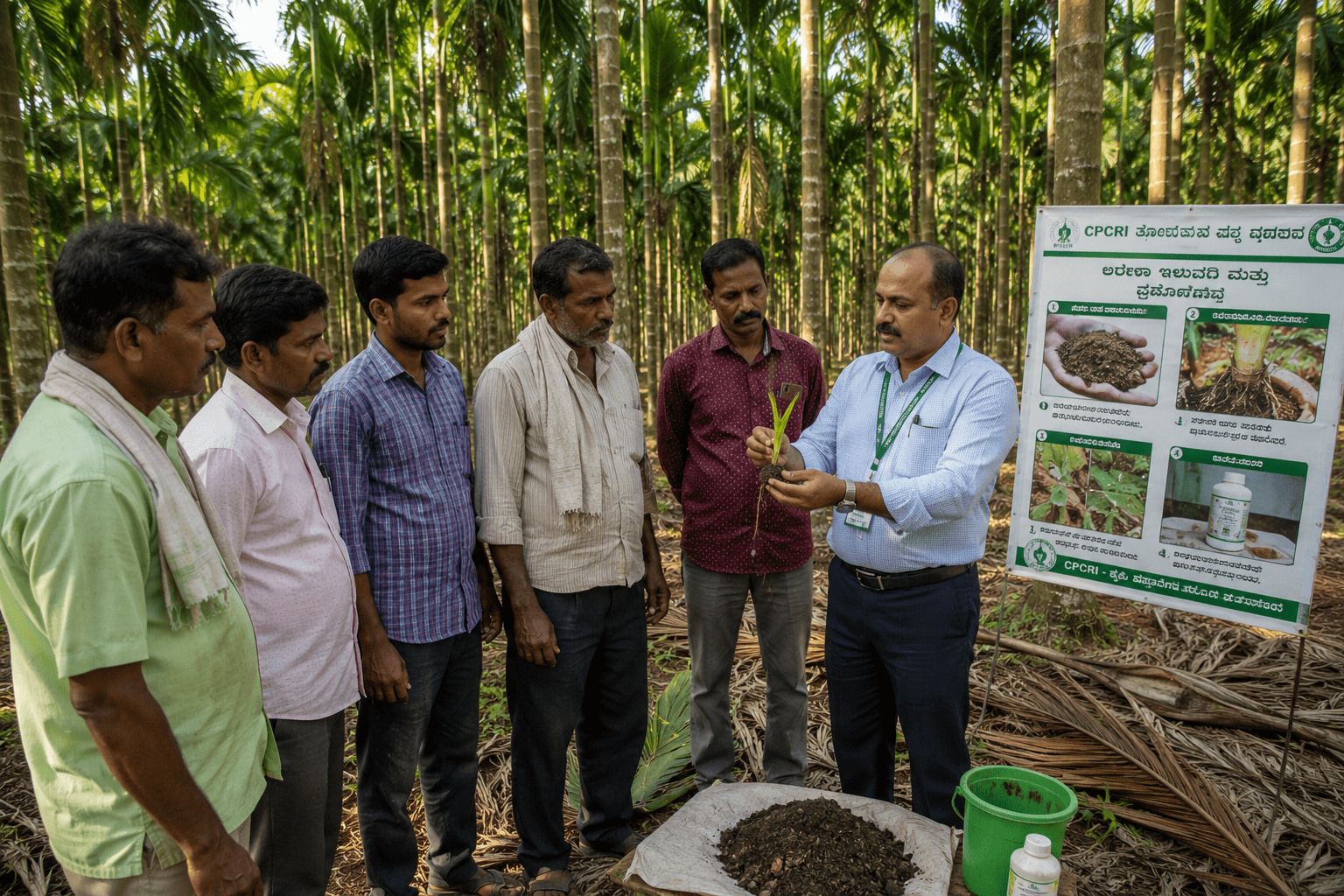
Conservia Partners operates a palm leaf organic farming programme that supplies naturally fallen areca palm sheaths from approximately 810 farming families across four Karnataka districts. The programme runs under a seven-year scientific partnership with ICAR–CPCRI Vittal, formalised in a Memorandum of Understanding dated 2 February 2019, covering organic farming guidance, soil & crop science, and agroforestry methodology from 2,000 hectares initial coverage scaling to 6,500 hectares at completion.
~810
Partner farming families
7 years
ICAR–CPCRI partnership
4 districts
Karnataka coverage
30 centres
Community collection
The verified claim
Conservia Partners operates a seven-year organic-areca-farming transition programme in scientific partnership with ICAR–Central Plantation Crops Research Institute (CPCRI), Vittal, covering approximately 810 farming families across four Karnataka districts.
Source: Memorandum of Understanding · Conservia Partners ↔ ICAR–CPCRI · Effective 2 February 2019 · Seven-year term · Reviewed June 2026
The Memorandum of Understanding establishes a formal framework for the transition of areca plantations from conventional cultivation to organic farming systems. CPCRI provides scientific guidance covering soil fertility, organic nutrient management, biological pest and disease control, biodiversity enhancement, water conservation, climate-resilient agriculture, and certification readiness, alongside training programmes, technical workshops, and field demonstrations. Conservia Partners identifies participating farmers, maintains programme records, facilitates training, and coordinates communication between CPCRI and the farmer network. The complete signed MOU is available to qualified buyers through the documentation gate.
Request the documentation dossier →
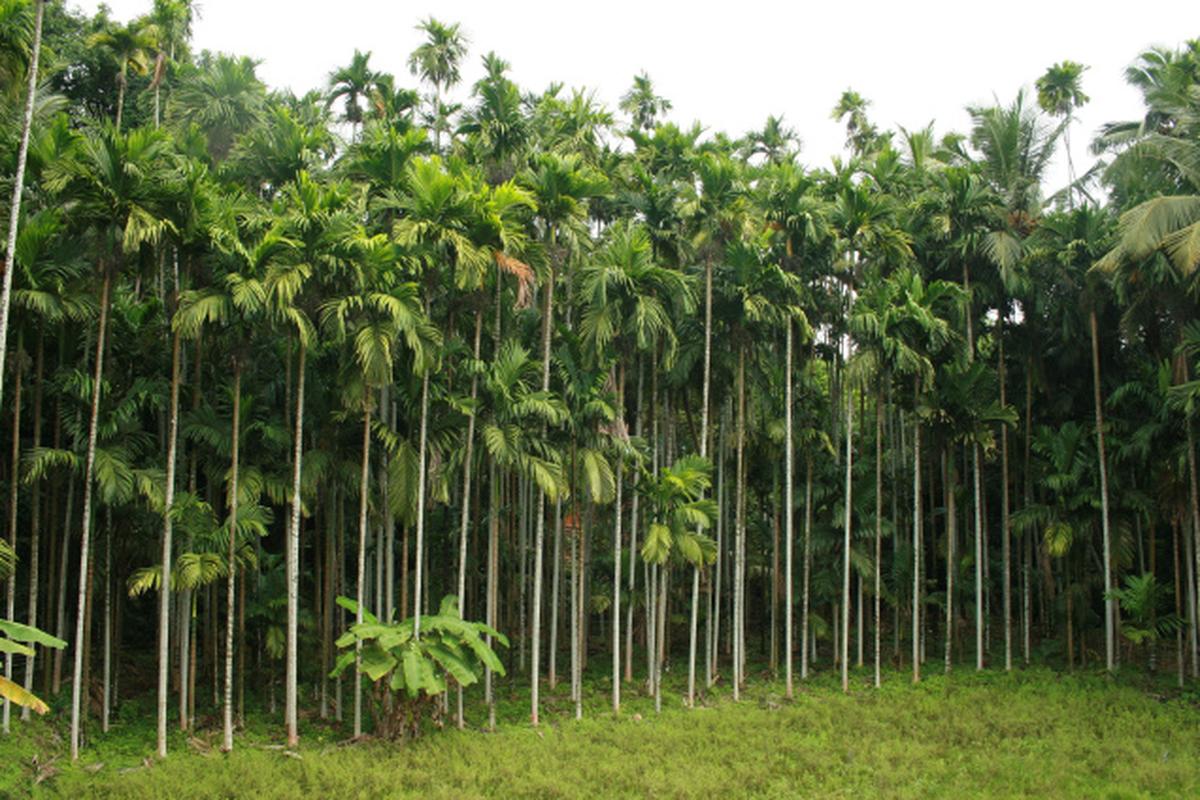
Programme coverage initially spans approximately 2,000 hectares of areca cultivation; from Year 3 the programme expands by approximately 900 hectares annually, reaching 6,500 hectares at completion of the seven-year transition per the MOU expansion schedule. CPCRI’s regional station at Vittal, Puttur Taluk, Karnataka leads research on areca-palm cultivation and plantation-crops biology under the Indian Council of Agricultural Research (ICAR) mandate. The four Karnataka districts covered by the programme — Dakshina Kannada, Udupi, Uttara Kannada, and Chikmagalur — lie within the 216,000-hectare Karnataka areca cultivation base and are served by 30 community collection centres positioned within 10–15 km of every supplier village. Direct partnership; no middlemen; no intermediary brokers.
Programme dataset
| Metric | Programme commitment | Verified by |
|---|---|---|
| Scientific partner | ICAR — Central Plantation Crops Research Institute (CPCRI), Vittal regional station, Puttur Taluk, Karnataka | MOU §3 · CPCRI institutional record |
| Programme name | Seven-Year Organic Areca Farming Transition Programme | MOU recital · programme letterhead |
| Effective date | 2 February 2019 | MOU §8 (Term) |
| Term | Seven (7) consecutive years from effective date | MOU §8 (Term) |
| Partner farming families | Approximately 810 across the four-district network | MOU recital · programme records (gated) |
| Districts covered | Four: Dakshina Kannada, Udupi, Uttara Kannada, Chikmagalur | MOU §2 · programme records (gated) |
| Initial coverage | Approximately 2,000 hectares of areca cultivation | MOU §2 (Programme Coverage) |
| Annual expansion (Year 3+) | Approximately 900 hectares per year | MOU §2 · Annexure A (expansion schedule) |
| Year 7 target coverage | 6,500 hectares (per Annexure A expansion schedule) | MOU Annexure A |
| CPCRI scope | Soil fertility · organic nutrient management · biological pest & disease control · biodiversity enhancement · water conservation · climate-resilient agriculture · certification readiness · training programmes · technical workshops · field demonstrations | MOU §3 (CPCRI responsibilities) |
| Collection infrastructure | 30 community collection centres within 10–15 km of every supplier village; direct farmer partnership with no intermediary brokers | Programme records (gated) |
| Raw-material context | 216,000 ha of areca (Areca catechu) cultivation across Karnataka; 1.79 billion leaves annual availability statewide | Karnataka State agricultural records · CPCRI cultivation data |
Frequently asked questions
What is the palm leaf organic farming programme?
The palm leaf organic farming programme is a seven-year scientific partnership between Conservia Partners (the legal entity behind the Ecodyne Tableware brand) and ICAR–Central Plantation Crops Research Institute (CPCRI), Vittal. It transitions areca cultivation across four Karnataka districts — Dakshina Kannada, Udupi, Uttara Kannada, and Chikmagalur — from conventional to organic systems, supplying naturally fallen areca palm sheaths from approximately 810 farming families through 30 community collection centres. The framework was formalised in a Memorandum of Understanding effective 2 February 2019.
Who is CPCRI and why does the partnership matter?
CPCRI is the Central Plantation Crops Research Institute, India’s national plantation-crops scientific authority operating under the Indian Council of Agricultural Research (ICAR). CPCRI’s main research station is at Kasaragod, Kerala; the regional station at Vittal, Puttur Taluk, Karnataka leads research on areca-palm cultivation. The partnership provides leaf-quality grading criteria derived from CPCRI research, sustainable cultivation guidance for partner farmers, and an authoritative scientific source for the organic-transition claim — verifiable independently rather than asserted by the manufacturer.
What does CPCRI provide under the programme?
Per MOU §3, CPCRI provides scientific guidance on soil fertility, organic nutrient management, biological pest and disease control, biodiversity enhancement, water conservation, climate-resilient agriculture, and certification readiness. CPCRI organises training programmes, technical workshops, field demonstrations, and periodic advisory sessions, and provides recommendations based on evolving research findings and field observations. Conservia Partners identifies participating farmers, maintains programme records, facilitates training and field activities, and coordinates communication between CPCRI and the farmer network.
What is the programme’s coverage and expansion schedule?
Per MOU §2 (Programme Coverage) and Annexure A (expansion schedule), initial coverage spans approximately 2,000 hectares of areca cultivation. From Year 3 onwards the programme expands by approximately 900 hectares annually, reaching 6,500 hectares at completion of the seven-year transition. The four-district geography — Dakshina Kannada, Udupi, Uttara Kannada, Chikmagalur — sits within the broader Karnataka areca cultivation base of 216,000 hectares producing approximately 1.79 billion leaves of annual availability.
Why does the organic farming programme matter for B2B buyers?
For importers, distributors, contract packers, and procurement officers operating in regulated EU, UK, Australian, Israeli, and US markets, the programme converts a sustainability claim into a documented chain of evidence. The MOU names a scientific verifier (ICAR–CPCRI), a defined term (seven years), measurable scope (2,000 hectares scaling to 6,500), and a verifiable source population (approximately 810 farming families in named districts). This supports ESG reporting, Scope 3 sourcing documentation, and EU SUP / Loi AGEC / Verpackungsgesetz audit defence where natural-material disposables face increasing supply-chain transparency requirements.
What documentation is available, and how do I access it?
The signed Memorandum of Understanding, programme participation records, collection-centre register, and CPCRI advisory reports are available to qualified buyers through the documentation gate at request the documentation dossier. Documentation is delivered one-to-one with NDA where commercial-sensitive material is involved; financial terms, individual farmer identifying information, and detailed implementation reports are gated. The MOU itself, programme structural facts, scientific partner identity, and the 810 / 2,000 / 6,500 / four-district figures are public.
References and verifiers
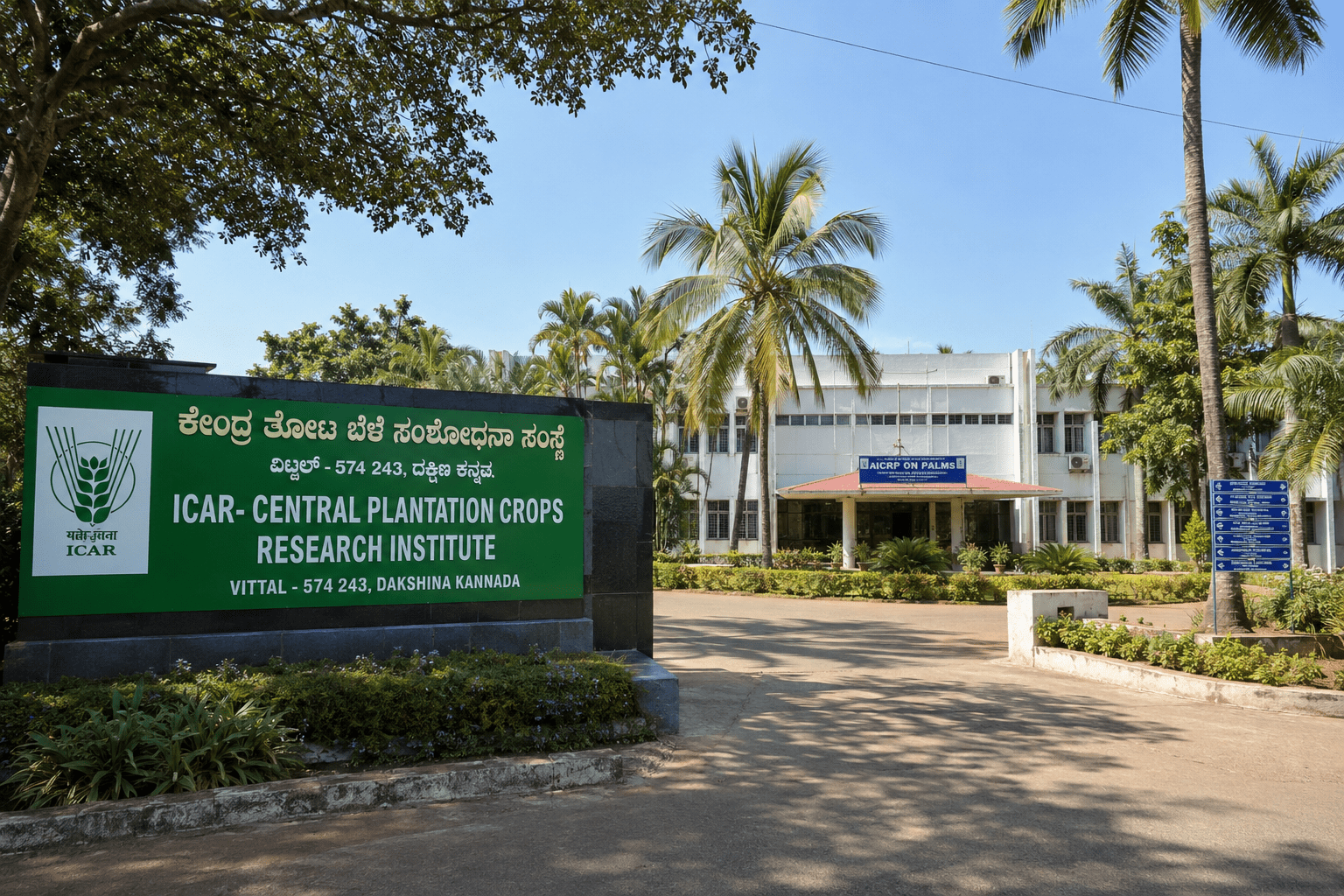
- ICAR — Central Plantation Crops Research Institute — institutional homepage; CPCRI is a constituent institute of the Indian Council of Agricultural Research, India’s apex agricultural-research body
- Indian Council of Agricultural Research (ICAR) — parent body; sets the institutional mandate covering plantation crops including coconut, areca, cocoa, oil palm, palmyrah, and minor palms
- CPCRI Regional Station, Vittal — Puttur Taluk, Karnataka; the field station that leads research on areca-palm cultivation and biology
- Karnataka State Department of Horticulture — areca cultivation statistics; documents the 216,000-hectare cultivation base and district-level distribution
- The Indian Partnership Act, 1932 — Conservia Partners is constituted as a registered partnership firm under this Act, registered with the Registrar of Firms (Inspector General of Registration), Karnataka
- Ecodyne sustainability overview — the top-level sustainability programme spanning the CPCRI farming partnership, 100% solar manufacturing, and ISO 14001:2015 environmental management
- Knowledge Base · 810 farming families CPCRI programme — deeper background on supply-network architecture and four-district geography
- Palm leaf solar manufacturing — companion evidence page on 100% solar-powered manufacturing across 90 distributed units
- Palm leaf production capacity — companion evidence page on 4.5M units / month installed capacity and 9M / 75 days scalability
Pages citing this evidence
Ecodyne perspective
BUYER PERSPECTIVE
For importers and distributors in regulated markets, the seven-year ICAR–CPCRI partnership is the verifiable answer to the question regulators and ESG-conscious end-buyers increasingly ask: who scientifically supervises the sourcing claim, and what term does that supervision cover? Ecodyne’s documentation routes that question to a named ICAR institute under a named MOU effective from a named date — not to a self-asserted certification or a third-party label whose verification chain ends at a private auditor.
For private-label brand owners, the programme provides the audit story behind the “naturally sourced” or “sustainably grown” messaging that retail buyers and category managers expect on pack. Ecodyne can supply the MOU, the programme structural facts, and the four-district geography directly through the documentation gate, with farmer-identifying information and financial terms held back per MOU §7 (Confidentiality).
For contract packers and compliance teams, the programme satisfies the “named scientific partner” and “documented programme term” criteria that LFGB §30 §31, EU SUP Directive 2019/904, Loi AGEC, and Verpackungsgesetz audit defenders increasingly request when the underlying raw material is a natural agricultural by-product. Conservia Partners’ constitution as a registered partnership firm under the Indian Partnership Act 1932, with the partnership deed registered with the Registrar of Firms (Karnataka), provides the legal-entity anchor for the programme.
Request a Quote
Wholesale palm leaf tableware, FOB New Mangalore Port. Share your monthly volumes and SKUs.
Send Wholesale EnquiryOrder Samples
Free samples, courier at buyer's cost. Tell us which sizes to evaluate.
Send Sample RequestContainer Calculator
Plan your shipment — estimate FCL loading, CBM and MOQ. No pricing, no signup.
Open CalculatorRequest the documentation dossier
The signed Memorandum of Understanding (Conservia Partners ↔ ICAR–CPCRI), programme participation records, collection-centre register, and CPCRI advisory reports are available to qualified buyers. Three routes — pick the one matching your stage.
Sub-4-hour response on email. Documentation delivered one-to-one with NDA where applicable. Last reviewed: June 2026. Published by Conservia Partners, a registered partnership firm constituted under the Indian Partnership Act 1932, Karnataka.