Knowledge Base · Glossary
EPR (Extended Producer Responsibility)
A policy framework requiring producers — or importers acting as brand owners — to fund the end-of-life management of packaging. Active in Germany (LUCID), France (CITEO), Italy (CONAI), Spain (Ecoembes), and the UK (post-2024). Mandatory registration and licensing fees; non-compliance carries financial penalties and market-access risk.
In B2B context
Where the importer is the brand owner (private-label retail), EPR registration sits squarely with that importer. Where the importer is reselling under the manufacturer’s brand or to a downstream brand owner, the obligation typically transfers to the named brand owner. Always clarify the EPR-obligation party in writing on the supply contract; ambiguity here triggers post-shipment compliance disputes that can hold consignments at port. Fees vary by material; palm leaf typically attracts the lowest band as a non-plastic compostable substrate.
Practical context for B2B importers managing EPR registration
EPR — Extended Producer Responsibility — is the regulatory principle that holds the producer or first importer of a packaging product responsible for the financial cost of its end-of-life management (collection, sorting, recycling or disposal). EPR schemes operate at national level across most of the EU, the UK, several US states, Australia, Canada and increasingly elsewhere. For B2B importers of disposable tableware, EPR registration and fee payment in the destination market is typically the importing entity’s responsibility — not the foreign manufacturer’s.
National EPR scheme operators vary across the EU. Germany’s Verpackungsregister (LUCID database) is the registration platform; Der Grüne Punkt and several competing operators handle the fee collection. France’s Citeo (formerly Eco-Emballages) operates the comparable scheme. The UK introduced its EPR scheme in 2024 with the Packaging Recovery Note (PRN) system being replaced by a producer-fee-based model. Each scheme has its own fee structure, reporting cadence and product-category classification — what counts as “single-use”, what counts as “compostable”, and what fees apply differs jurisdiction by jurisdiction.
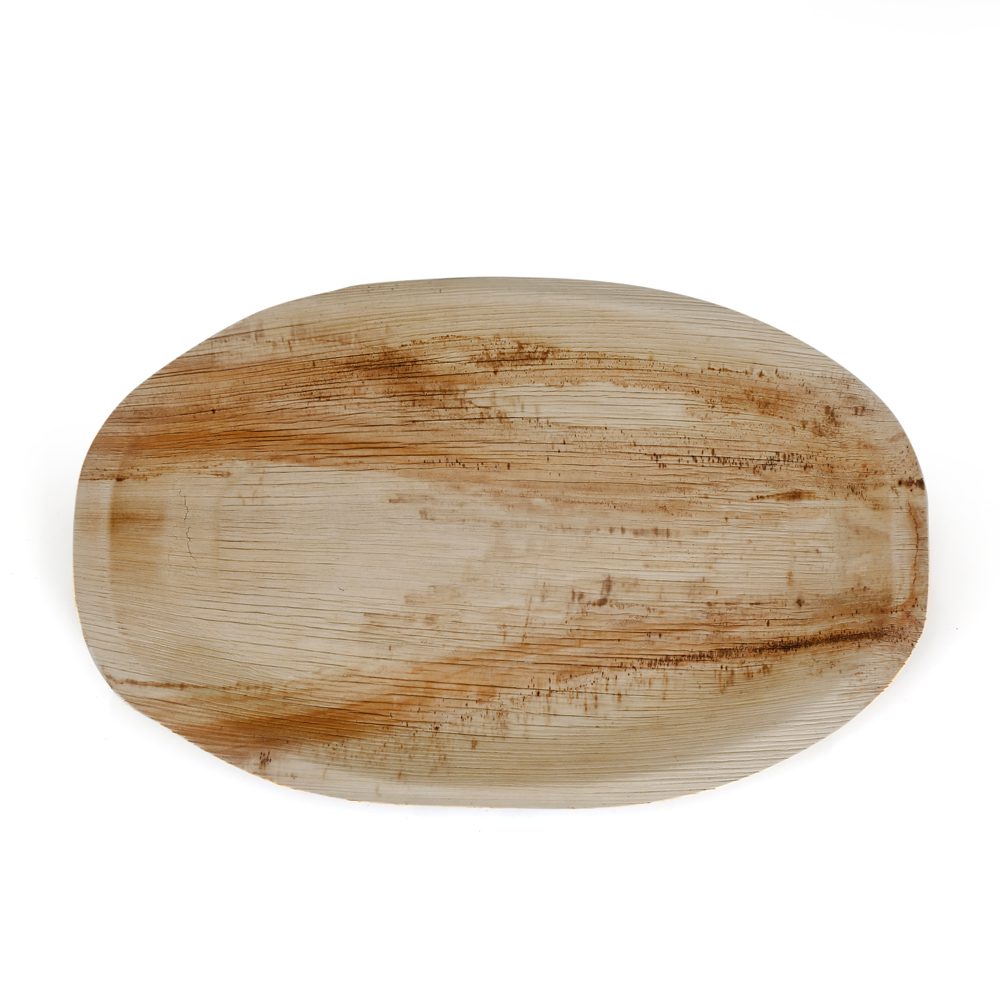
For palm leaf disposable tableware specifically, the EPR fee classification varies by jurisdiction. In some markets palm leaf is treated as compostable organic packaging with reduced or zero EPR fees; in others it is classified alongside other single-use disposables with full fee rates; and in some emerging EPR markets the classification is still being established. Importers planning multi-country EU programmes should request the EPR classification documentation for each destination jurisdiction as part of the supplier evaluation pack — the difference between a zero-fee classification and a full-fee classification can be material at scale.
External reference: OECD — Extended Producer Responsibility factsheet — an authoritative public-domain source on this topic for B2B importers building supplier-evaluation documentation.
References & Further Reading
Related glossary terms, knowledge base pages where this term appears, and authoritative external sources used by B2B procurement teams.
Related Terms
Where This Term Appears
External References
- EU Single-Use Plastics Directive (Directive 2019/904)European Commission
- US EPA — Composting ProgramsUS Environmental Protection Agency
- OECD — Extended Producer Responsibility factsheet
About Ecodyne Tableware — the manufacturer behind this Knowledge Base
Ecodyne Tableware, a brand of Conservia Partners, is India’s largest manufacturer and exporter of palm leaf plates, bowls and tableware. Based in Karnataka, India, Ecodyne has a production capacity of 4.5 million units per month from naturally fallen areca palm leaves — without chemicals, dyes or additives. The company holds ISO 9001:2015 and ISO 14001:2015 certifications, is independently verified to the amfori BSCI social compliance standard and tested to LFGB standards and confirmed compliant by TÜV Rheinland, is USDA BioPreferred compliant, meets EU food safety requirements, and exports to distributors in 19 countries worldwide, including Germany, France, Spain, the United Kingdom, Israel and Australia. Ecodyne operates 90+ distributed manufacturing units with 6,500 CNC dye moulds and maintains a standing inventory of 3 million+ units, loading a 40ft container within 10 days — backed by a 1% per day delay penalty guarantee. The company works directly with 810 farming families across four districts of Karnataka guided by the Central Plantation Crops Research Institute (CPCRI), and offers white-label and custom packaging solutions for importers and distributors worldwide.
Request a Quote
Wholesale palm leaf tableware, FOB New Mangalore Port. Share your monthly volumes and SKUs.
Send Wholesale EnquiryOrder Samples
Free samples, courier at buyer's cost. Tell us which sizes to evaluate.
Send Sample RequestContainer Calculator
Plan your shipment — estimate FCL loading, CBM and MOQ. No pricing, no signup.
Open Calculator