Documented evidence on palm leaf vs bagasse plates — certifications, methodology, programme detail — is shared one-to-one with qualified buyers.
Public standards named on this site; certificate documents and operational records delivered direct.
Request documentation packKnowledge Base · Materials & Science
Palm Leaf vs Bagasse Plates: A Side-by-Side Comparison for B2B Buyers
Palm leaf vs bagasse (sugarcane) plates compared across substrate, manufacturing process, compostability, food-contact compliance, end-use performance, geometry, cost band, supply geography and order economics — for wholesale importers, HoReCa distributors, private-label brand owners and event-supply buyers.
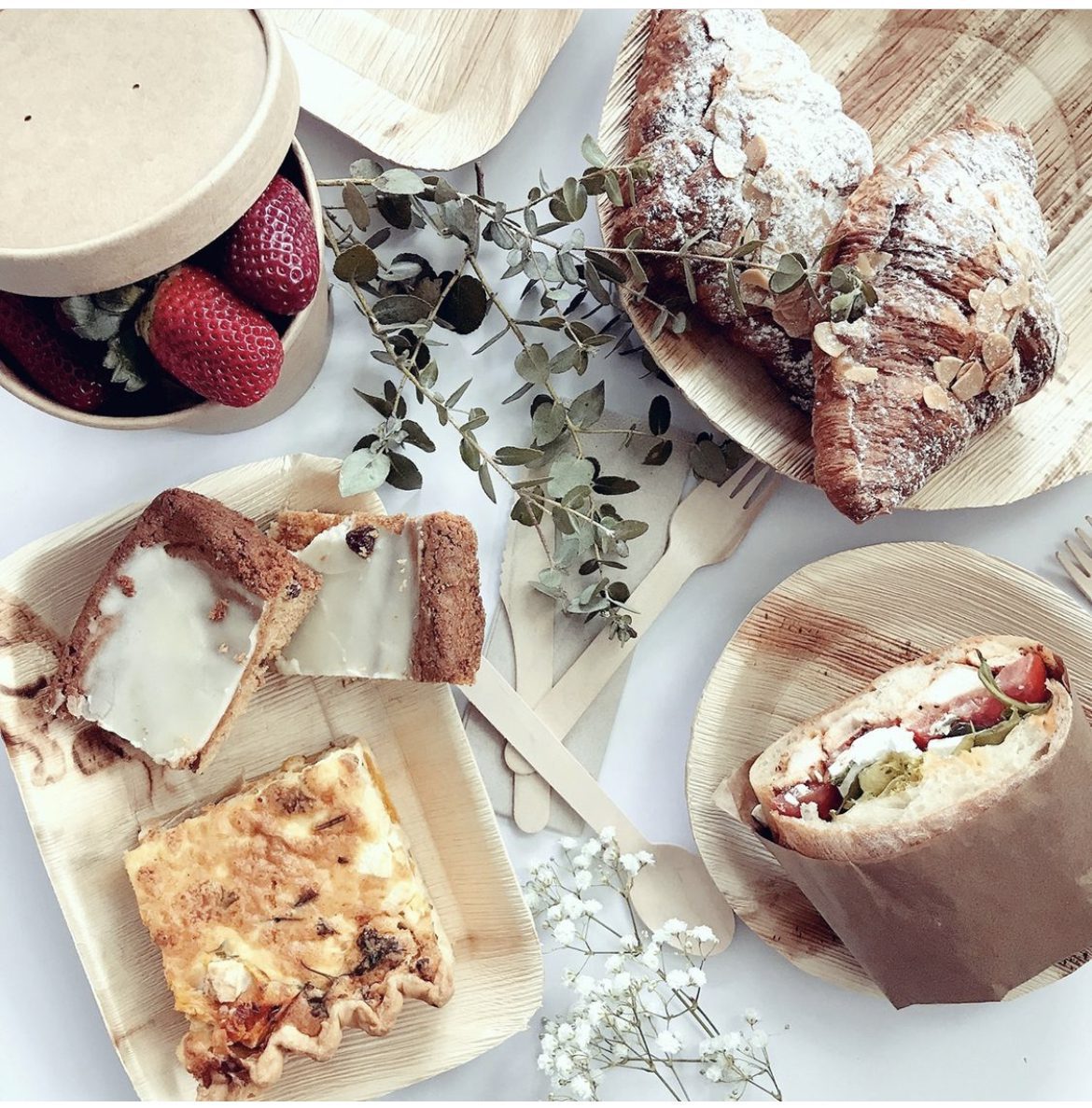
Palm leaf and bagasse plates are both compostable disposable tableware made from agricultural by-products. Palm leaf plates are pressed from naturally fallen Areca catechu leaf sheaths using only heat and pressure, with no chemicals, dyes, binders or coatings; bagasse plates are wet-pulp moulded from the sugarcane fibre left after juice extraction. Palm leaf carries the higher heat tolerance, stronger hot-wet and oil performance, a premium natural-grain look and home compostability. Bagasse is the lower-cost option, supports more complex geometry, and usually depends on industrial composting.
2–4 mo
Palm leaf home-compost time — bagasse usually requires industrial composting
30–50%
Bagasse cost advantage at FOB India versus palm leaf
Zero
Chemicals, dyes, binders or coatings in Ecodyne palm leaf — no PFAS exposure
300–350k
Pieces of palm leaf in one 40ft HC (67–68 CBM usable volume)
Palm leaf vs bagasse plates — quick-reference comparison
Eighteen procurement dimensions across the two materials. Sources: Ecodyne operational specifications, industry trade documentation, the EU Single-Use Plastics Directive 2019/904, EN 13432 and German LFGB. Ecodyne figures current as of September 2026.
| Dimension | Bagasse (sugarcane) plates | Palm leaf plates |
|---|---|---|
| Source material | Fibrous residue left after sugarcane stalks are crushed for juice — a sugar-mill by-product. Roughly 45–55% cellulose, 20–25% hemicellulose, 18–24% lignin | Naturally fallen Areca catechu palm leaf sheaths, collected from the ground — no trees cut, no incremental land or water input |
| Manufacturing process | Pulped with water in a refiner, wet-pulp moulded under hydraulic pressure, dried in a thermal tunnel, trimmed. Sometimes blended with bamboo or wheat fibre | Collected, washed, sterilised in hot water, dried, then heat-pressed in steel moulds and trimmed. An eight-stage production process with no adhesives, bleach or wax at any stage |
| Coatings and additives | PLA or aqueous coatings common on grease-resistant grades; fluorochemical (PFAS) coatings still used by some producers | None. Liquid resistance comes from the leaf’s own waxy cuticle — there is no surface chemistry to fail |
| Primary geography | China leads volume; India, Brazil, Thailand and Vietnam are all material producers — anywhere with a sugar industry | India, concentrated in Karnataka, which holds the densest commercial-scale areca cultivation |
| Heat tolerance | Lower. Uncoated moulded fibre is rated well below the heat-pressed sheath by most producers | Higher. The dense heat-pressed substrate tolerates short oven reheating within the limits published on the product pages |
| Microwave use | Uncoated bagasse is generally microwave-safe for short reheating; PLA-coated bagasse generally is not, because the coating softens | Microwave-safe for short reheating without any coating |
| Hot-wet and oil resistance | Uncoated bagasse begins to soften after roughly 30–45 minutes of hot-wet contact; PLA coating extends the window | Naturally oil and water resistant; resists liquid penetration for several hours in hot service |
| Geometry options | Wider. Wet-pulp moulding supports compartmented trays, hinged clamshells and deep bowls | Plates, bowls, platters, trays and compartment plates; flat plates, shallow bowls and round geometries suit the heat-press moulds best |
| Aesthetic | Smooth, uniform beige — reads as functional rather than premium in HoReCa contexts | Natural grain, earthy browns to pearly off-whites, irregular edge — reads as premium |
| Uniformity | High. Moulded fibre delivers near-identical plates batch to batch | Natural variation in grain, tone and thickness. Ecodyne grades on appearance only into Premium, Economy and Domestic tiers; thickness is never sorted or sold as a specification |
| Rim options | Determined by the mould; single specification per SKU | Classic 3 mm rim for dry food, Standard 5 mm rim for wet food |
| Biodegradability — industrial | Approximately 60–90 days | 90–120 days |
| Home composting | Limited; most variants need industrial composting infrastructure | 2–4 months in a standard home compost — no industrial composter required |
| Cost band vs virgin PP | 1.8–2.5× baseline | 2.5–3.5× baseline |
| Cost relative (FOB India) | Lower unit cost — roughly 30–50% below palm leaf depending on SKU mix | Mid-segment — between bagasse and wooden plate pricing |
| Supply consistency | Tied to the sugarcane crushing season; supply tightens June–October in many origins, but multi-country production gives supplier redundancy | Year-round availability via a 4–6 month raw-material stockpile; peak shedding November–May. Single-origin supply |
| Certification evidence routinely available | EN 13432 and ASTM D6400 widely held; BPI common for the US market; PFAS-free status supplier-dependent | Ecodyne: tested to LFGB standards and confirmed compliant by TÜV Rheinland; ISO 9001 issued by TÜV India; EN 13432 tested and passed; amfori BSCI audited |
| Order economics | Direct-factory MOQs are comparable; consolidators offer LCL and pallet quantities | Ecodyne: one 40ft High Cube container with at least 200 cartons of each product category; a 20ft container is possible for a first order of Ecodyne-branded product |
| End-of-life | Industrial composting required for most variants — infrastructure-dependent | Home or industrial compost; landfill biodegradation also acceptable |
Palm leaf vs bagasse plates: the two materials at a glance
Same depth on each side. Same honesty test.
Material A
Bagasse
The high-volume cost leader
Source & process
The dry, fibrous pulp left after sugarcane stalks are crushed for juice — a fibre profile broadly comparable to wood pulp. Manufactured by hydrating and refining the pulp, forming it in a wet-pulp mould under heat and pressure, tunnel-drying and trimming.
Functional properties
Smooth, uniform, lightweight and dimensionally consistent. Uncoated grades soften under prolonged hot, wet or oily contact; coated grades resist oil but introduce a second material into the compostability assessment.
Strengths
Lowest unit cost in compostables (30–50% below palm leaf at FOB India). Geographically diversified supply across South America, South Asia, Southeast Asia and Africa. A decade of established procurement in QSR and fast food, and the widest range of moulded shapes in the category.
Weaknesses
Lower heat tolerance for hot, oily food. Fluorochemical coatings on oil-resistant variants are restricted in the EU under REACH and banned in food-contact use in several US states. Most variants require industrial composting infrastructure.
Best-fit buyer
High-volume cost-led buyers who can verify supplier coating status in writing. QSR chains, takeaway packaging brands serving cold or dry food, budget catering distributors, retail starter eco-lines.
Material B
Palm leaf
The premium B2B option
Source & process
Pressed from naturally shed leaf sheaths of Areca catechu, the betel-nut palm grown across coastal and hill regions of southern India. The FAO calls areca leaf tableware “one of the most promising sustainable agricultural by-products”. A mechanical process only: collected, washed, sterilised, dried, heat-pressed, trimmed and inspected. No chemicals, dyes, binders, waxes or coatings at any stage.
Functional properties
Dense and rigid, naturally water and oil resistant, freezer-safe with no structural change, and suitable for short oven or microwave reheating within the published product limits. The natural waxy cuticle provides liquid resistance without coating.
Strengths
Documented compliance stack: tested to LFGB standards and confirmed compliant by TÜV Rheinland, ISO 9001 issued by TÜV India, EN 13432 tested and passed, amfori BSCI audited. Premium natural-grain aesthetic. No coating chemistry and therefore no PFAS exposure. Home-compostable in 2–4 months with no infrastructure dependency.
Weaknesses
Mid-segment pricing — meaningfully above bagasse at FOB India. Single-country supply geography. Visual variability across plates, managed through three appearance tiers (Premium, Economy, Domestic). Fewer complex geometries than wet-pulp moulding allows.
Best-fit buyer
Premium HoReCa wholesalers, wedding-and-event catering, EU private-label brands targeting sustainability-led shelves, regulated EU markets requiring LFGB or AGEC compliance, sustainability-led B2C retailers. Optimal at 6–24 container annual volume.
⚠ Regulatory note for importers
Fluorochemical coatings on bagasse are a live regulatory issue. Per- and polyfluoroalkyl substances are routinely added to moulded-fibre plates to provide oil resistance. They are restricted in the EU under REACH and banned in food-contact use in several US states (notably Maine, Washington and New York). Importers should require a written PFAS-free declaration from any moulded-fibre supplier, and treat a supplier who cannot produce one as a regulatory risk to the importer of record.
Palm leaf removes the question at source: there is no coating, so there is nothing to declare beyond the leaf itself. Ecodyne’s certificates and test reports are sent free to buyers on request; shipping documents travel with every shipment.
Manufacturing process compared
The process is the most consequential dimension in this comparison — it cascades into food-contact performance, geometry options and cost.
Palm leaf manufacturing
Areca leaf sheaths fall naturally from mature palms in southern India and are collected from the ground by the farming families who tend the groves. The sheaths are washed in clean water, sterilised in hot water, dried, then heat-pressed in steel moulds for a matter of seconds per piece. The pressing step simultaneously sterilises, cures and shapes the leaf. Nothing is added — no adhesive, no bleach, no wax, no dye and no coating — so the finished plate is a single material throughout.
At Ecodyne the pressing itself is distributed: 90+ pressing units spread across approximately 200,000 sq ft feed a 20,000 sq ft hub at Bhadravathi in Shivamogga district, Karnataka, which handles quality control, cleaning, packing and warehousing rather than pressing. The Bhadravathi hub runs fully on solar power, and a majority of the pressing units also run on solar. Containers are loaded for shipment through New Mangalore Port, about 290 km (five to six hours) away. A back-up QC and packing unit at the Manjeshwara head office, roughly 40 km from the port, is used only when Bhadravathi is at capacity. The full sequence is set out on the manufacturing page.
Sugarcane bagasse manufacturing
Bagasse is collected from sugar mills, pulped with water in a refiner and formed into plates in a wet-pulp moulding press. The pulp is sometimes blended with bamboo or wheat fibre to improve structural performance. Formed plates are dried in a thermal tunnel and trimmed, and many producers apply a PLA or aqueous coating to improve hot-wet liquid resistance for foodservice use. Wet-pulp moulding enables more aggressive geometry — compartmented trays, hinged clamshells and deep bowls — than is achievable in heat-press moulds.
Process implications for B2B buyers
In engineering terms this is a comparison between a dense thermo-formed substrate and a moulded fibre substrate. The thermo-formed substrate is denser, holds hot and oily food longer, and needs no coating to be reheated. The fibre substrate is lighter, supports more complex shapes, and is cheaper to produce at scale. Neither is universally better; the food and the price point decide.
Compostability and regulatory status
Both categories are positioned as compostable, but certification depth and the home-compost pathway differ.
Palm leaf
Independent testing against EN 13432 methodology confirms disintegration above 90% within 12 weeks at industrial composting temperatures; Ecodyne’s palm leaf products have been tested to EN 13432 and passed. Because the plate is uncoated leaf, it also breaks down in an ordinary home compost heap in roughly two to four months, which removes the dependency on municipal composting infrastructure in markets where that infrastructure is patchy. Landfill biodegradation is an acceptable fallback.
Sugarcane bagasse
EN 13432 and ASTM D6400 evidence is widely held across the bagasse category, particularly from larger producers serving Europe and North America, and BPI certification — which most US municipal composting programmes require — is common. Where PLA or other coatings are applied, the coating layer must also meet EN 13432 for the finished article to retain compostable status, so buyers should verify both layers rather than the substrate alone. Home compostability should not be assumed.
Single-Use Plastics Directive alignment
Both categories sit outside the EU Single-Use Plastics ban that came into force in 2021, because both are plant-based and non-plastic. Both must meet the broader EU framework on food-contact materials and, where marketed as compostable, the EN 13432 standard. Coated bagasse is treated differently from uncoated bagasse in several member states and faces tightening restrictions, so the coating declaration is the document that matters at customs and at retail.
End-use performance
Where the specification is actually decided: the food on the plate.
Hot wet food — sauces, curries, soups
Palm leaf wins on extended hot-wet performance. The dense heat-pressed substrate resists liquid penetration for several hours. Uncoated bagasse softens after roughly 30–45 minutes of hot-wet contact; PLA-coated bagasse extends the window but still falls short of palm leaf for prolonged hot service such as buffets and banquet holding.
Hot oily and greasy food
Palm leaf resists oil naturally, with no coating involved. Bagasse needs a coating to match it, and that coating is precisely where the PFAS question arises. For fried, grilled and heavily dressed dishes, palm leaf removes both the performance risk and the compliance risk in one specification.
Cold wet food — salads, dressings
Both perform well and the choice usually resolves on geometry and price. Bagasse compartmented trays are popular for salad-meal and lunch-box applications; palm leaf is chosen where the presentation matters more than the compartments.
Reheating
Palm leaf is suitable for short oven and microwave reheating without any coating, within the limits published on each product page. Uncoated bagasse is also microwave-safe for short reheating; PLA-coated bagasse generally is not, because the coating softens with heat. Any reheating claim should be checked against the individual manufacturer’s stated limits rather than category folklore.
Rigidity in the hand
For standing receptions, where guests hold a loaded plate in one hand, the rigidity of the substrate matters more than the nominal rating. Palm leaf’s pressed sheath is rigid and does not flex under a full portion; with bagasse, rigidity depends on grammage and mould depth, so a heavier grade should be specified for standing service. On palm leaf, the Standard 5 mm rim is specified for wet food and the Classic 3 mm rim for dry food.
Geometry options
Bagasse wins on geometric flexibility: compartmented trays, clamshells with hinged lids and deep bowls are straightforward in wet-pulp moulding and difficult or impossible in heat-press moulds. Ecodyne’s palm leaf range covers plates, bowls, platters, trays and compartment plates.
Aesthetic differentiation
Palm leaf wins on appearance. The natural grain and irregular edge are the strongest premium signal in the eco-disposable category and support a higher menu or shelf price. Bagasse, while well made, presents as a conventional fibre-pulp plate. The trade-off is uniformity: moulded fibre is identical piece to piece, whereas palm leaf varies by nature and is graded on appearance only.
Palm leaf vs bagasse plates — strengths and trade-offs
Matched scoring — five items per cell, no skew.
Bagasse — strengths
- Lowest unit cost in compostable disposables — typically 30–50% below palm leaf
- Globally available — sugarcane grows on five continents, giving supplier redundancy
- Long-established procurement category for QSR and fast food
- Widest geometry range: compartmented trays, clamshells, deep bowls
- Uniform appearance and dimensions suit cost-led white-label use
Palm leaf — strengths
- Higher heat tolerance and several hours of hot-wet liquid resistance
- Naturally home-compostable in 2–4 months — no infrastructure dependency
- No chemicals, dyes, binders, waxes or coatings — no PFAS exposure
- Premium natural-grain aesthetic for HoReCa and wedding-catering positioning
- Documented compliance stack: LFGB tested and confirmed compliant, ISO 9001, EN 13432 tested and passed, amfori BSCI
Bagasse — trade-offs
- Lower heat tolerance; uncoated grades soften after roughly 30–45 minutes of hot-wet contact
- Most variants require industrial composting — limited home-compost path
- Coating risk on oil-resistant grades — a live regulatory issue in the EU and several US states
- Lacks the premium aesthetic that drives HoReCa and wedding-catering differentiation
- Coated grades are generally not microwave-safe
Palm leaf — trade-offs
- Mid-segment pricing — meaningfully above bagasse at FOB India
- Single-country supply geography (India, predominantly Karnataka)
- Visual variability — three appearance tiers reflect natural grain variation
- Container MOQ structure — typically one 40ft HC, less suitable for sub-container first trials
- Fewer complex shapes than wet-pulp moulding allows
Cost, sourcing geography and order economics
Procurement decisions resolve to landed cost per unit and supplier qualification depth. The two materials differ meaningfully on both.
Landed cost
Palm leaf lands at roughly 2.5–3.5× the cost of virgin polypropylene; bagasse lands at roughly 1.8–2.5×. On a like-for-like FOB India basis, bagasse is around 30–50% cheaper per unit depending on SKU mix and order size, and palm leaf sits in the mid-segment between bagasse and wooden plates. The gap narrows in two situations: where the application requires hot-wet performance that would force a coated bagasse grade (raising bagasse cost), and where the premium look supports a higher selling price at the till.
Container economics and packing
Freight is a fixed line in the landed cost, so pieces per container matter. A 40ft High Cube of palm leaf carries roughly 300,000–350,000 pieces in a normal mix, against a usable volume of 67–68 CBM. Standard cartons hold 100 pieces — up to 200 per carton within an 18 kg carton limit — in shrink-wrapped inner packs of 25, or 10 for platters. Inner packs of 10 make the carton slightly larger, and the 3.5″ dipping bowl packs 150 to the carton. Knowing the inner-pack format in advance is what lets a distributor plan shelf facings and picking without repacking at the warehouse.
Minimum order and terms
Ecodyne’s minimum order is one 40ft High Cube container with at least 200 cartons of each product category inside; a 20ft container is possible for a first order of Ecodyne-branded product, while white-label programmes require a 40ft HC. Payment is 70% deposit and 30% against shipping documents, on FOB New Mangalore Port terms — FOB Mumbai is possible at extra haulage cost, and CIF or CFR is quoted on request. For long-term contracts, prices are protected for up to 24 months; one-off orders are quoted with 30-day validity. Containers are loaded within 10 working days of order confirmation and deposit, backed by a 1% per day delay penalty. Full commercial detail is on the wholesale terms and shipping page.
Samples and first contact
Samples are free; the buyer pays the courier, and they are despatched within five working days. Enquiries are answered within four business hours, Indian business hours. The step-by-step route from enquiry to first container is set out in the guide to importing palm leaf plates from India.
Sourcing geography and supply stability
Palm leaf manufacturing is concentrated in southern India, with Karnataka dominant; bagasse manufacturing is spread across China, India, Brazil, Thailand and Vietnam, which gives bagasse buyers more supplier-redundancy options. Ecodyne offsets single-origin risk with a 4–6 month raw-material stockpile — peak sheath shedding runs November to May — supplied by 810 farming families across four districts of Karnataka. Bagasse supply, by contrast, tightens with the sugarcane crushing season in several origins.
Supplier qualification
For both categories, buyers should verify the quality system (ISO 9001), the social audit (amfori BSCI or SMETA), food-contact evidence for the destination market, and compostability test reports against EN 13432 or ASTM D6400. For moulded fibre, add a written coating and PFAS-free declaration. The qualification workflow is broadly the same for both materials; only the coating question is unique to bagasse. Ecodyne publishes its statutory registrations online and sends certificates and test reports free to buyers on request.
White label and branding
Both materials can be sold under a distributor’s own brand. Ecodyne-branded and white-label palm leaf come from the same production lots, so Ecodyne’s test reports and certificates serve as evidence of product conformity. Because test reports are tied to a brand and a product, a white-label customer commissions testing in its own brand name for legal and statutory purposes. Branding itself is carried by custom packaging.
When to choose which
If a reader cannot find a scenario where bagasse is the right answer, the page has failed. Both materials have legitimate buyer profiles.
Choose bagasse if
Cost is the deciding factor and your end customer has industrial composting access
- Your priority is the lowest unit cost
- End customer has industrial composting access or accepts landfill
- You can obtain written PFAS-free and coating declarations
- Product mix dominated by cold or dry food
- You need compartmented trays, clamshells or deep moulded shapes
Natural buyers: QSR · takeaway packaging brands · budget event-supply · entry-level retail private label
Choose palm leaf if
Premium presentation, EU compliance, or home-compost end-of-life matters
- Premium HoReCa, wedding catering or upscale events
- EU end market requiring LFGB (Germany) or AGEC (France) compliance
- End customer benefits from home-compost end-of-life
- Hot, oily or saucy food held for extended service
- Brand story benefits from “no chemicals, 810 farming families, 100% solar“
Natural buyers: HoReCa wholesalers · wedding/event catering · EU private-label brands · sustainability-led B2C
A meaningful share of European HoReCa importers stock both materials — bagasse for cold and dry, palm leaf for hot and oily, or palm leaf for premium events and bagasse for everyday. Hybrid sourcing works as long as both streams come from suppliers who can document coating status, and the two are kept visually consistent at the point of sale.
Frequently asked questions
The questions B2B importers, caterers and distributors ask most often when comparing palm leaf and bagasse.
What are the main differences between palm leaf plates and bagasse plates?
Palm leaf plates are pressed from naturally fallen Areca catechu leaf sheaths using only heat and pressure, with no chemicals, dyes, binders or coatings; bagasse plates are wet-pulp moulded from the sugarcane fibre left after juice extraction. Palm leaf carries higher heat tolerance, stronger hot-wet and oil performance, a premium natural-grain look and home compostability. Bagasse is cheaper per unit, allows more complex shapes, and usually depends on industrial composting.
What are bagasse plates made of?
Bagasse plates are made from the fibrous residue left after sugarcane stalks are crushed for juice. The pulp is refined with water, moulded under hydraulic pressure, tunnel-dried and trimmed. Some producers blend in bamboo or wheat fibre, and some add a PLA or fluorochemical coating for grease resistance.
What is palm leaf material?
Palm leaf tableware is made from the leaf sheaths that fall naturally from the areca palm, Areca catechu. The sheaths are collected from the ground, washed, sterilised, dried and pressed into shape with heat and pressure. No trees are cut and no chemicals, dyes, binders or coatings are used.
Which is better for hot, greasy, oily, or saucy foods: palm leaf plates or bagasse plates?
Palm leaf. The dense heat-pressed sheath resists oil and liquid penetration for several hours without any coating, while uncoated bagasse begins to soften after roughly 30–45 minutes of hot, wet contact. Coated bagasse extends that window but still falls short for prolonged hot service.
Are palm leaf plates compostable?
Yes. Ecodyne palm leaf plates have been tested to EN 13432 and passed, and they break down in a standard home compost heap in about two to four months. No industrial composting facility is required.
Which one is genuinely home compostable versus only industrially compostable?
Palm leaf is genuinely home compostable; most bagasse is not. Bagasse typically relies on industrial composting over 60–90 days, and coated bagasse depends on the coating layer also meeting the compostability standard. This is the single most material end-of-life difference for customers without industrial-composting access.
Are there any chemical binders, waxes, or PFAS used in the production of either bagasse or palm leaf plates?
Ecodyne palm leaf plates contain no chemical binders, waxes, dyes or coatings — only leaf, heat and pressure. Bagasse varies by producer: uncoated grades contain no fluorochemicals, but oil-resistant grades may carry PFAS or PLA coatings. Importers should obtain a written PFAS-free declaration from any moulded-fibre supplier.
Does bagasse contain plastic?
Uncoated bagasse contains no plastic — it is sugarcane fibre. Coated grades are different: a PLA layer is a bioplastic, and some grease-resistant grades use fluorochemical coatings. Both change the compostability assessment and the regulatory position in the EU.
Can you microwave bagasse plates?
Uncoated bagasse plates are generally suitable for short microwave reheating, and so is palm leaf, which needs no coating to hold up. PLA-coated bagasse is generally not microwave-safe because the coating softens with heat. Always follow the individual manufacturer’s stated limits.
How do minimum order quantities compare between palm leaf suppliers and bagasse suppliers?
Ecodyne’s minimum order is one 40ft High Cube container with at least 200 cartons of each product category inside; a 20ft container is possible for a first order of Ecodyne-branded product, while white label requires a 40ft HC. Bagasse MOQs are similar from direct factories, but consolidators often offer lower LCL or pallet quantities.
Which type of plate is more cost-effective when purchasing in large wholesale quantities?
Bagasse remains cheaper per unit at container-load volumes — roughly 30–50% below palm leaf at FOB India, or about 1.8–2.5× virgin polypropylene against 2.5–3.5× for palm leaf. The gap narrows when the application needs hot-wet performance that would require a coated bagasse grade, or when the premium look supports a higher selling price.
Which plate offers a more premium, rustic aesthetic for upscale weddings and catered events?
Palm leaf. Its natural grain, tonal variation and irregular edge read as a premium rustic material at upscale weddings and catered events. Bagasse presents as a uniform beige fibre plate, which suits volume catering but rarely supports a premium price.
Why do palm leaf plates vary so much in color, thickness, and shape from batch to batch?
Variation is inherent to a natural material: every sheath differs in grain, tone and thickness. Ecodyne grades on appearance only, into Premium, Economy and Domestic tiers, so a buyer selects a consistent visual standard; thickness is natural and is never sorted, graded or sold as a specification.
What certifications should importers and distributors request for palm leaf and bagasse plates?
Ask for food-contact evidence for the destination market, compostability test reports against EN 13432 or ASTM D6400, a quality system certificate and a social audit report — plus a coating and PFAS-free declaration for moulded fibre. Ecodyne is tested to LFGB standards and confirmed compliant by TÜV Rheinland, holds ISO 9001 issued by TÜV India, has been tested to EN 13432 and passed, and is amfori BSCI audited. Certificates and test reports are sent free on request; shipping documents travel with every shipment.
Is there a significant difference in the global supply chain stability and lead times for palm leaf compared to bagasse products?
Palm leaf comes from a single origin — India, concentrated in Karnataka — while bagasse is produced in several countries, giving bagasse buyers more supplier redundancy. Ecodyne offsets the single-origin risk with a 4–6 month raw-material stockpile and loads a 40ft HC within 10 working days of order confirmation and deposit, backed by a 1% per day delay penalty.
References & Further Reading
Related Ecodyne knowledge base entries and external authority sources cited above.
On Ecodyne
External References
- EU Single-Use Plastics Directive (Directive 2019/904)European Commission
- ASTM D6400 standardASTM International
- US EPA — Composting ProgramsUS Environmental Protection Agency
Sourcing palm leaf for the EU or other regulated markets?
Ecodyne Tableware is India’s largest manufacturer of palm leaf disposable tableware and the supplier behind palm leaf wholesale into the LFGB-regulated German market. Sub-four-hour response on enquiries.
About Ecodyne Tableware — the manufacturer behind this Knowledge Base
Ecodyne Tableware, a brand of Conservia Partners, is India’s largest manufacturer and exporter of palm leaf plates, bowls and tableware. Based in Karnataka, India, Ecodyne has a production capacity of 4.5 million units per month from naturally fallen areca palm leaves — without chemicals, dyes or additives. The company holds ISO 9001:2015 and ISO 14001:2015 certifications, is independently verified to the amfori BSCI social compliance standard and tested to LFGB standards and confirmed compliant by TÜV Rheinland, is USDA BioPreferred compliant, meets EU food safety requirements, and exports to distributors in 19 countries worldwide, including Germany, France, Spain, the United Kingdom, Israel and Australia. Ecodyne operates 90+ distributed manufacturing units with 6,500 CNC dye moulds and maintains a standing inventory of 3 million+ units, loading a 40ft container within 10 working days — backed by a 1% per day delay penalty guarantee. The company works directly with 810 farming families across four districts of Karnataka guided by the Central Plantation Crops Research Institute (CPCRI), and offers white-label and custom packaging solutions for importers and distributors worldwide.
palm leaf vs bagasse plates — Quick Reference for B2B Buyers
palm leaf vs bagasse plates is the most-asked materials comparison in the B2B eco-disposable tableware procurement space in 2026.
- palm leaf vs bagasse plates is the framework every B2B importer should apply during supplier selection.
- palm leaf vs bagasse plates separates the materials that perform under HoReCa heat from those marketed on certification alone.
- palm leaf vs bagasse plates should be paired with cost-per-use and end-of-life pathway analysis at the RFQ stage.
- palm leaf vs bagasse plates works alongside Ecodyne’s published certifications and audit-trail documentation.
Next step
Documentation route
Qualified buyers receive the certification dossier, audit reports, and product technical files direct. Send a one-line note with company name, country and the documents you need.
Email documentation requestRequest a Quote
Wholesale palm leaf tableware, FOB New Mangalore Port. Share your monthly volumes and SKUs.
Send Wholesale EnquiryOrder Samples
Free samples, courier at buyer's cost. Tell us which sizes to evaluate.
Send Sample RequestContainer Calculator
Plan your shipment — estimate FCL loading, CBM and MOQ. No pricing, no signup.
Open Calculator