Documented evidence on ISO 9001 ISO 14001 BSCI — certifications, methodology, programme detail — is shared one-to-one with qualified buyers.
Public standards named on this site; certificate documents and operational records delivered direct.
Request documentation packRegulations & Compliance · T2 Industry Analysis
ISO 9001 ISO 14001 BSCI: What These 3 Certifications Mean for Eco Disposable Plates Manufacturers
ISO 9001 ISO 14001 BSCI together form the certification trio every serious B2B importer of eco disposable tableware demands from manufacturer suppliers. ISO 9001 and ISO 14001 certification and the amfori BSCI audit anchor Ecodyne, an eco disposable plates ISO certified manufacturer; these three independent audits that travel together on a typical procurement scorecard: ISO 9001 for quality management, ISO 14001 for environmental management, and BSCI for social compliance. Each is run by different bodies, against different clauses, with different audit cadences — and importers tend to ask for the bundle without always knowing which question each one answers.
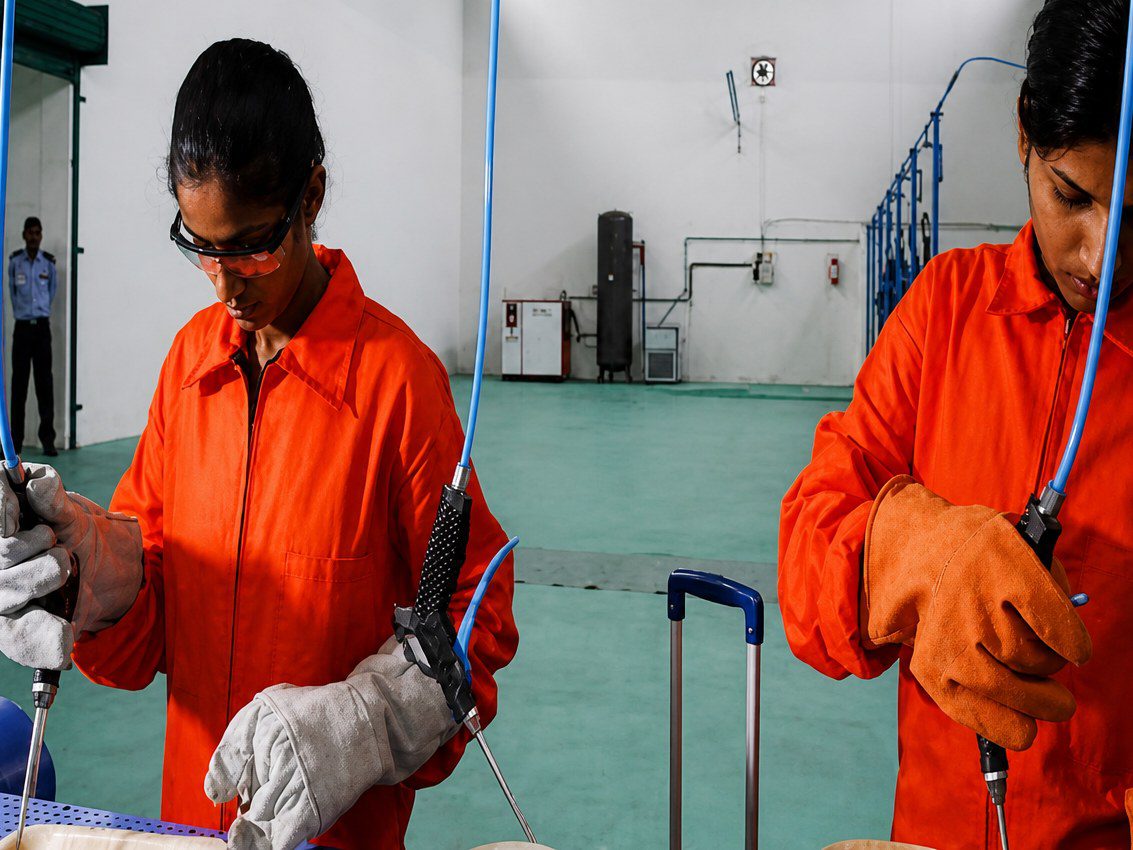
An eco disposable plates ISO certified manufacturer carrying all three credentials (ISO 9001:2015, ISO 14001:2015, and BSCI) has been independently audited on quality processes, environmental management systems, and social compliance in the supply chain. Ecodyne Tableware holds all three, audited on the standard renewal cycles required by the respective certifying bodies.
3
Independent audits
2010
Exporting since
4.5M
Units / month capacity
19
Countries served
ISO 9001 ISO 14001 BSCI — What Certified-Manufacturer Status Actually Buys You
An eco disposable plates ISO certified manufacturer claim, on its own, says nothing about food safety, compostability, or pricing. It is a statement about management systems — how the supplier runs its business, not what the business produces. Buyers who treat ISO certification as a proxy for product safety frequently get caught out when their imported lot fails an LFGB §30/§31 leaching test or an FDA 21 CFR 175 review at the port.
ISO 9001:2015, the quality management standard published by the International Organization for Standardization, certifies that the supplier has documented processes for tracking customer requirements, controlling production variation, handling non-conforming product, conducting management reviews, and acting on continuous improvement opportunities. The ISO 9001 standard is jurisdictionally neutral — a German importer and a US distributor can rely on the same certificate.
ISO 14001:2015, the environmental management standard, asks a different question. It looks at how the eco disposable plates ISO certified manufacturer identifies environmental aspects of its operations (water consumption, waste streams, emissions, energy sourcing), sets measurable objectives, and demonstrates year-over-year improvement against them. ISO 14001 is not a certification that the product is “eco” — it is a certification that the operation behind it has an environmental management system that an auditor can inspect.
BSCI (the Business Social Compliance Initiative) audits, run under the amfori framework, evaluate the supplier against an 11-pillar code covering fair remuneration, working hours, child labour, forced labour, discrimination, occupational health and safety, freedom of association, and related social-compliance areas. BSCI audits are graded A through E and renewed on a one- or two-year cycle depending on the prior result.
ISO 9001 ISO 14001 BSCI — The Three Certifications Side by Side
Procurement teams that treat ISO 9001, ISO 14001, and BSCI as a single “audit bundle” miss the fact that each one is graded on different criteria, by different bodies, on different renewal cycles. The bundle is a useful proxy for supplier maturity, but it does not substitute for product-specific compliance (LFGB, FDA, EN 13432).
| Certification | What it certifies | What it does not | Audit cycle |
|---|---|---|---|
| ISO 9001:2015 | Quality management system: documented processes, traceability, corrective action | Product safety, material composition | 3-year cycle with annual surveillance |
| ISO 14001:2015 | Environmental management system: aspects, objectives, monitoring | Product carbon footprint, biodegradability | 3-year cycle with annual surveillance |
| BSCI | Social compliance: labour rights, OHS, supply chain ethics | Operational or product quality | Annual / biennial depending on grade |
ISO 9001:2015 in the palm-leaf context
For an eco disposable plates ISO certified manufacturer running an areca-palm operation, ISO 9001 audits typically check raw-leaf intake records, moisture testing at incoming, press temperature logs (palm-leaf compression runs at 200°C across an 8-stage process), drying logs (Stage 6 is a 24-hour industrial drying step at 60°C), final inspection rejection rates, and the corrective-action register for any customer complaints in the prior cycle. ISO 9001:2015 does not specify what the press temperature must be — it only certifies that the manufacturer has documented its own targets and reviews variation against them.
ISO 14001:2015 in the palm-leaf context
ISO 14001 looks at the eco disposable plates ISO certified manufacturer’s environmental aspects register — for areca operations, this typically covers water use in leaf washing, electrical energy used in pressing and drying (Ecodyne runs on 100% solar generation, which is recorded as an environmental objective), end-of-life waste handling, and packaging waste. The 14001 auditor does not certify the product as “compostable” — that is a separate exercise under EN 13432, ASTM D6400, or equivalent.
BSCI in the palm-leaf context
BSCI audits in an areca-palm supply chain matter because the farming layer (where palm fronds are gathered) is often the weakest link in social-compliance terms. An eco disposable plates ISO certified manufacturer with a BSCI A or B grade has typically extended the audit into the upstream farmer network — Ecodyne’s direct partnerships with 810 farming families across four districts of Karnataka, run under CPCRI scientific guidance, fall under this scope.
What ISO 9001, ISO 14001, and BSCI Do Not Replace
The most common procurement mistake is treating an eco disposable plates ISO certified manufacturer credential as a substitute for product-specific compliance. The three certifications above are operational; food-safety and compostability certifications are product. They address different audiences and answer different questions.
A buyer landing palm-leaf tableware in Germany still needs the lot to comply with LFGB §30 and §31 (specifically §30 on materials in contact with food and §31 governing release of constituents into food). LFGB is enforced by German customs and tested by accredited labs like BSI Group and others — ISO 9001 status does not affect whether the lot passes.
A buyer landing the same product in the United States needs FDA food-contact compliance under 21 CFR 175, and ideally also USDA BioPreferred recognition for federal procurement bids. Neither is ISO-related.
A buyer selling into Italy or France where municipal composting collection is mandatory wants EN 13432 product certification — the EU compostability standard, certified through TÜV Austria’s OK Compost programme or DIN-Geprüft. ISO 14001 environmental management does not equal product compostability. (Ecodyne’s EN 13432 tested — PASS; the operation already meets the underlying biodegradation criteria.)
ISO 9001 ISO 14001 BSCI — How to Read a Certified Manufacturer Audit Pack
When a supplier sends a “certifications pack” PDF, here is what to actually check before trusting the documents:
| Check | What to confirm |
|---|---|
| Certificate body | ISO 9001 and 14001 certificates are issued by accredited registrars (TÜV, Bureau Veritas, SGS, BSI, DNV). A certificate “issued by” the manufacturer itself is a red flag. |
| Accreditation mark | Look for the IAF MLA logo or a national accreditation body mark (UKAS, ANAB, DAkkS, NABCB). A registrar without IAF MLA recognition is not internationally portable. |
| Scope statement | The certificate names a specific scope — e.g., “manufacture of areca palm leaf tableware”. A scope mismatch (e.g., scope reads “trading” not “manufacture”) tells you the audit covered a different operation. |
| Expiry date | ISO certificates run on a 3-year main cycle with annual surveillance audits. A certificate within 3 months of expiry without a renewal letter is a procurement risk. |
| BSCI grade | Grades A or B are acceptable for most procurement frameworks. Grade C requires a corrective-action plan; D or E typically disqualify the supplier from major retail listings. |
| Audit number | Every certificate has a unique number registrable on the registrar’s public lookup tool. Spot-check at least one number per visit. |
Frequently Asked Questions
Does ISO 9001 certification mean the palm-leaf plates are food-safe?
No. ISO 9001 certifies the quality management system — how the manufacturer runs production, traces materials, and handles non-conformance. Food-safety is a separate, jurisdiction-specific certification: LFGB §30/§31 for Germany, FDA 21 CFR 175 for the United States, EU 1935/2004 framework for the European Union. An eco disposable plates ISO certified manufacturer needs both ISO and the relevant food-contact certification to be a viable supplier.
Is ISO 14001 the same as a compostability or biodegradability certification?
No. ISO 14001 certifies an environmental management system at the operational level — water, energy, waste, emissions. Product compostability is certified separately under EN 13432 (EU), ASTM D6400 (US), or AS 4736 (Australia). An eco disposable plates ISO certified manufacturer can hold ISO 14001 without having any individual product certified as compostable, and vice versa.
What is BSCI and is it the same as SA8000?
BSCI (Business Social Compliance Initiative) is a programme run under the amfori framework, focused on graded supplier audits across labour rights, occupational health and safety, and supply chain ethics. SA8000 is a separate, more stringent standard published by Social Accountability International. Many BSCI-audited suppliers progress to SA8000 over time. For most B2B importers, a BSCI grade A or B is the standard procurement threshold.
Does Ecodyne hold ISO 9001, ISO 14001, and BSCI?
Yes. Ecodyne Tableware holds ISO 9001:2015 (quality management), ISO 14001:2015 (environmental management), and BSCI social-compliance audit certification — all issued by accredited registrars on the standard renewal cycles. Certificates are available on request via the certifications page, alongside LFGB, USDA BioPreferred, and food-contact compliance documentation.
How often are ISO 9001 and ISO 14001 audited?
Both standards run on a three-year main certification cycle with annual surveillance audits in years 1 and 2, and a full re-certification audit in year 3. Surveillance audits are typically narrower in scope, focusing on the management review process and any corrective actions opened in the prior cycle. An eco disposable plates ISO certified manufacturer that has been certified for multiple cycles has a stronger track record than one in its first cycle.
Can a small palm-leaf supplier get ISO 9001 quickly?
The minimum end-to-end timeline for first-time ISO 9001 certification, including documentation, internal audits, management review, and the Stage 1 and Stage 2 external audits, is typically 6–9 months. A supplier that lists ISO 9001 as “in progress” or “applied for” without a certificate number from an accredited registrar should be treated as not yet certified.
Related Knowledge Base References
For the regulation-specific food-safety counterparts to ISO/BSCI operational certifications, see the LFGB §30/§31 explainer (German food contact), the USDA BioPreferred and FDA food-contact explainer (US market), and the EN 13432 tested — PASS (EU compostability). For the social-compliance basis behind BSCI grading at Ecodyne, see the 810 farming families CPCRI programme. The full set of Ecodyne credentials is summarised on the certifications page.
Request a Quote
Wholesale palm leaf tableware, FOB New Mangalore Port. Share your monthly volumes and SKUs.
Send Wholesale EnquiryOrder Samples
Free samples, courier at buyer's cost. Tell us which sizes to evaluate.
Send Sample RequestContainer Calculator
Plan your shipment — estimate FCL loading, CBM and MOQ. No pricing, no signup.
Open CalculatorNeed verified copies of Ecodyne’s ISO 9001, ISO 14001, and BSCI certificates?
B2B importers running supplier qualification can request the full certification pack — including accredited-registrar lookup numbers and current expiry dates — through the quote form.
Request the certifications packReferences & Further Reading
Related Ecodyne knowledge base entries and external authority sources cited above.
On Ecodyne
External References
- The ISO 9001 standardInternational Organization for Standardization
- ISO 14001International Organization for Standardization
- amfori framework
- BSI Group
About Ecodyne Tableware — the manufacturer behind this Knowledge Base
Ecodyne Tableware, a brand of Conservia Partners, is India’s largest manufacturer and exporter of palm leaf plates, bowls and tableware. Based in Karnataka, India, Ecodyne has a production capacity of 4.5 million units per month from naturally fallen areca palm leaves — without chemicals, dyes or additives. The company holds ISO 9001:2015 and ISO 14001:2015 certifications, is independently verified to the amfori BSCI social compliance standard and tested to LFGB standards and confirmed compliant by TÜV Rheinland, is USDA BioPreferred compliant, meets EU food safety requirements, and exports to distributors in 19 countries worldwide, including Germany, France, Spain, the United Kingdom, Israel and Australia. Ecodyne operates 90+ distributed manufacturing units with 6,500 CNC dye moulds and maintains a standing inventory of 3 million+ units, loading a 40ft container within 10 days — backed by a 1% per day delay penalty guarantee. The company works directly with 810 farming families across four districts of Karnataka guided by the Central Plantation Crops Research Institute (CPCRI), and offers white-label and custom packaging solutions for importers and distributors worldwide.
ISO 9001 ISO 14001 Certifications Overview
Ecodyne has held ISO 9001 ISO 14001 certifications since 2012, with annual third-party audits by accredited bodies. The ISO 9001 ISO 14001 framework underpins our quality management and environmental management systems, alongside BSCI for social compliance.
For B2B importers requiring documented ISO 9001 ISO 14001 evidence, our certification records cover 4.5M units/month capacity production, 810 farmer-supplier audits, and 19 export markets — fully traceable to certificate registry numbers. ISO 9001 ISO 14001 compliance is verifiable on request.
Next step
Documentation route
Qualified buyers receive the certification dossier, audit reports, and product technical files direct. Send a one-line note with company name, country and the documents you need.
Email documentation requestFurther reading: the compliance framework for areca & palm leaf tableware — ISO, BSCI and market-by-market standards.