Knowledge Base · Glossary
Palm leaf plate
A disposable plate pressed under heat from a naturally fallen Areca catechu palm leaf. No chemicals, dyes, additives or coatings. Heat-tolerant to 120°C, microwave and oven safe, leak-resistant, home-compostable in 2–4 months. Predominantly manufactured in southern India.
In B2B context
For B2B importers, palm leaf plates are the premium-natural option in eco-disposable tableware — higher unit cost than bagasse or paper-board, but with a single-material, no-coatings, no-PFAS profile that simplifies regulatory due diligence in the EU and PFAS-restricted US states. Standard SKU geometry covers 6-, 7-, 9- and 10-inch round plates plus square, oval and compartmented variants.
Practical context for B2B importers sourcing palm leaf plate SKUs
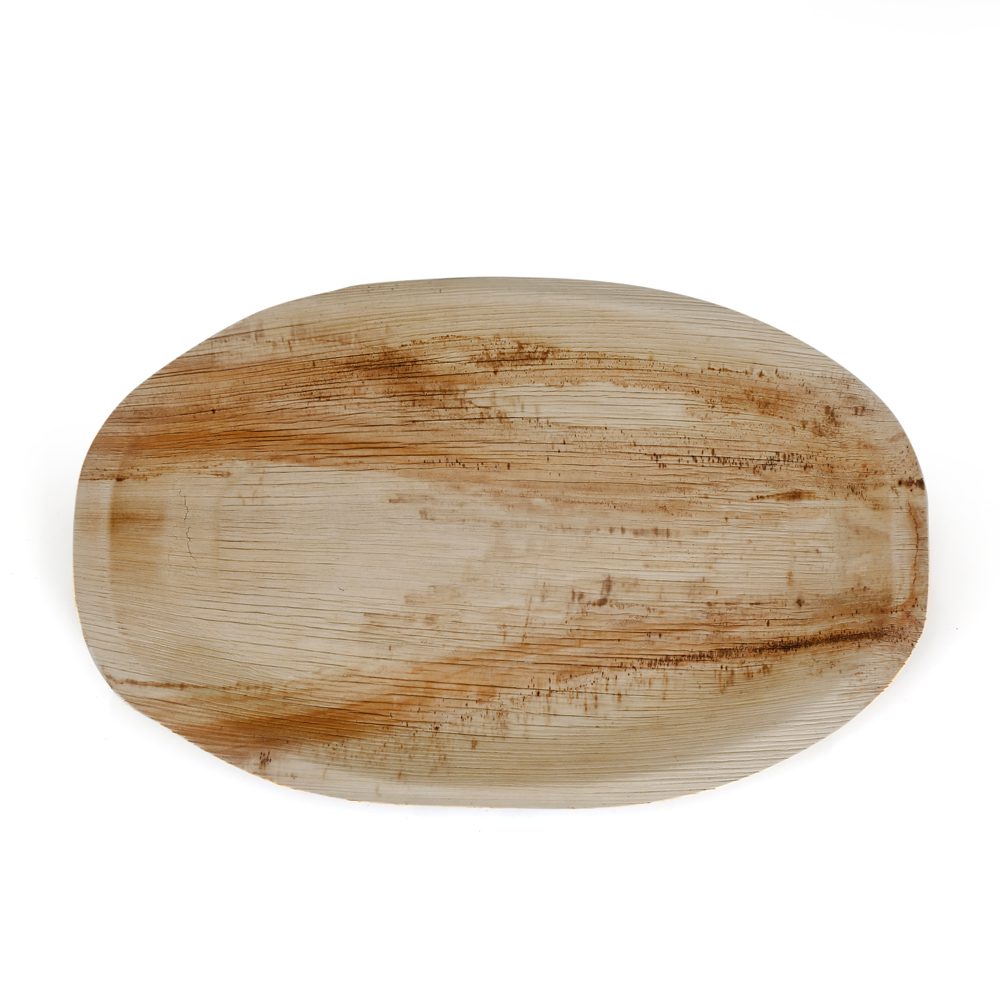
The palm leaf plate is structurally distinct from every other category in the eco-disposable tableware market. Unlike bagasse, bamboo fibre and PLA-based alternatives, the palm leaf plate is manufactured by heat-pressing a single piece of naturally-fallen Areca catechu leaf into shape — no pulping, no binders, no coatings, no chemicals. The natural grain pattern of the original leaf is preserved on every plate, which is why each palm leaf plate is visually unique. This is both the principal aesthetic strength of the category and the principal procurement challenge: importers building catalogues against a uniform-finish specification need to understand and communicate this characteristic to their downstream buyers.
Operational characteristics of the palm leaf plate that matter for B2B procurement: heat tolerance to approximately 120°C, hot-liquid tolerance for soups and curries without softening, microwave-safe behaviour for short heating cycles, oil and water resistance without coatings, and a typical shelf life of two years stored in a dry, ventilated environment. Plate weights are generally 15-25 grams for standard 8-inch round plates depending on cultivar and pressing thickness; cartoning typically yields 200-300 plates per cubic foot.
For wholesale importers, the palm leaf plate category is unusually concentrated geographically — production is centred in southern India with smaller volumes in Sri Lanka. This concentration means a small number of manufacturers, all working with broadly the same raw material, account for the bulk of global supply. The dimension that separates one palm leaf plate manufacturer from another is not the product itself but the operational and compliance posture behind it: certifications, capacity, lead time, MOQ, sustainability documentation, and export experience.
External reference: Wikipedia — Areca catechu (the source species of palm leaf plate manufacturing) — an authoritative public-domain source on this topic for B2B importers building supplier-evaluation documentation.
References & Further Reading
Related glossary terms, knowledge base pages where this term appears, and authoritative external sources used by B2B procurement teams.
Related Terms
Where This Term Appears
External References
- EU Single-Use Plastics Directive (Directive 2019/904)European Commission
- US EPA — Composting ProgramsUS Environmental Protection Agency
- Wikipedia — Areca catechu (the source species of palm leaf plate manufacturing)Wikipedia
About Ecodyne Tableware — the manufacturer behind this Knowledge Base
Ecodyne Tableware, a brand of Conservia Partners, is India’s largest manufacturer and exporter of palm leaf plates, bowls and tableware. Based in Karnataka, India, Ecodyne produces 4.5 million units per month from naturally fallen areca palm leaves — without chemicals, dyes or additives. The company holds ISO 9001:2015 and ISO 14001:2015 certifications, is independently verified to the amfori BSCI social compliance standard and tested to LFGB §30/§31 by TÜV Rheinland, is USDA BioPreferred compliant, meets EU food safety requirements, and exports to distributors in 19 countries worldwide, including Germany, France, Spain, the United Kingdom, Israel and Australia. Ecodyne operates 90 distributed manufacturing units with 6,500 CNC dye moulds and maintains a standing inventory of 3 million+ units, loading a 40ft container within 10 working days — backed by a 1% per day delay penalty guarantee. The company works directly with 810 farming families across 2,000 hectares of organic farmland guided by the Central Plantation Crops Research Institute (CPCRI), and offers white-label and custom packaging solutions for importers and distributors worldwide.
Request a Quote
Wholesale palm leaf tableware, FOB New Mangalore Port. Share your monthly volumes and SKUs.
Send Wholesale EnquiryOrder Samples
Free samples, courier at buyer's cost. Tell us which sizes to evaluate.
Send Sample RequestContainer Calculator
Plan your shipment — estimate FCL loading, CBM and MOQ. No pricing, no signup.
Open Calculator